
An engineer at a food plant was approved to download logic to one mixer PLC during a window, then asks to download logic to every other PLC under that same approval. Which decision fits a zero-trust rule?
Select an answer to reveal the explanation.
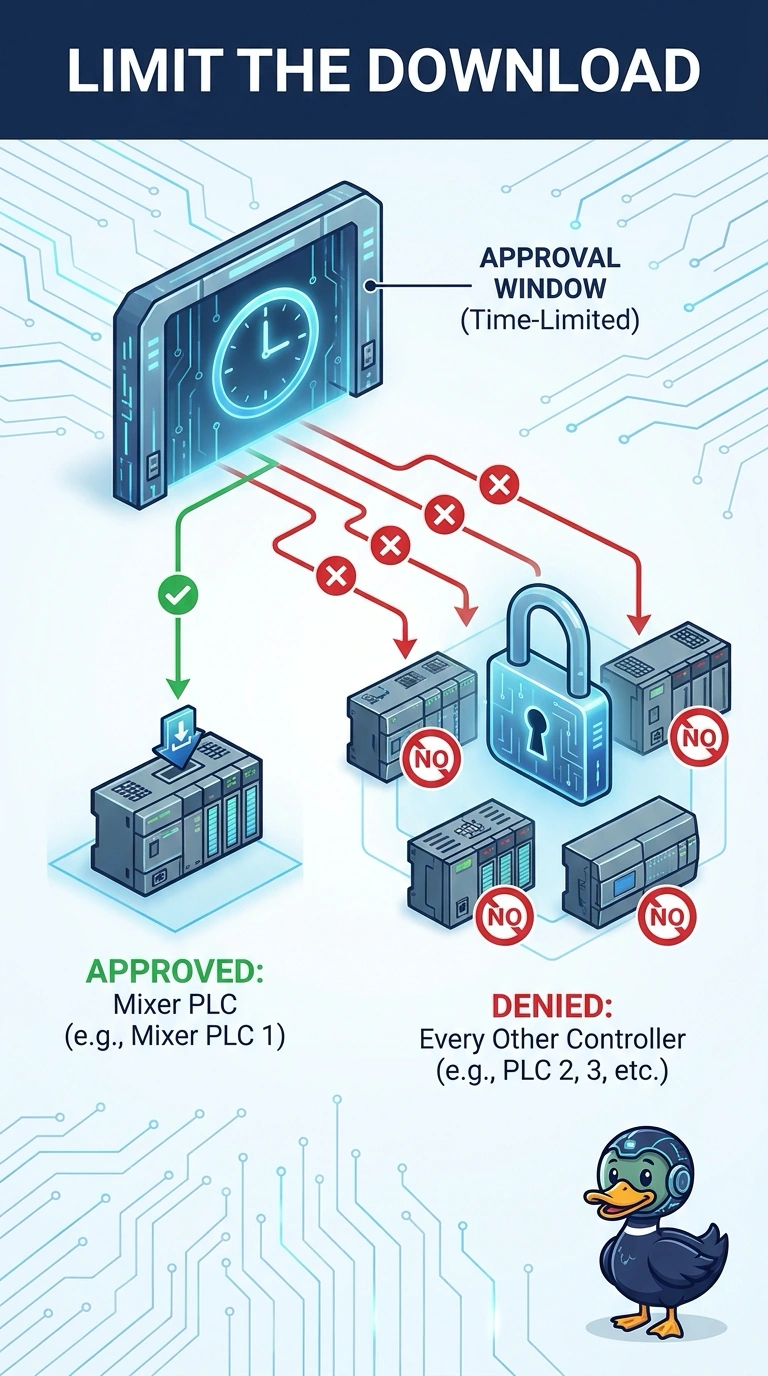
Short Explanation
You keep the approval scoped to the one mixer PLC it names, and deny downloads to every other controller under that request. Being inside the plant, on its engineering network, or connected through a VPN does not extend that approval.
Full Explanation
Zero trust treats authorization as explicit for the asset, not as a property of the network a person has reached. The engineer was approved to download logic to one mixer PLC during a window; because the approval does not name the other controllers, allow the download only to that mixer and deny the request to program every other PLC. A later approval can name another controller, but this approval cannot be stretched. Allowing every PLC on the engineering VLAN for the rest of the month replaces a single-asset, time-bounded approval with broad standing privilege. Allowing every PLC because the engineer is inside the plant treats physical location as authorization, an assumption zero trust rejects. Treating the existing VPN session as approval for every controller makes the same mistake with a network tunnel: it provides access to the network, not permission to program every controller behind it. Exam caveat: an emergency declared by operations may use a monitored break-glass path for a named engineer and a named asset; an open engineering VLAN is not that path and is not covered by this approval. Practical check: attempt a download to a second PLC while only the mixer approval is in force and confirm it is denied, then confirm the mixer download succeeds and is logged against the engineer and that PLC.