
A pipeline vendor wants a standing VPN from their office laptops straight into the compressor PLC VLAN so they can connect at any hour. Which design should the asset owner use instead?
Select an answer to reveal the explanation.
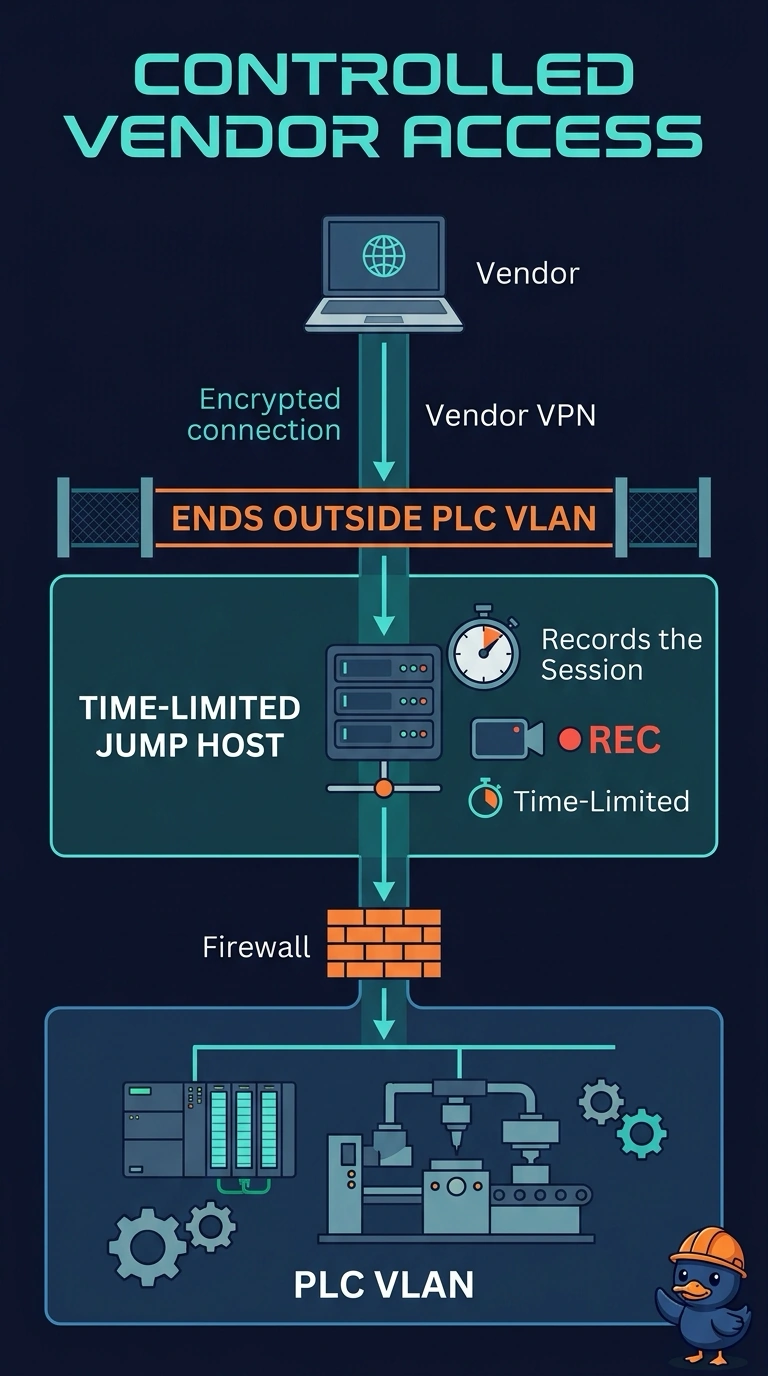
Short Explanation
A standing tunnel into the PLC VLAN is a key under the vendor's doormat. You want a front desk that checks them in, watches the session, and locks the door when the window ends. Anywhere-anytime access feels helpful until the day you cannot tell who was online.
Full Explanation
Controlled remote access to a PLC puts a broker between the vendor and the controller. The vendor authenticates to a jump host, or a similar access broker, that sits outside the PLC VLAN, usually reached through the industrial DMZ. The session is approved for a window, recorded, and torn down when the work ends. Their VPN does not land inside the compressor VLAN, so a forgotten client cannot browse every controller the next night. Giving them the programming password and a path from a home router removes the asset owner's control of the workstation and of the hours. Port-forwarding the programming service from the internet exposes the PLC to anyone who finds the port. Joining vendor laptops to the plant domain and leaving them in a cabinet makes those laptops permanent residents of the control network, which is the opposite of a controlled session. Exam caveat: the jump host itself is a high-value target and needs hardening, MFA, and no split path around it. A recorded session is not a substitute for least privilege on what the vendor is allowed to download. Operational check: confirm a test vendor account can reach only the approved jump host, the session appears in the recording system, and the path closes when the window expires.