
A regional hoster has assigned every usable 802.1Q identifier from 1 through 4094 on one bridged fabric, and the next tenant still needs its own isolated network. Which design removes that constraint?
Select an answer to reveal the explanation.
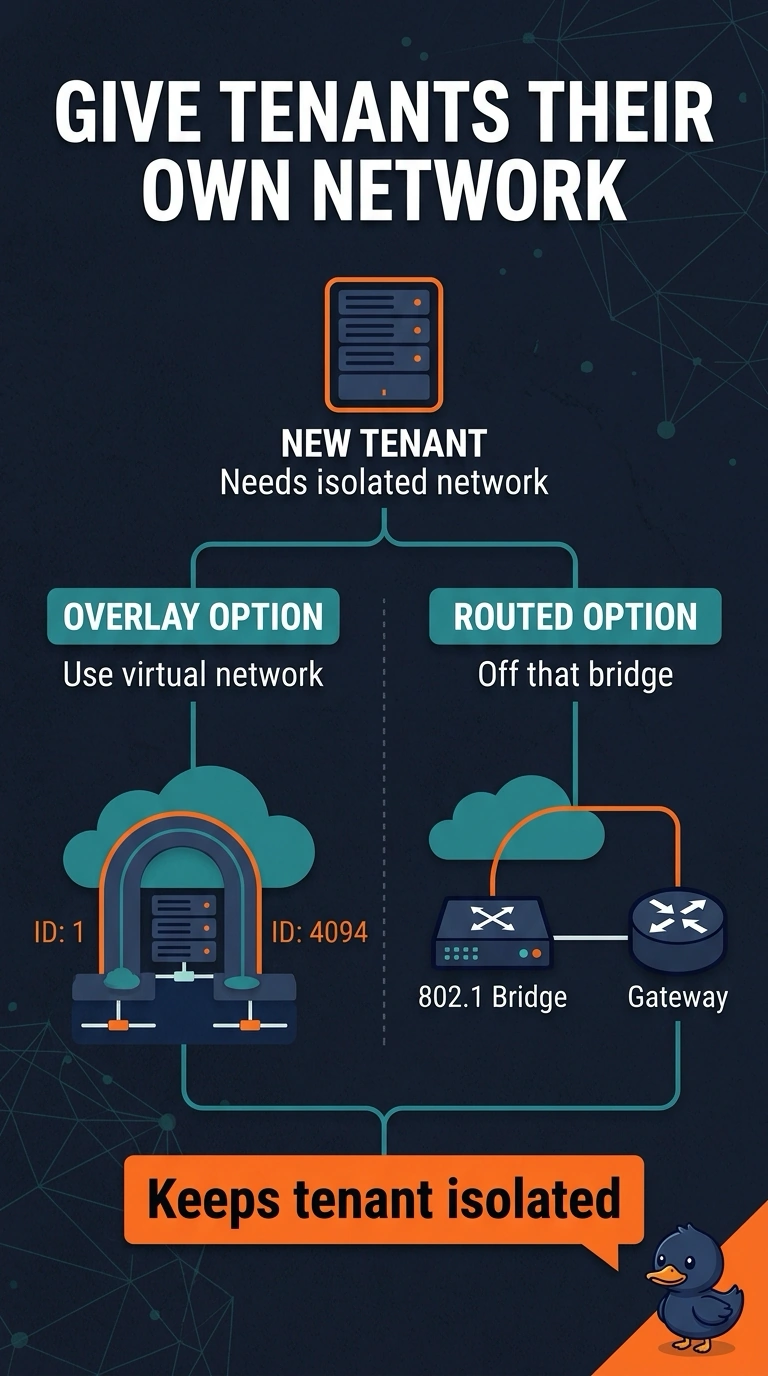
Short Explanation
You’ve filled every usable 802.1Q identifier on this bridged fabric, so the next tenant needs another way to stay isolated. Put the tenant in an overlay virtual network or a routed tenant network off the bridge; extending the identifier field, reusing another tenant’s identifier, or sharing one VLAN across tenants won’t provide a new isolated network.
Full Explanation
A single bridged domain has 4094 usable 802.1Q identifiers, numbered 1 through 4094. Since this fabric has assigned all of them, the next tenant cannot receive a new isolated bridge on that same domain. Place the tenant in an overlay virtual network or a routed tenant network off the bridge; either design moves segmentation beyond the full bridged identifier space. Extending the same bridged identifier field to mint a VLAN past 4094 does not work because one bridged 802.1Q domain has no usable identifier beyond 1 through 4094. Reusing another tenant’s VLAN identifier on that fabric removes separation rather than creating a distinct tenant network. Stretching one shared VLAN across every tenant puts them in the same broadcast domain, the opposite of isolation. Exam caveat: the 4094-identifier limit applies to one 802.1Q field on a bridged domain; an identifier beyond that range cannot be created in that field. Practical check: confirm the fabric VLAN table uses identifiers 1 through 4094 and verify the new tenant’s traffic is isolated in an overlay or routed virtual network, not assigned a new bridged identifier.