
A bank platform team still receives guest machines to patch. Staff operate the everyday pool, and during tax week extra guests run on a pool a public provider operates. Which description matches that arrangement?
Select an answer to reveal the explanation.
Short Explanation
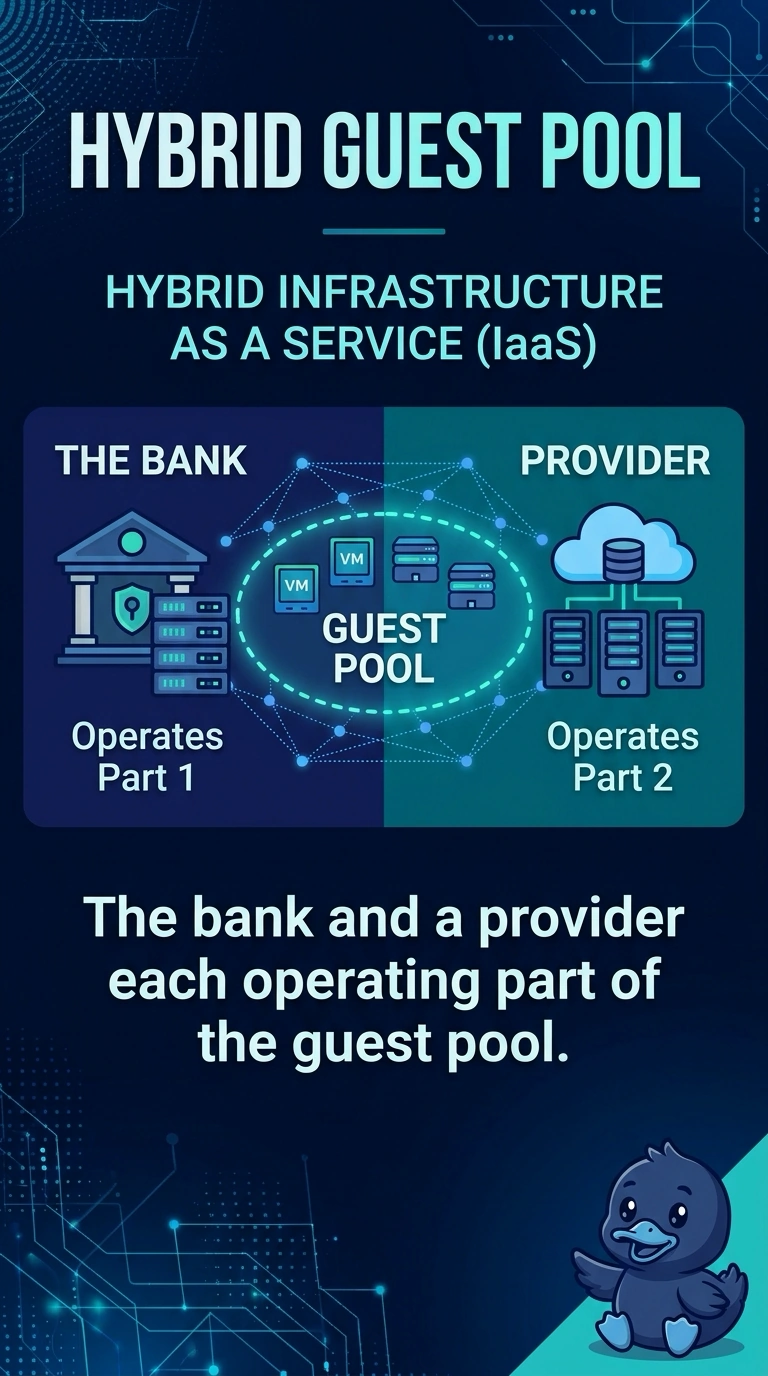
Hybrid cloud connects distinct cloud environments and enables data or application portability. Here the same guest workload can move from the private pool to a public cloud. You still patch guests, so you stay on infrastructure as a service while software as a service, function as a service, and a provider-only pool each drop a guest or drop your half.
Full Explanation
Infrastructure as a service still hands the tenant the guest, which is what the bank platform team patches. Hybrid cloud connects distinct cloud environments and enables data or application portability. Here the same guest workload can move from the private pool to a public cloud. Hybrid infrastructure as a service, with the bank and a provider each operating part of the guest pool is the design that meets this requirement. Software as a service that hands over an application and leaves no guest to patch is the wrong fit because the platform team still receives guests to patch, so the cloud is handing over machines rather than a finished application. Function as a service that treats the tax-week burst as an event with no guest is the wrong fit because a short calendar does not make the workload a function with no guest, since the team still patches guest machines. Public infrastructure as a service only, with the provider operating the entire guest pool is the wrong fit because the everyday pool is operated by bank staff, so the provider does not operate the entire pool. Exam caveat: a tax-week burst does not change infrastructure as a service into a function service if guests remain to patch.