
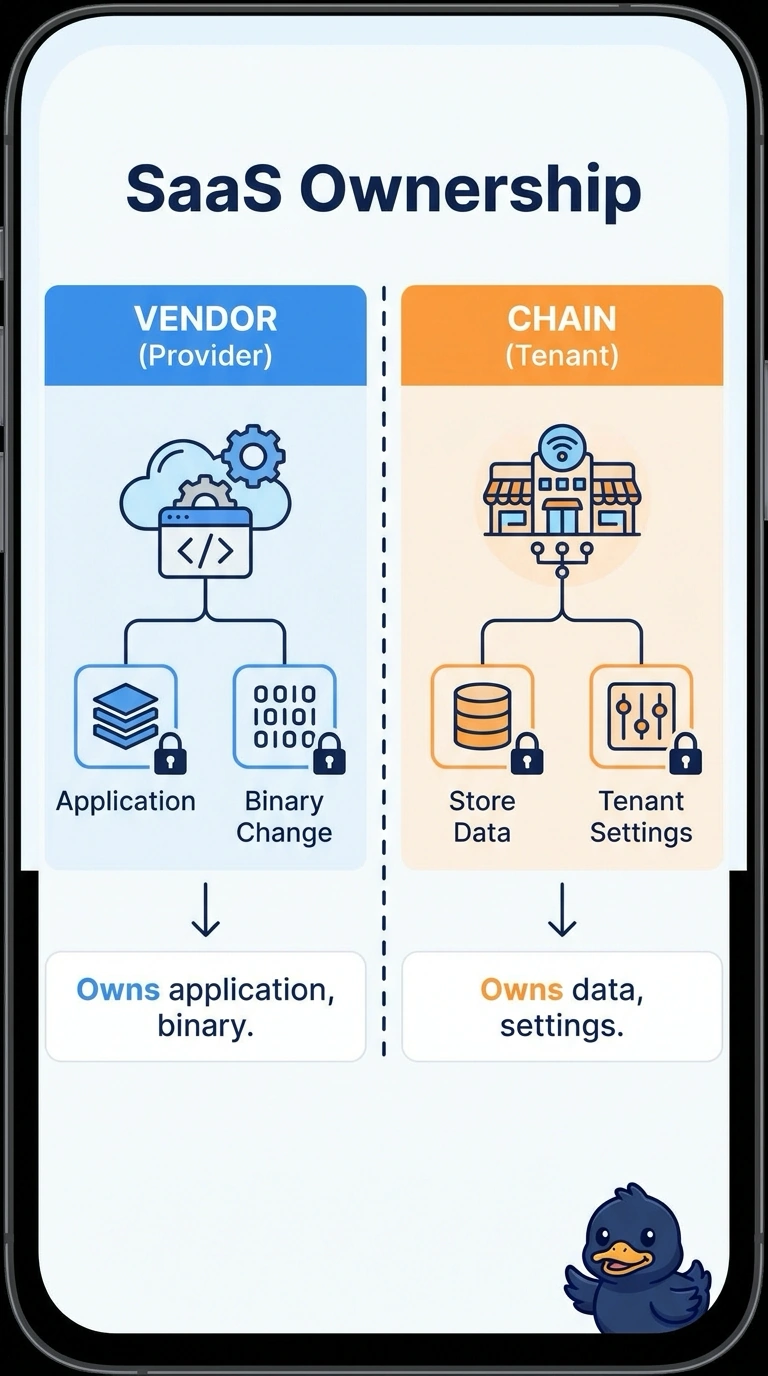
A retail chain uses a vendor scheduling application delivered as software as a service. The chain wants to replace that application's binary with its own build. The chain can already edit its store data and its tenant settings. Who owns the binary change?
Select an answer to reveal the explanation.
Short Explanation
Using a bank's website does not mean you ship a new build of the banking software. The chain owns its store data and its settings, and it can already edit those. The binary of a software service stays with the vendor.
Full Explanation
Software as a service gives the tenant the running application to use, including tenant data and tenant-level settings, and leaves the application binary with the vendor. Replacing that binary is a change to the vendor's application, so the vendor owns it. The chain's ability to edit store data and settings is the tenant side of the same split and does not extend to the binary. A chain that owns the binary would be running its own build, which is not this service model. A vendor that owns the store data and settings reverses the split the scenario already demonstrates, because the chain edits those. A guest kernel under the application is not handed to the tenant on a software service; there is no tenant guest to patch or replace. Exam caveat: a vendor may accept a plugin or a configuration extension, which is still not a replacement of the application binary. Operational check: list what the chain's administrators can change in the tenant console and confirm the application build number changes only when the vendor publishes a release.