
A port authority already has the image and the flavor for a virtual firewall in its VIM, yet nothing can reach the instance for first-time configuration. What gives the instantiated firewall its first management reachability?
Select an answer to reveal the explanation.
Short Explanation
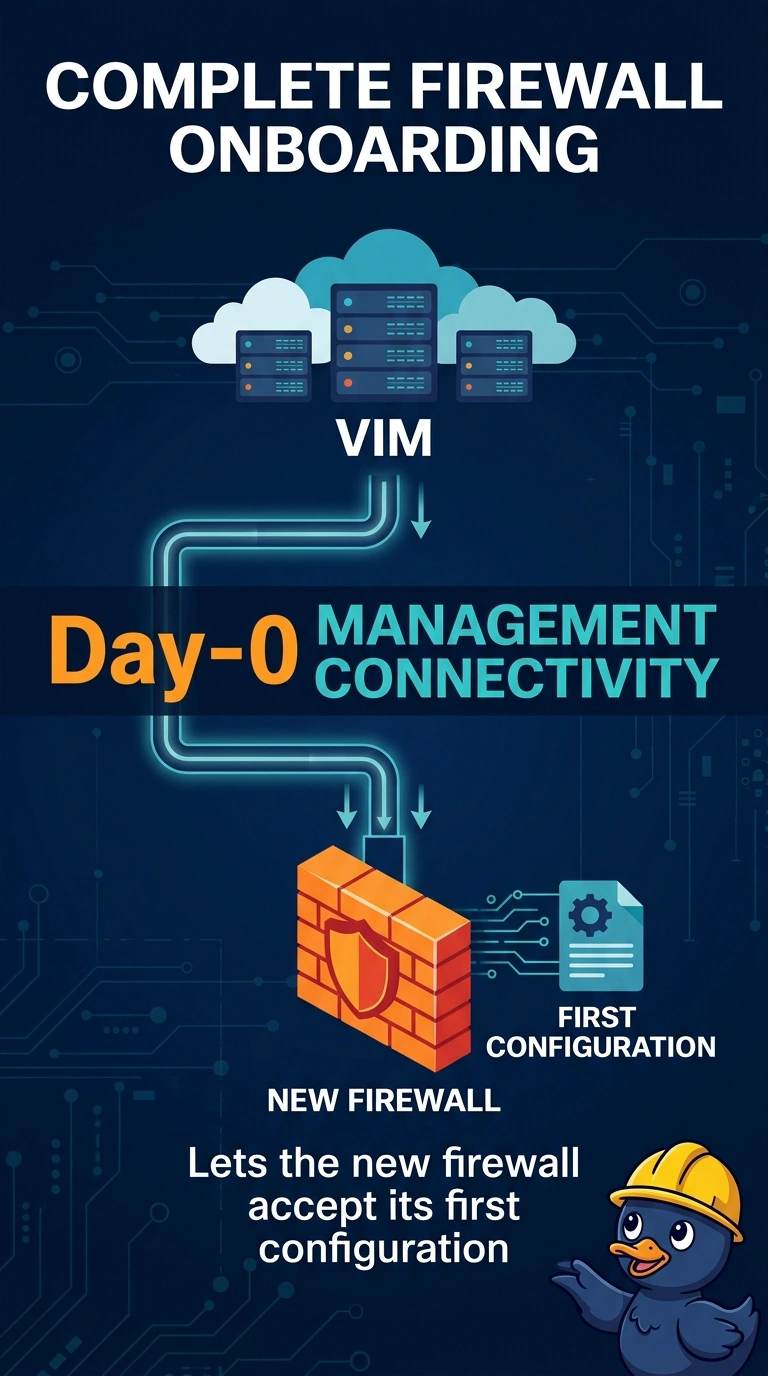
A ship stays at the pier until the gangway is down, no matter how finished the hull looks. You finish onboarding this firewall by giving it a day-0 management path so the first configuration can land. Multi-device service intent, telemetry from routers already forwarding, and using the VIM as a WAN controller belong to later jobs.
Full Explanation
Onboarding places a virtual function into the cloud so it can take its first configuration. The image and flavor are already chosen for this port firewall, so the remaining piece is day-0 management connectivity. Attach the configured day-0 management network and verify address assignment and reachability. This validates deployment and bootstrap separately from package onboarding. Day-0 management connectivity in the VIM so the new firewall can accept its first configuration is the design that meets this requirement. Orchestrator service intent that programs many devices after the firewall is already running is the wrong fit because service intent programs devices that already exist and does not attach the first management path to a new instance. A streaming telemetry subscription toward provider routers that are already forwarding traffic is the wrong fit because a telemetry subscription reads counters from devices that already forward and does not place a new firewall on a management network. Using the VIM as the WAN controller that steers customer paths across the provider core is the wrong fit because the VIM schedules instances, networks, and flavors, and it is not the controller that steers provider core paths. Exam tip: catalog image and flavor still need a day-0 path. Check the instance has a reachable management address.