
A usage-rating hook must run only when a billing event arrives. The tenant must not patch a guest operating system or keep a long-lived runtime for that hook. Which service model matches the hook?
Select an answer to reveal the explanation.
Short Explanation
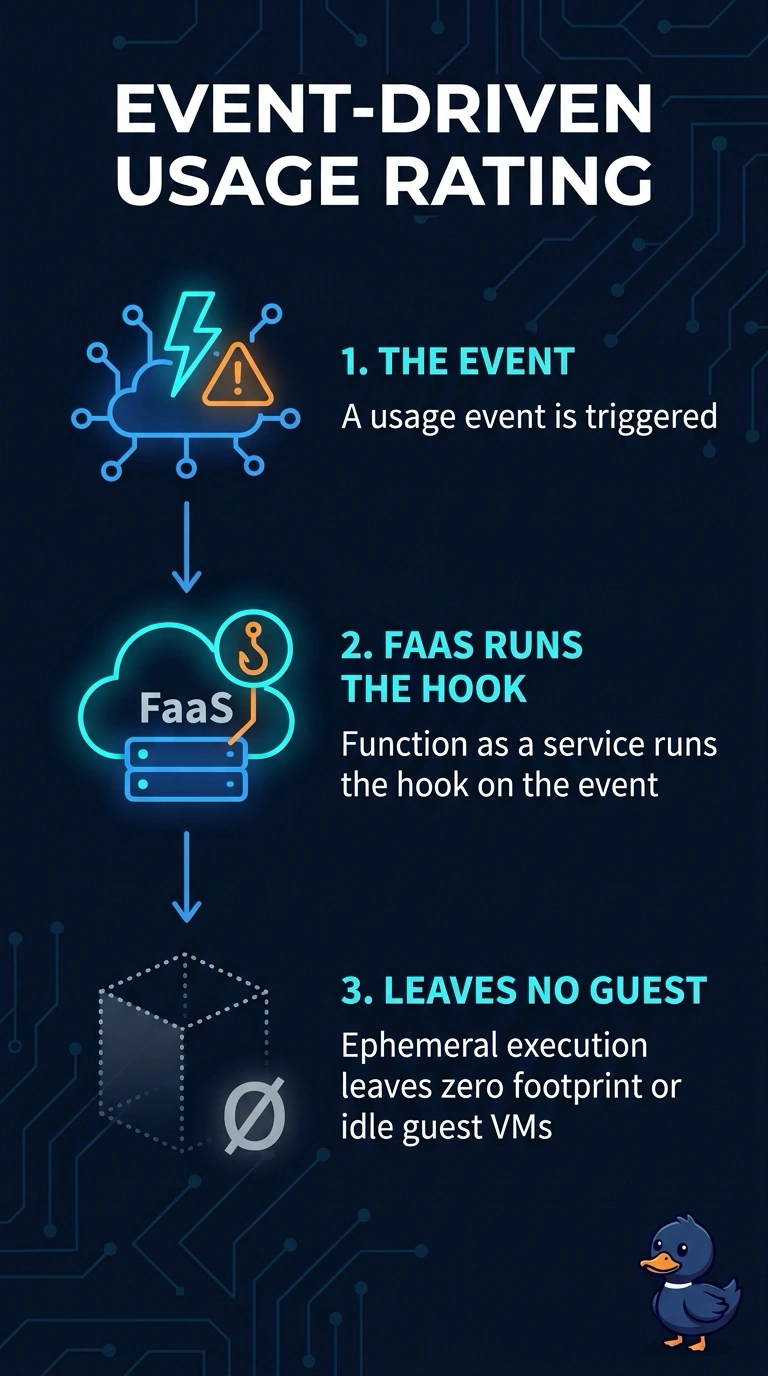
You can keep this hook lightweight: function as a service runs your code when the billing event arrives, then leaves no guest operating system or long-lived runtime for you to maintain. Infrastructure as a service gives you a guest OS to patch, platform as a service keeps a runtime and guest, and software as a service gives you a finished application rather than a hook you supply.
Full Explanation
Function as a service fits because it runs your code in response to the billing event and does not leave you with a guest operating system to patch or a long-lived runtime to keep. The key match is the event-triggered, short-lived execution model: the hook runs when needed and then stops. Infrastructure as a service hands you a guest operating system, so you would be responsible for patching it, contrary to the requirement. Platform as a service hands you a runtime and keeps the guest, so it does not meet the requirement to avoid keeping a long-lived runtime. Software as a service hands you a finished application to use; it does not provide the model for running a hook that you supply when a billing event arrives. Exam caveat: distinguish the execution model from the cloud deployment model; the fact that code runs on a provider’s infrastructure does not mean you are managing a guest OS. Practical check: send a billing test event, verify that the hook runs and exits, and confirm that no guest OS or long-lived runtime remains for you to patch or maintain.