
A university team on platform as a service wants to load a kernel module on the host that runs their enrollment application. The team can already deploy new application builds. Who owns that host change?
Select an answer to reveal the explanation.
Short Explanation
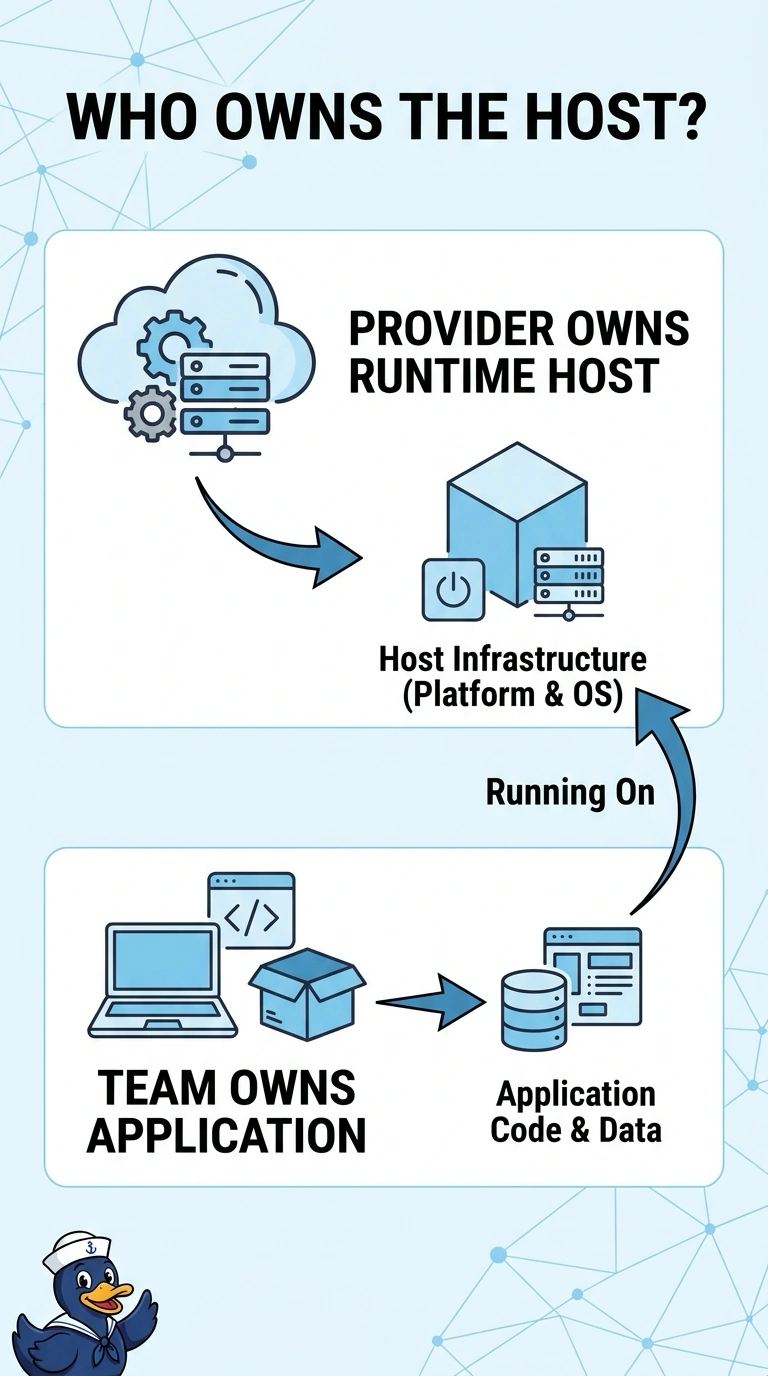
You can rearrange the furniture in a rented office without owning the building's elevator motor. On platform as a service the team owns the enrollment application, and the provider owns the host under it. Loading a kernel module on that host is the provider's machine, not the team's.
Full Explanation
Platform as a service lets the tenant deploy the application and keeps the runtime host, its operating system, and its kernel with the provider. The university can already ship new application builds, which is the tenant's side of that line. A kernel module on the runtime host crosses into the provider's side, so the provider owns that change. IaaS can give the consumer control of a guest operating system, while physical hosts and hypervisors remain provider-managed. Saying the provider owns the application source reverses the split: the team is the one deploying builds. The hypervisor patch cycle remains the provider’s responsibility in both PaaS and IaaS, and a kernel module on the platform host is not a hypervisor patch the tenant is entitled to apply. Exam caveat: some platforms allow a custom buildpack or a sidecar, which is still not a kernel module on the provider's host. Operational check: review the platform's responsibility matrix and confirm kernel and host patching are on the provider, while the enrollment repository stays with the team.