
Operators already collect flow records and router logs for the core. They need an active measurement of delay for a single SR policy. Which addition matches that measurement?
Select an answer to reveal the explanation.
Short Explanation
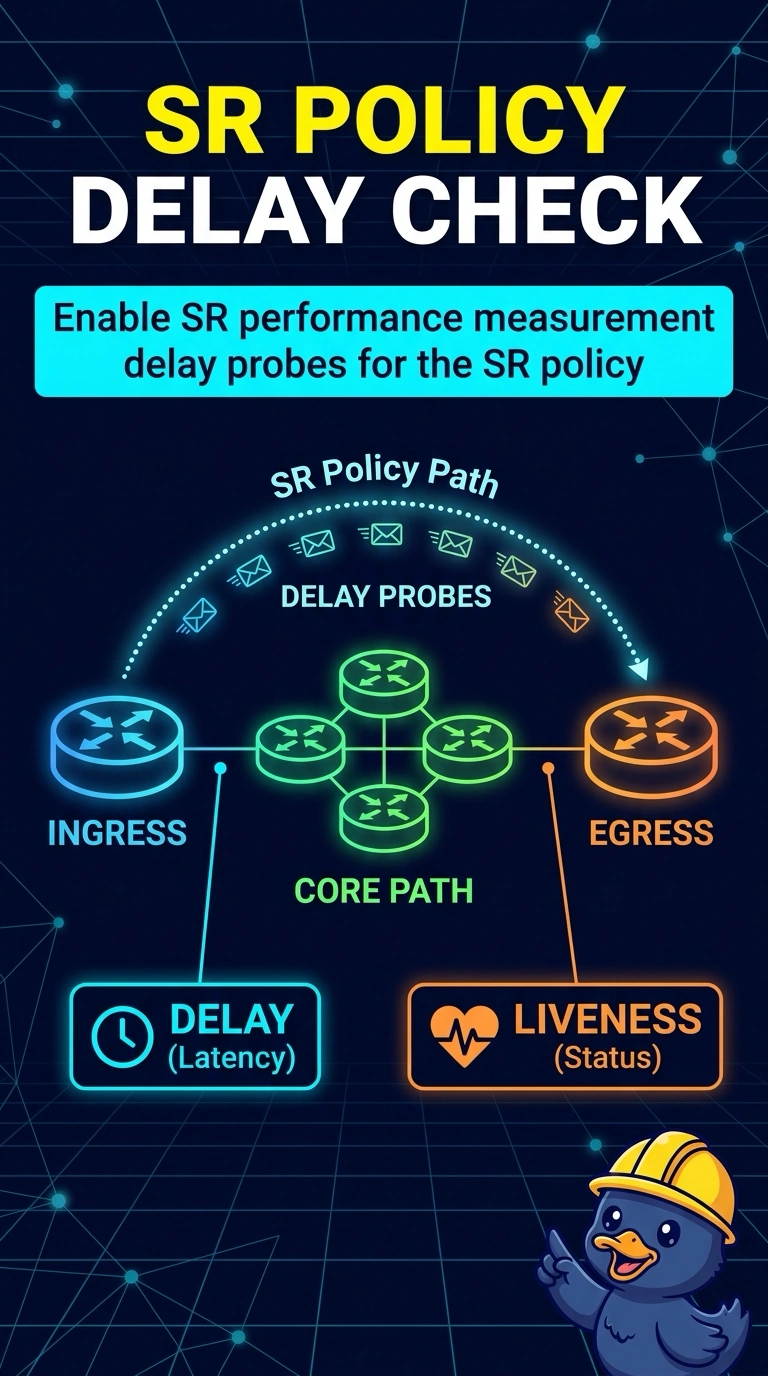
A stopwatch on the route is different from a list of who drove or a diary of roadside events. You add SR performance measurement delay probes when the missing data is delay for a single SR policy. NetFlow or IPFIX, syslog, and SNMP traps or RMON describe flows, events, and device counters instead.
Full Explanation
SR performance measurement delay probes for an SR policy actively measure delay for that single SR policy. NetFlow and IPFIX export flow records of conversations. Syslog stores event messages. SNMP traps and RMON report device counter events. The network already has flows and logs. The missing piece is an active probe of the policy itself, not another copy of those records. Enable SR performance measurement delay probes for that SR policy is the design that meets this requirement. NetFlow or IPFIX export that records the conversations crossing the core routers is the wrong fit because it exports records of conversations on the routers and does not actively measure delay for the SR policy. Syslog collection that stores the event messages emitted by those same core routers is the wrong fit because it stores event messages from the routers and does not measure delay for the SR policy. SNMP traps or RMON alarms that report a device counter when a watched threshold is crossed is the wrong fit because it signals a device counter event and does not probe the SR policy for delay. Exam caveat: Keep flow export and syslog for the questions they already answer. A path probe does not replace them, and an SNMP trap is not a measurement of SR delay. Operational check: Confirm delay for this SR policy comes from the SR probe, while the existing flow export and router logs remain in place for their own jobs.