
A charity telethon prefix is under a volumetric flood, and good sessions toward that same prefix must survive. Which mitigation keeps the good traffic?
Select an answer to reveal the explanation.
Short Explanation
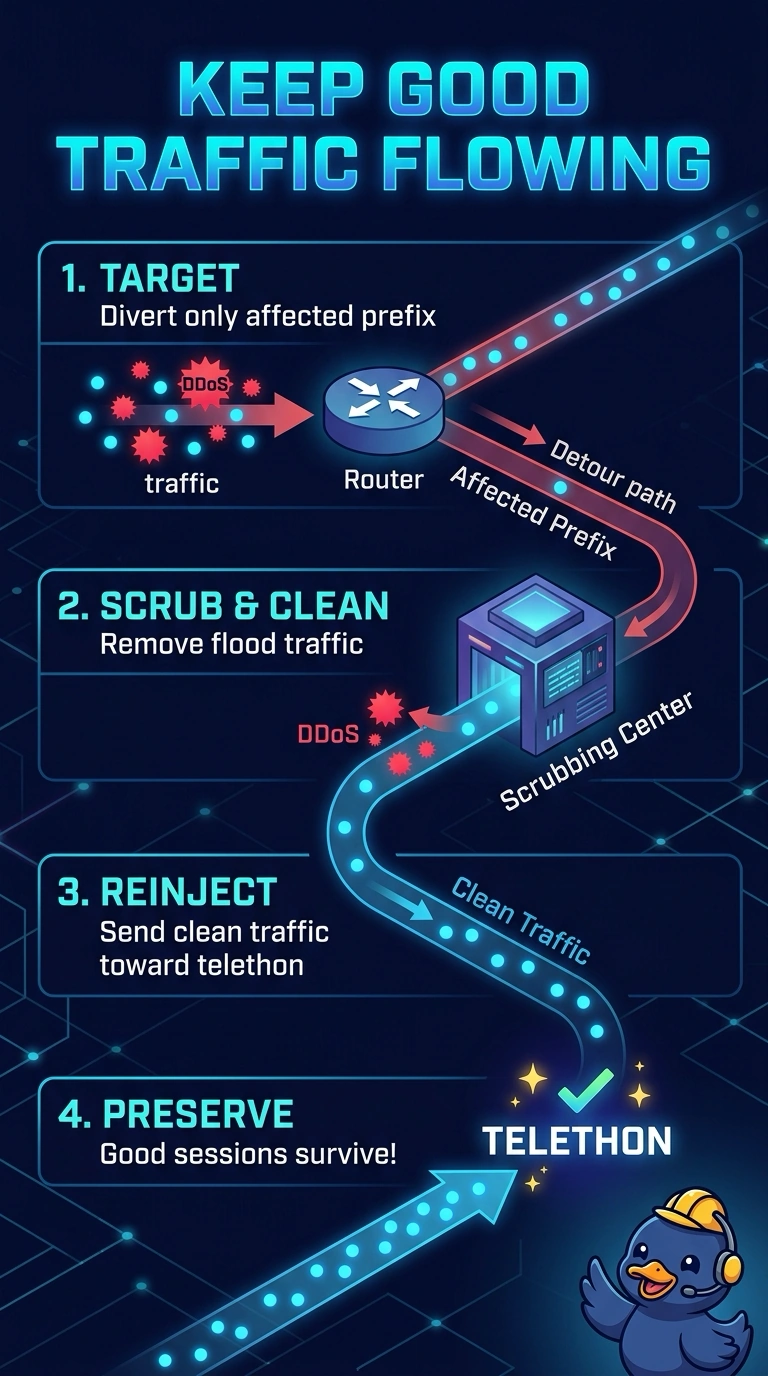
A wash bay that cleans a muddy truck and lets the cargo continue is like a scrubber. You divert only the telethon prefix, clean it, and send the good traffic on. A provider-wide black hole, a black hole of the telethon prefix, and a flowspec filter that drops every packet to that prefix each throw away sessions you still need.
Full Explanation
Divert the targeted prefix to a scrubbing service with enough capacity and reinject permitted traffic. The telethon prefix is under a volumetric flood and those good sessions must stay up. A remote black hole for every customer prefix is a provider-wide outage. A remote black hole for the telethon prefix drops the good sessions with the flood. A flowspec filter that discards every packet toward the prefix does the same harm. Divert only that prefix to a scrubbing center and reinject the clean traffic toward the telethon is the design that meets this requirement. A remote black hole applied to every customer prefix in the provider network is the wrong fit because black-holing every customer prefix takes the whole provider offline and is not mitigation of this one flood. A remote black hole for only the telethon prefix that still drops the good sessions is the wrong fit because black-holing the telethon prefix drops the good sessions the charity still needs to keep alive. A flowspec filter that discards every packet sent toward the attacked telethon prefix is the wrong fit because a filter that discards every packet toward the prefix removes the good sessions along with the flood. Exam caveat: Scrubbing keeps the good sessions only when the clean traffic is reinjected, and a black hole of the telethon prefix would not bring those sessions back. Operational check: Test convergence and existing-session behavior; diversion does not guarantee zero interruption.