
A utility cloud's Windows management VM runs a PowerShell process covered by its enabled host exploit-protection engine. A memory-injection attack targets that process, with no file written and no DNS query. Where should detection for this attack be placed?
Select an answer to reveal the explanation.
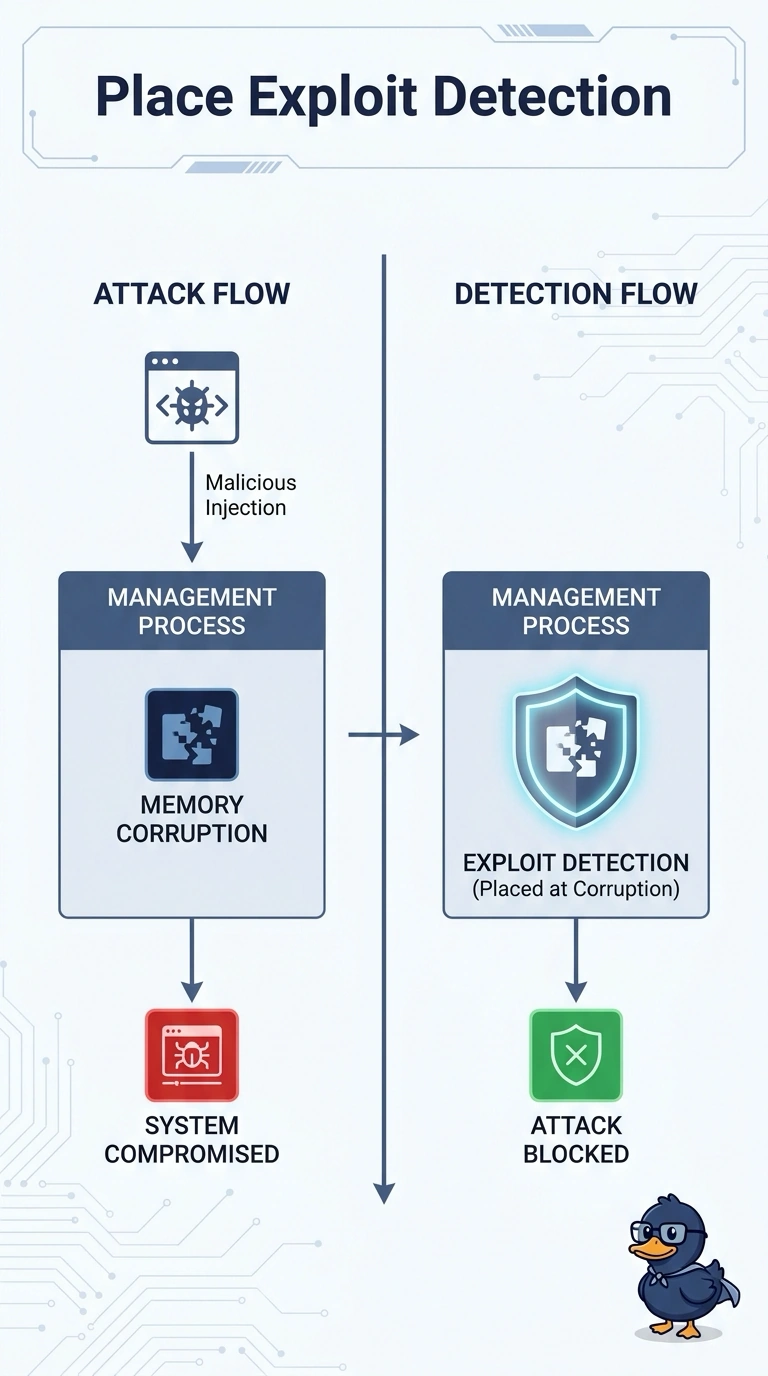
Short Explanation
You’re looking in the right place when you focus on where the corruption happens: the management process. Since nothing was written to disk and no DNS query was made, exploit detection belongs on that process.
Full Explanation
Exploit detection belongs on the workload where the exploit can be seen. This attack targets a supported management process in memory, so the enabled host exploit engine is the relevant detector, and placement should be on that process. DNS security classifies names at the recursive resolver; with no DNS query, it has nothing to classify. Malware detection on the file store inspects files, but this attack wrote none. A flow record lists addresses and does not inspect the process or its memory, so it cannot detect this corruption. Exam caveat: a later stage of the same incident might download a file or look up a name; those stages could call for file-store malware detection or DNS security, but this stage does not. Practical check: confirm the exploit detector is attached to the management process and that test corruption there raises an event, while the file store and recursive resolver stay quiet. If a later stage writes a file or makes a lookup, place detection for that activity on the corresponding file store or resolver.