
Guests query a recursive resolver for command-and-control names. The security team must see those queried names. The lookups do not leave a file on disk. Where should this control sit?
Select an answer to reveal the explanation.
Short Explanation
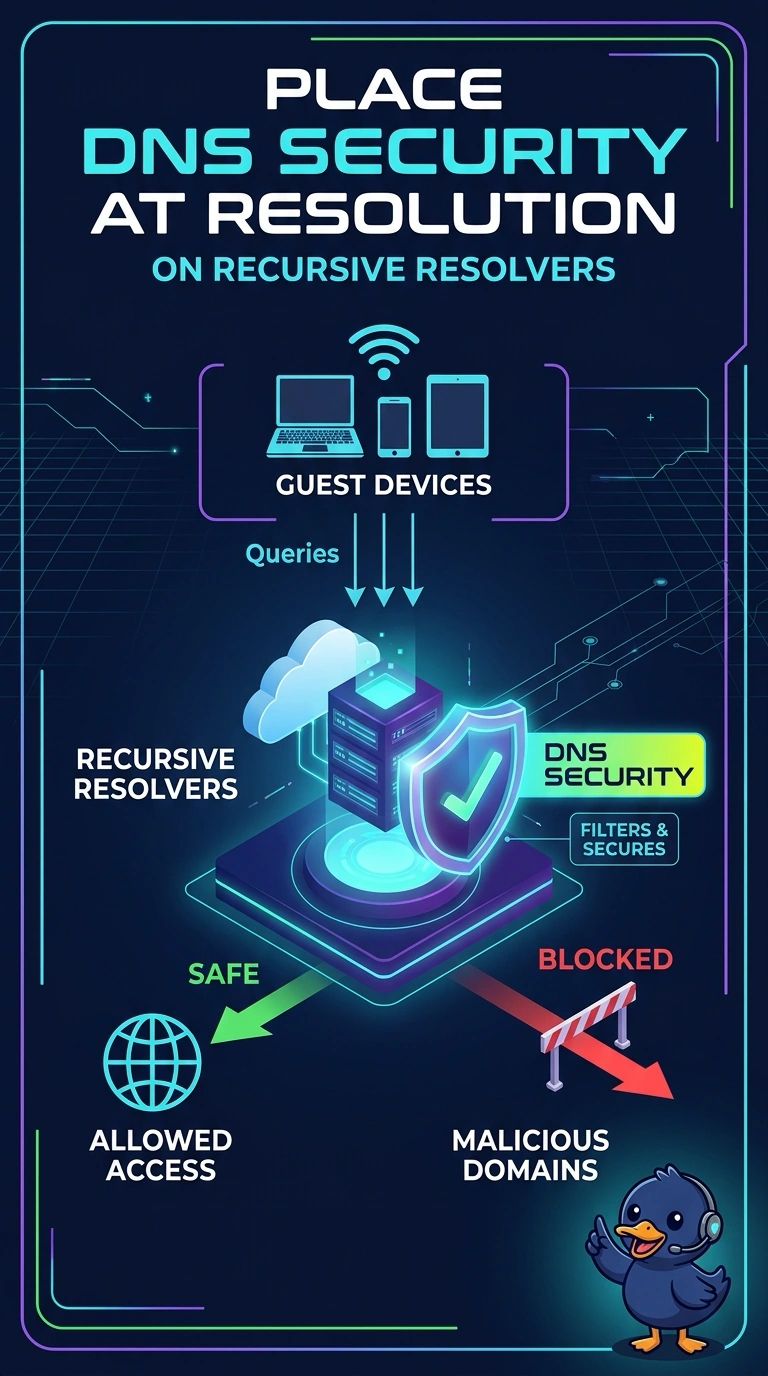
You do not search the desk drawers for a phone call. You put DNS security on the recursive resolvers so the queried command-and-control names are visible. Disk malware scans, exploit detection that misses the name, and a permit-DNS firewall rule watch the wrong evidence.
Full Explanation
DNS security sees queries at the resolver. Malware detection on disk looks for a resident binary. Exploit detection sees an attack on the flow it watches. A lookup that exists only as a recursive query, and that leaves no file, is invisible to a disk scan and to inspection that lacks the name. A rule that merely permits DNS does not read the question. Watch the recursive resolvers. DNS security on the recursive resolvers that receive the guest queries is the design that meets this requirement. Malware detection scanning guest disks for files the lookups do not leave behind is the wrong fit because Malware detection on disk looks for a resident payload and does not see the name the guest queried. Exploit detection on east-west packets that do not carry the queried name is the wrong fit because Exploit detection on packets that lack the queried name cannot report the command-and-control lookup. A firewall rule that permits DNS and does not inspect the name being queried is the wrong fit because A firewall rule that only permits DNS sees a port, not the name the resolver was asked to look up. Exam caveat: DNS security sees the query at the resolver you instrument. A guest that talks straight to a raw address, with no lookup, will not appear in that DNS view. Operational check: Generate a test lookup from a guest and confirm the resolver security log shows the queried name, not only the guest address after resolution.