
Two tenants' virtual firewalls can already reach each other's day-0 management addresses, while orchestrator API calls require authentication and the API channel is encrypted. Which control closes that reachability?
Select an answer to reveal the explanation.
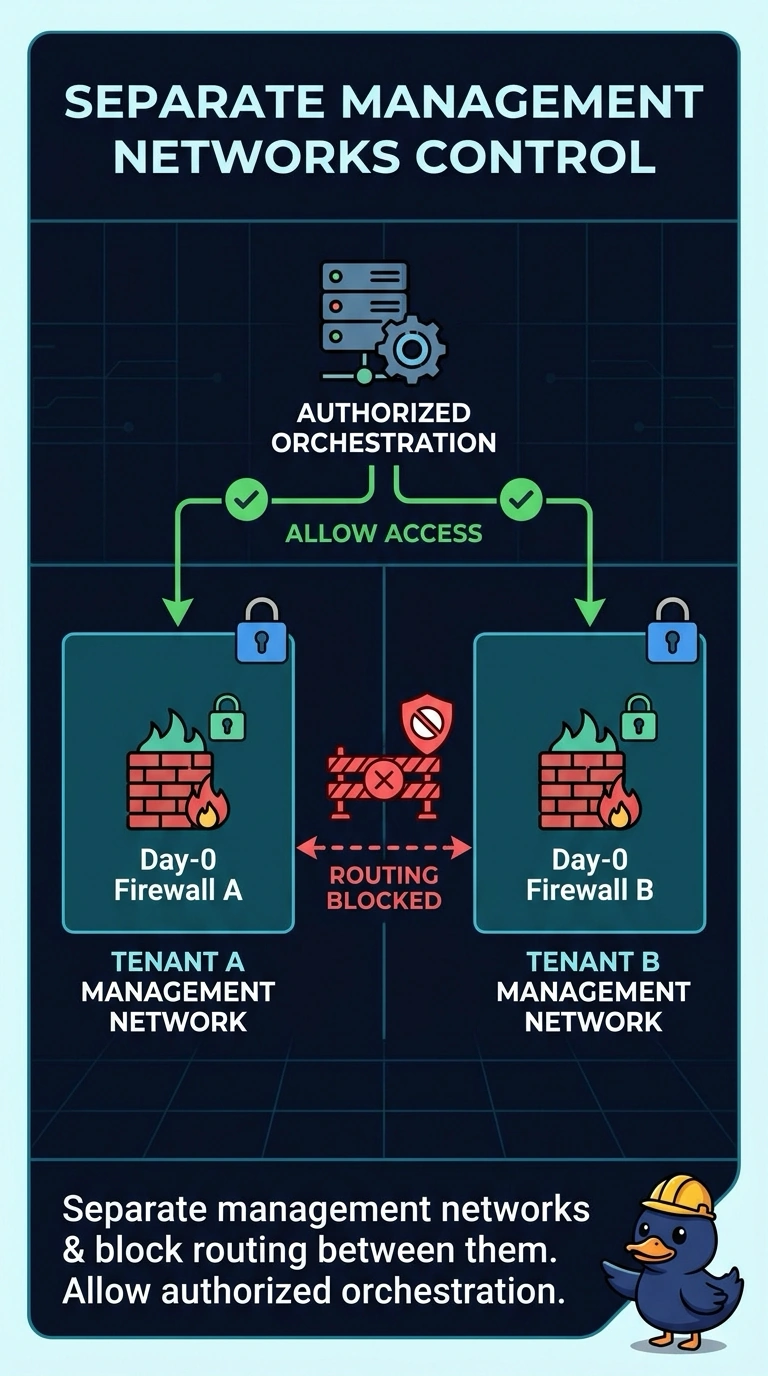
Short Explanation
Hotel floors with locked stairwells keep guests out of each other's rooms, even when the front desk already checks badges. You split the tenant management networks so one virtual firewall cannot open the other's day-0 address. Mutual API authentication, more transport encryption, and stronger API credentials only harden the orchestrator door.
Full Explanation
Tenant segmentation keeps one workload off another workload's management plane. Authentication and transport encryption protect the orchestrator API, which these firewalls are not using when they open each other's day-0 addresses. The missing control is separation of those management networks. Separate networks can still communicate if inter-network routing or policy permits it, so Put the workloads on separate management networks and deny routing or access between them while allowing authorized orchestration. Mutual authentication on the orchestrator API so both the caller and the API prove identity is the wrong fit because mutual authentication proves both parties on an API call and does not stop direct reachability between tenant management addresses. Transport encryption on the orchestrator API channel that is already encrypted for those callers in that other design is the wrong fit because encrypting an already encrypted channel does not remove that direct path. Stronger API credentials for orchestrator users who can already authenticate to that same API is the wrong fit because stronger credentials only change who may call the orchestrator, and these firewalls are reaching each other without that API. Exam caveat: Transport encryption protects a channel, while mutual authentication is the extra step when both sides must prove identity.