
A volumetric flood matches a known signature toward one hosted game prefix. Legitimate players on that prefix must stay reachable, and other customers must be untouched. What should the provider distribute?
Select an answer to reveal the explanation.
Short Explanation
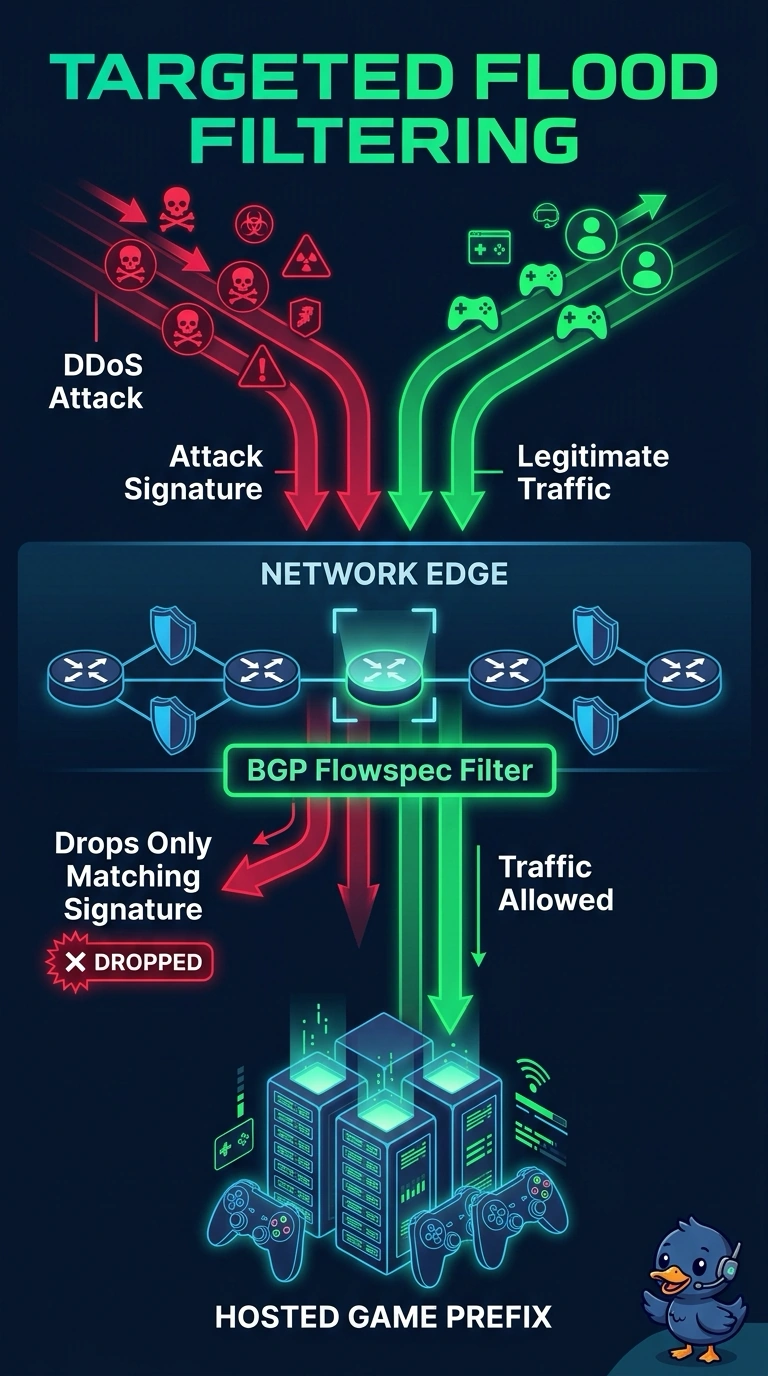
You strain one dirty drain without shutting off water to the whole street. Distribute a FlowSpec discard rule for the attack’s expressible header fields, such as destination prefix, protocol, ports, or packet length, and verify the rule installs upstream of any saturated link. You stay precise while players and other customers stay up.
Full Explanation
BGP Flowspec is the correct control here because you need selective discard while legitimate players on the same game prefix stay reachable. Distribute a FlowSpec discard rule for the attack’s expressible header fields, such as destination prefix, protocol, ports, or packet length, and verify the rule installs upstream of any saturated link. That edge enforcement drops only flood traffic while other sessions to the same prefix and all other customers continue normally. A destination RTBH route discards matching traffic; it does not simply withdraw the prefix. A remote black hole for the provider aggregate so every customer prefix is discarded is the wrong fit because it discards every customer to stop one game flood, a far wider blast radius than required. A remote black hole for only the attacked prefix so that entire prefix goes unreachable is the wrong fit because discarding all traffic to that destination also discards legitimate players, violating the requirement to keep that prefix up. MACsec on the customer Ethernet hop so frames on that link are encrypted during the flood in that other design is the wrong fit because encrypting one Ethernet hop provides confidentiality and does not discard a routed flood. Exam caveat: use destination discard only when losing the whole destination is accepted. Operational check: confirm installation and legitimate sessions still complete.