
Tenant guests in an insurance cloud cannot route to the VIM API. A build job presents a valid certificate and a valid token, then deletes another tenant's network. The token's role is admin for the whole cloud. What must change?
Select an answer to reveal the explanation.
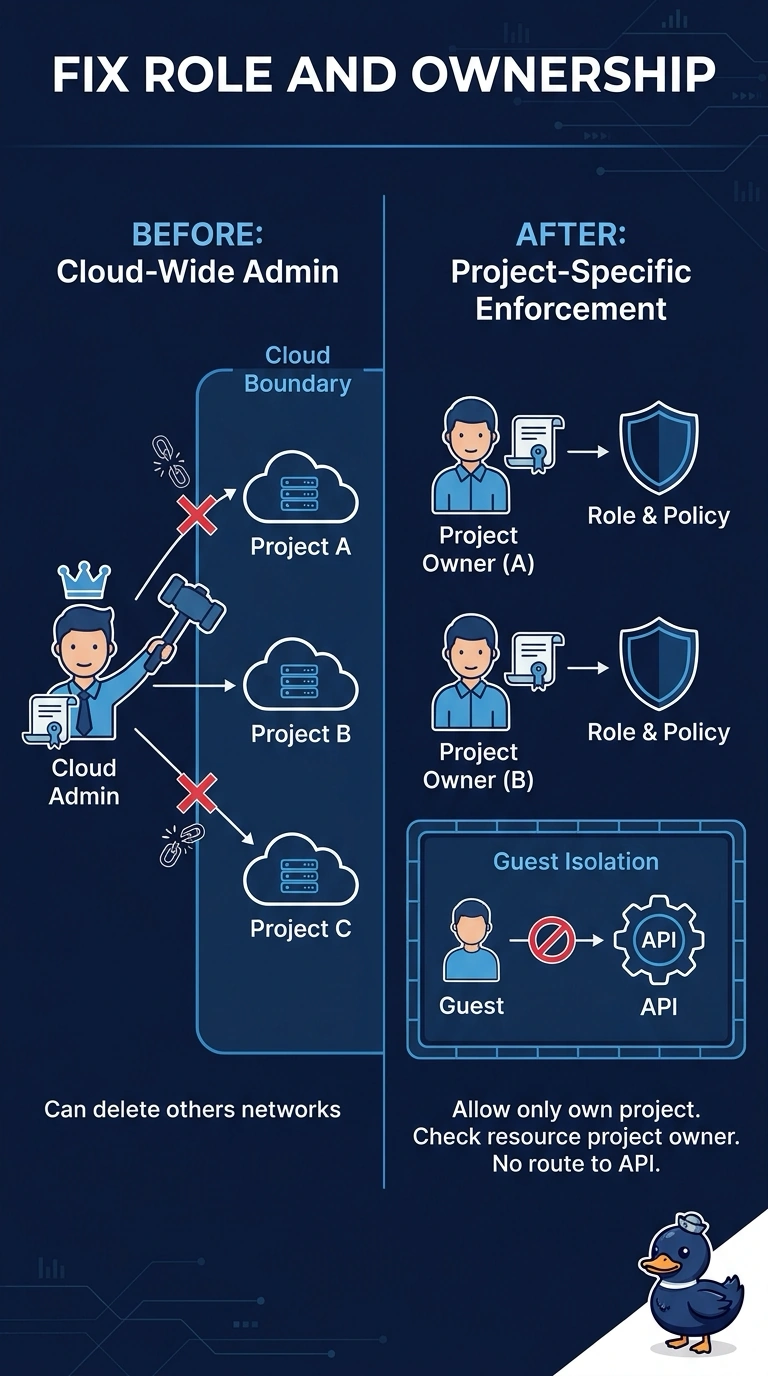
Short Explanation
You’re dealing with an authorization problem: a cloud-wide admin role lets the job delete another tenant’s network even though its certificate and token are valid. Narrow the job’s role and resource policy to its own project; guest routing is already closed, and the certificate check is not rejecting the request.
Full Explanation
The build job is authenticated: its certificate is valid and its token is accepted. The deletion succeeds because the token grants cloud-wide administration, so the job’s API role and resource policy must enforce project-owner access. A project-scoped token alone does not ensure that a request can affect only resources owned by that project. Guest routing is already closed; enabling tenant guests to reach the VIM API would expand their access rather than fix the job’s excessive authority. The certificate check is not rejecting the job: the certificate is valid, and the API accepts the request. Disk encryption protects data stored on the build guest; it does not authorize API calls or determine which network the token can delete. Exam caveat: mutual authentication establishes who is calling, but it does not replace a project-scoped role or resource-ownership check. Practical check: use the job’s token to attempt deletion of another project’s network and confirm the API refuses it because of authorization; also confirm that a guest still has no route to the API address. The same certificate can remain valid while the policy blocks the cross-project deletion.