
A stadium edge router forwards visitor traffic normally, but SSH and BGP to the router itself stall while a burst of packets is aimed at the router's own addresses. Which control protects the router without filtering that transit?
Select an answer to reveal the explanation.
Short Explanation
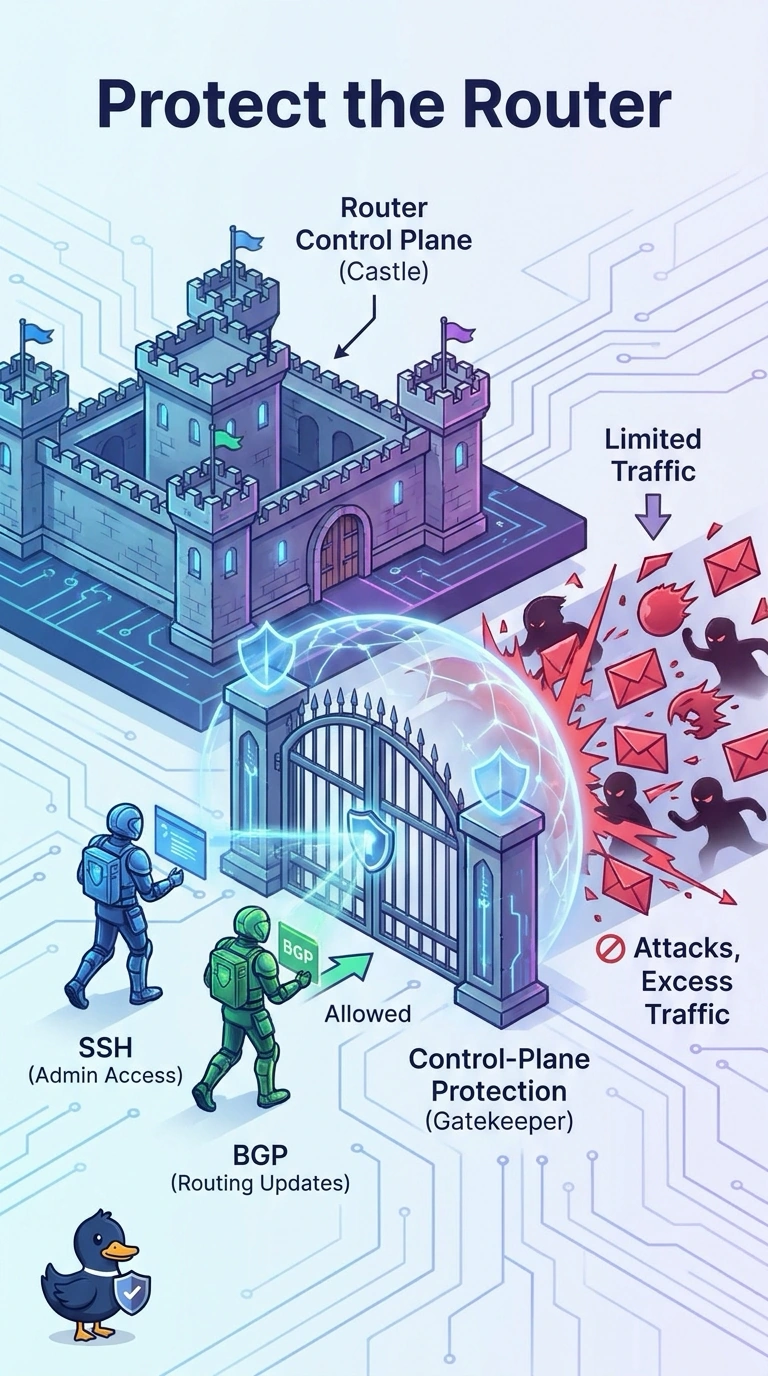
The loading dock can be jammed while trucks on the highway still roll. Visitor transit is fine, and the pain is packets aimed at the router itself. You limit what is allowed to reach the router's control plane, and you leave the highway alone.
Full Explanation
Control-plane protection, often called control-plane policing, rate-limits traffic that is destined to the router: SSH, BGP, and other packets the route processor must handle. Normally hardware-forwarded transit bypasses the route processor, while exception or punted transit can require CPU processing; classify and police CPU-bound traffic without indiscriminately filtering visitor transit. An access list written against the visitor prefixes would filter the transit that is still healthy, which is the opposite of the requirement. A destination black hole for the visitor prefix throws away the users' destination as well as any attack, and the scenario's target is the router's own addresses, not the visitor prefix. A malware scan of a ticket-file guest inspects stored files and does not police packets to the route processor. Exam caveat: control-plane protection does not scrub a volumetric flood that only transits the router toward a customer; use it when the destination is the router. Operational check: identify the input policy on the control plane and confirm SSH and BGP are permitted at a limited rate while a transit flow to a visitor prefix is absent from the punt counters.