
Traffic from a cloud fabric toward the physical network should keep several equal-cost next hops in service at the same time. The physical routers advertise the destination through BGP, and their paths meet the platform’s multipath eligibility rules. Which design provides those next hops?
Select an answer to reveal the explanation.
Short Explanation
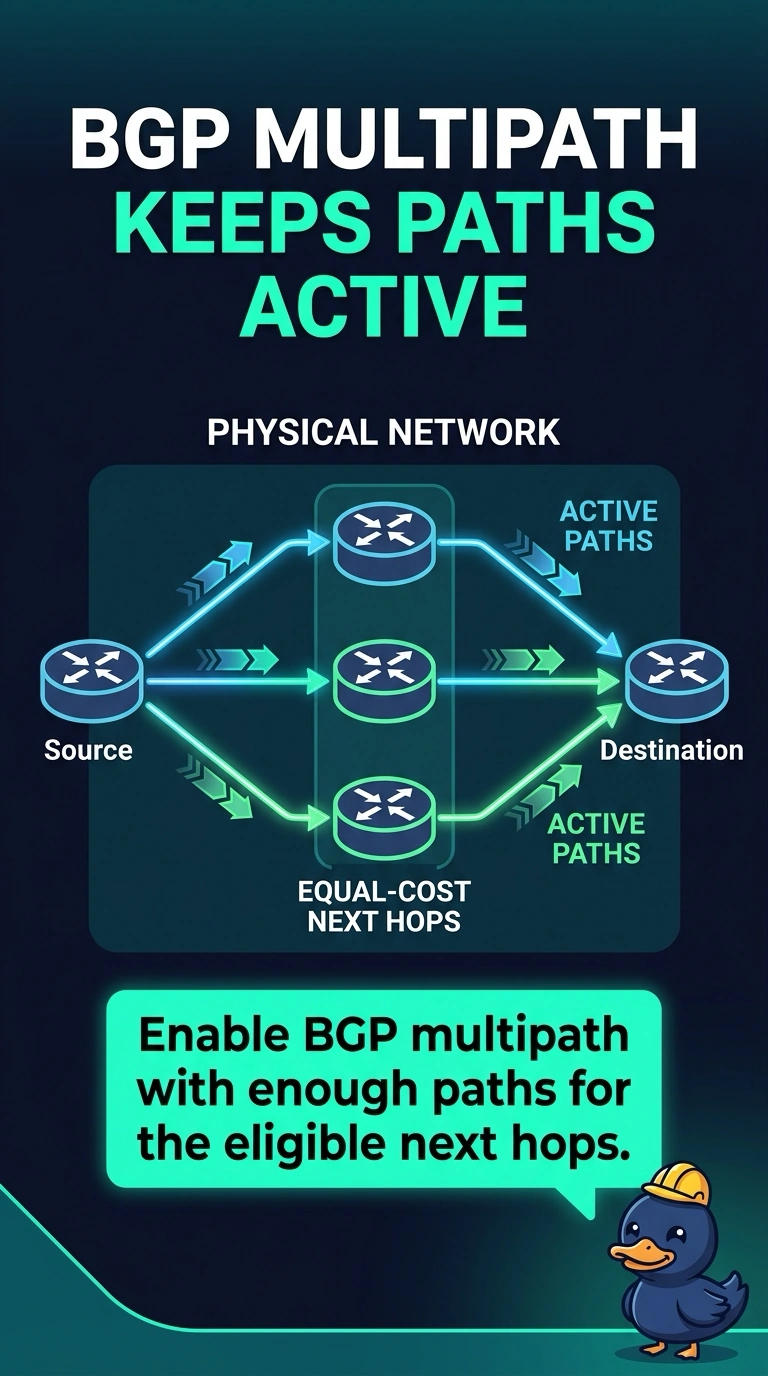
You need more than one active next hop, so you enable BGP multipath for these eligible BGP paths. With enough paths configured, you keep all the equal-cost next hops forwarding at the same time.
Full Explanation
When the physical routers advertise the same destination through BGP and the paths satisfy the platform's multipath eligibility rules, enabling BGP multipath with sufficient maximum paths lets the fabric install more than one equal-cost BGP next hop toward the physical network at the same time. That keeps several forwarding next hops active together for load sharing and resilience, rather than selecting only one best path. A single static default route toward one physical gateway cannot meet the requirement because it defines only one next hop and has no additional path to keep active. Static defaults with different preferences also fail the equal-cost requirement because unequal administrative distance or preference forces only the preferred route to be used while the other remains standby. A design that leaves a single fabric next hop with equal-cost multipath disabled likewise provides only one forwarding path, since multipath is explicitly not allowed to install additional parallel next hops. Only BGP multipath configured for the eligible BGP-learned paths preserves multiple active equal-cost next hops.