
Subscribers reach a virtual packet gateway through a load balancer. After one balancer node froze, traffic kept hashing to it and sessions stalled. DNS and the BGP next hops toward the site stayed healthy. Which change matches the failure?
Select an answer to reveal the explanation.
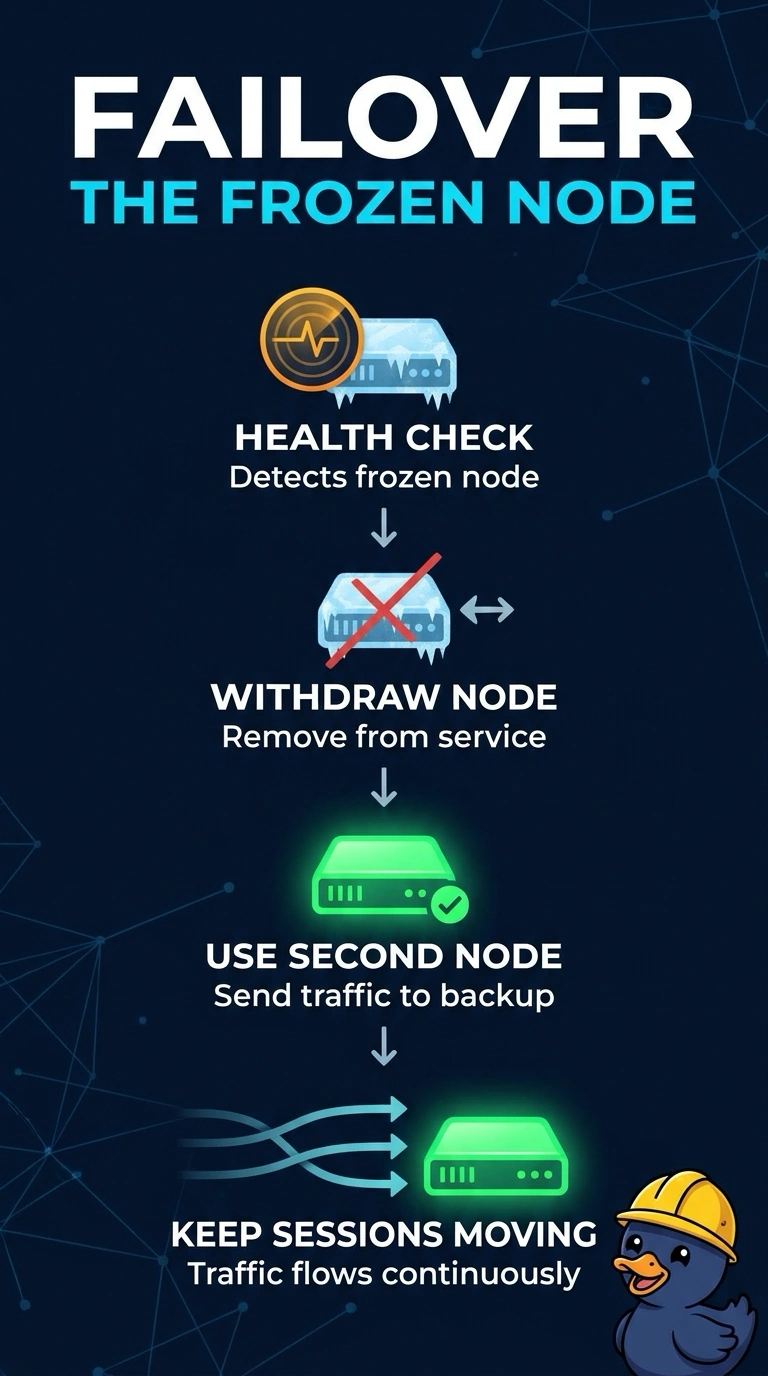
Short Explanation
When one cashier freezes, opening another phone book does not clear the line. You need a health check that withdraws the frozen load-balancer node and uses a second node. A second DNS resolver, another BGP next hop, or a hosts-file entry does not detect that frozen node.
Full Explanation
DNS, routing, and load balancers fail in different places. Here, the name still resolves and the site’s BGP next hops remain healthy, while one balancer node accepts hashed traffic and does not answer. The matching design is a health check that withdraws the frozen node and uses a second node, so traffic can avoid the failed balancer. An anycast address added on a second DNS resolver for the same service name is the wrong fit because DNS is healthy; another resolver does not stop hashing toward the frozen node. A second BGP next hop from the core toward the same gateway site is also the wrong fit: the existing next hops are healthy, and another route does not detect or remove the failed balancer. A hosts-file entry on the subscriber CPE is wrong for the same reason that changing name lookup cannot repair this failure: it points the gateway name differently but does not monitor the balancer node. Exam caveat: A health check helps only if failure removes the node from the hash or next-hop set; a probe that logs failure but leaves traffic directed to the node does not resolve the stall. Practical check: Freeze one balancer node in a lab, verify that new sessions land on the remaining node, and confirm DNS and BGP next hops stay unchanged during the test.