
In a carrier-neutral building, three access networks are already on the local internet exchange. A regional provider wants to exchange routes with those three and does not want transit or a cloud port. Which arrangement matches?
Select an answer to reveal the explanation.
Short Explanation
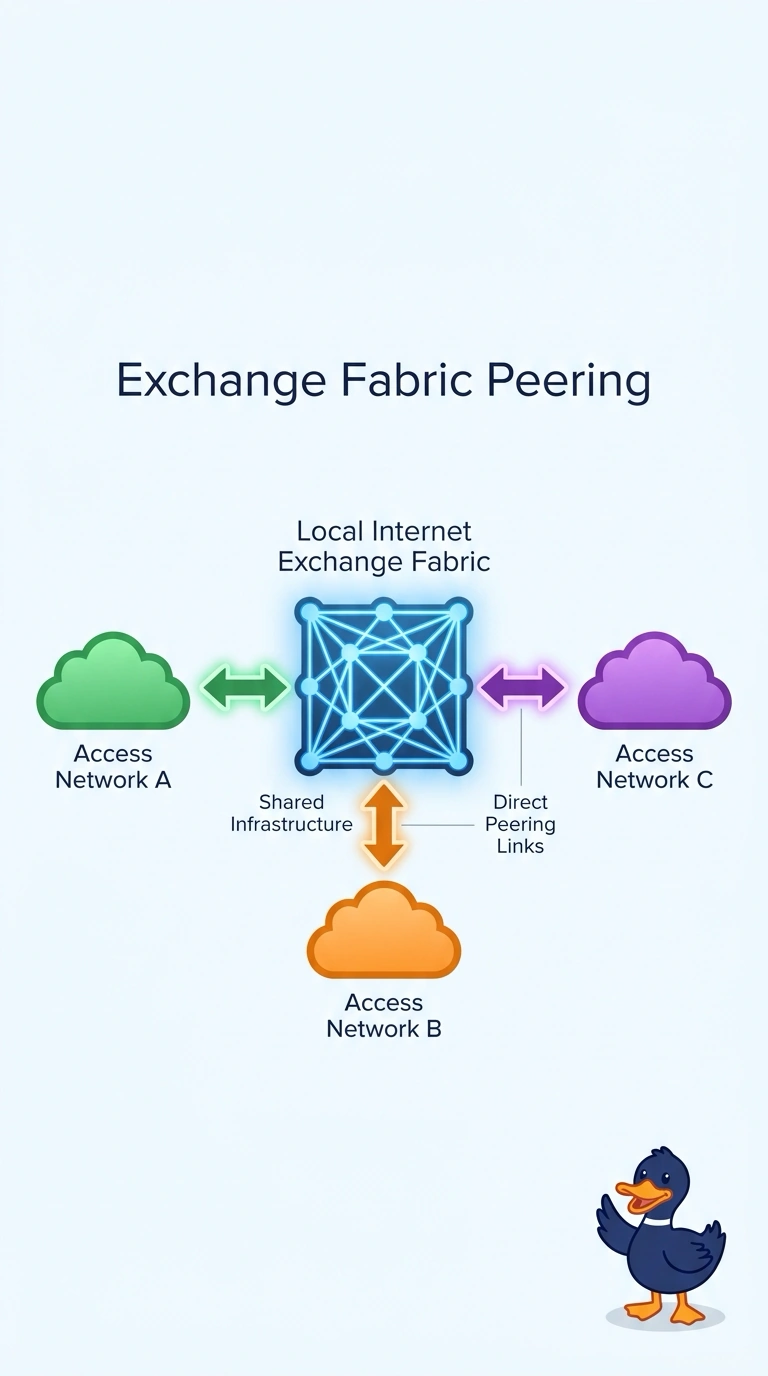
If the networks you want to meet are already in the room, you can talk to them there. The three access networks are on the local exchange, and you don’t want transit or a cloud port. Peering with those three on the exchange fabric is the match.
Full Explanation
A carrier-neutral building can host an internet exchange where networks meet on a shared peering fabric. By peering with the three access networks already present, the regional provider can establish BGP sessions and exchange routes directly with them, without buying transit or ordering a cloud port. A cross-connect to a cloud on-ramp would connect the provider to a cloud service, which the provider does not want. Treating the neutral building as the provider’s home cloud region confuses a location hosting network infrastructure with a cloud region; being in the building does not make it one. Buying transit from an upstream that is not one of the three would provide reachability through a different network, rather than directly exchanging routes with the three access networks on the exchange. Peering reaches the prefixes each peer advertises under the agreed policy, potentially including downstream customers; exchange membership alone does not provide universal internet reachability. Practical check: confirm that BGP sessions are established with all three access networks over the exchange fabric and that accepted prefixes match each peer’s agreed routing policy, with no default route learned from an upstream transit provider.