
A clinic can reach its cloud virtual router only across the public internet, and patient records on that path must be encrypted. The provider's segment-routed core serves other sites and has no port into this cloud. Which design meets the requirement?
Select an answer to reveal the explanation.
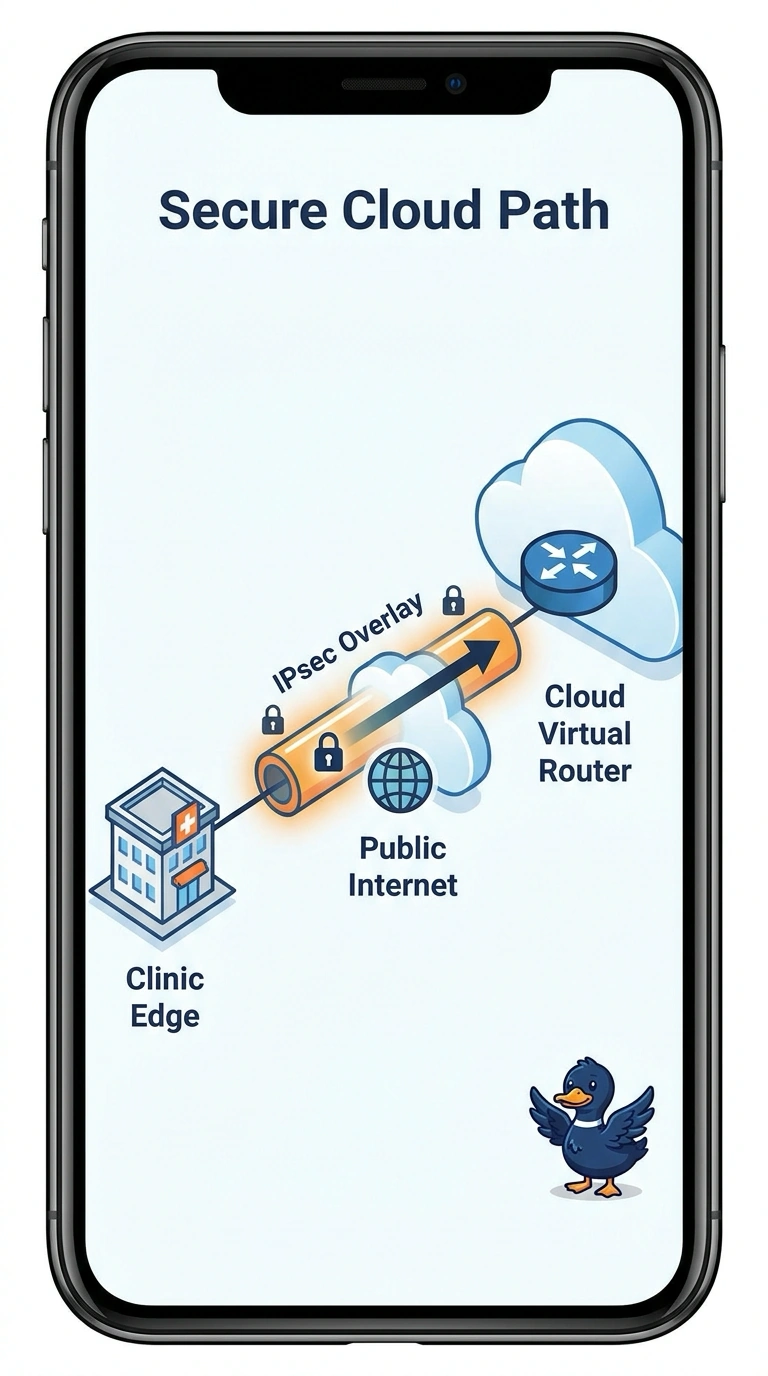
Short Explanation
If the only road into town is the public highway, you lock the cargo rather than wishing for a private gate that is not there. The clinic's only path is the internet, and the records have to be encrypted. An IPsec overlay to the cloud virtual router is the design that does that.
Full Explanation
IPsec builds an encrypted overlay across a path the clinic does not trust. Here that path is the public internet, and it is the only way to reach this cloud virtual router, so the overlay terminates on that router and encrypts the records in transit. Segment routing steers a provider core; this core has no port into the cloud, so steering it does not create reachability or encryption. A private interconnect would be the dedicated attachment, and the clinic does not have one into this cloud, so it does not meet a requirement that has to work on the path they actually have. An unencrypted internet session reaches the router and leaves the records exposed, which fails the encryption requirement. Exam caveat: IPsec encrypts; it does not by itself give a bandwidth commitment or a private last mile. Operational check: confirm the tunnel is up to the cloud virtual router and that a capture on the internet side shows encrypted packets rather than readable patient records. Encryption is doing the job the clinic can actually buy; steering a core that never touches this cloud does not put records on a protected path.