
A grocery chain already enters the cloud on a private interconnect, and its backup crosses the public internet and must be encrypted. The provider core does not need a new steering policy. Which design encrypts the backup?
Select an answer to reveal the explanation.
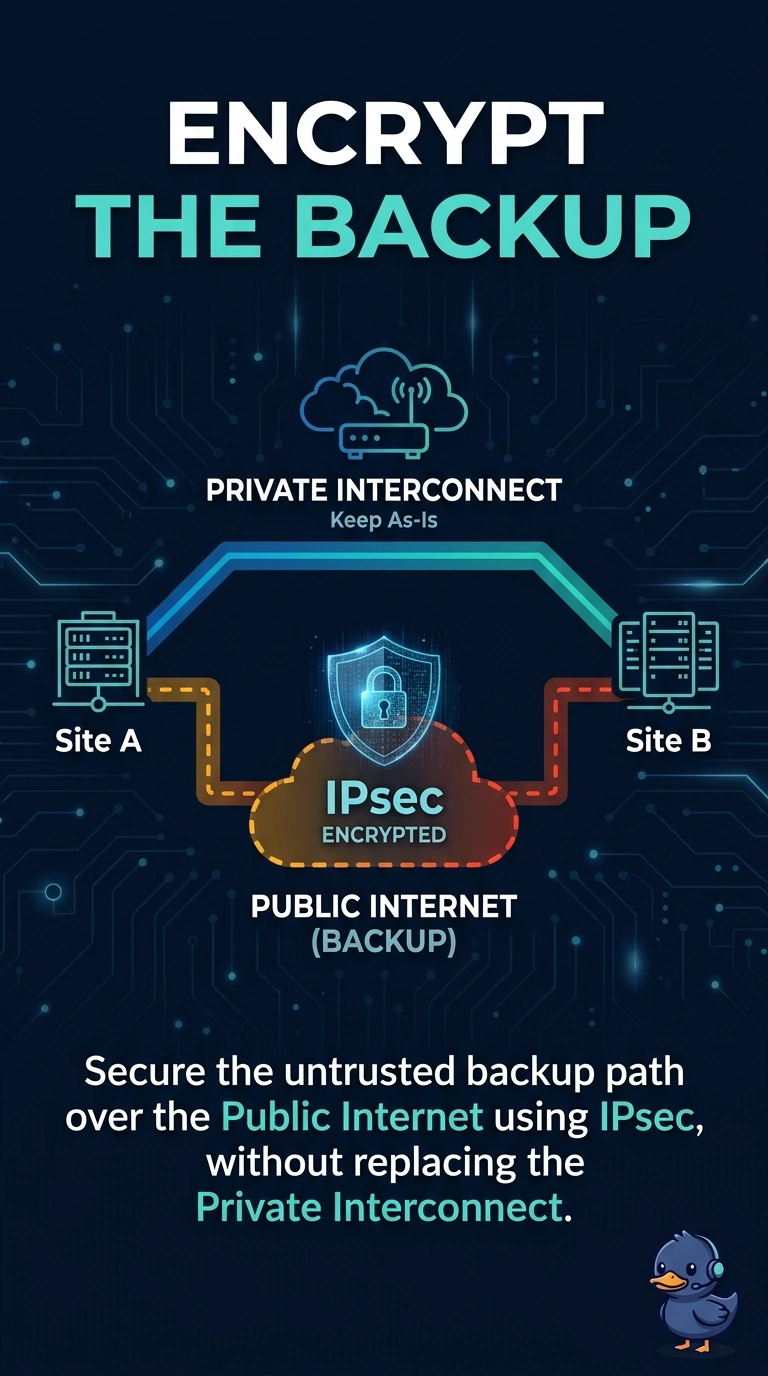
Short Explanation
Think of the public-internet backup as a path that needs its own protection, separate from the private interconnect you already use. You can add IPsec to encrypt that backup without changing the primary path. Another dedicated private port, segment routing, and an MPLS label stack do not encrypt the internet backup.
Full Explanation
A private interconnect provides a dedicated path into the cloud, but the port itself does not encrypt traffic. Since your primary path is already a private interconnect and the backup crosses the public internet, IPsec on the internet backup is the design that encrypts the untrusted path without replacing the existing connection. A second private interconnect would provide another dedicated cloud port, not encryption for the internet backup described here. Segment routing on the provider core steers traffic; it does not encrypt packets crossing the public internet, and the provider core does not need a new steering policy. An MPLS label stack is used for transport, not encryption, so treating its labels as protection would leave the internet path unencrypted. Exam caveat: Do not assume a private interconnect is encrypted just because it is dedicated, or that MPLS labels provide confidentiality. Practical check: Verify that the backup tunnel successfully negotiates IPsec, then capture traffic on the internet side and confirm the grocery payloads are not readable; leave the primary private interconnect in place.