
A cannery already reaches the cloud on a trusted private interconnect. The new need is to steer one batch transfer onto a specific path in the MPLS provider core. What meets that need?
Select an answer to reveal the explanation.
Short Explanation
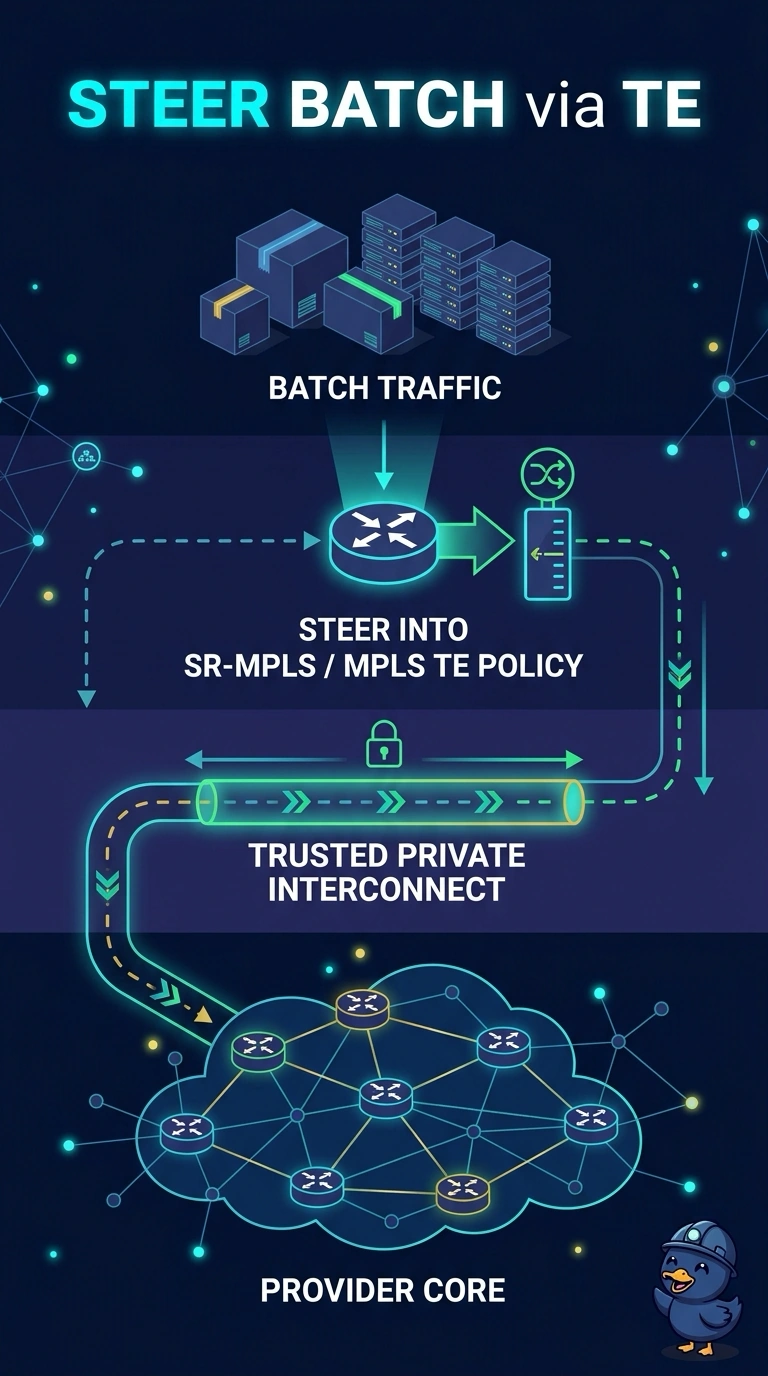
You already have a trusted private road, so you don’t need a new lock when the task is choosing a lane. Use MPLS traffic engineering to steer your batch onto the specific provider-core path. IPsec adds unrequested encryption, GRE encapsulates without steering the core, and a public internet handoff abandons the private path.
Full Explanation
An MPLS traffic-engineering policy, such as an SR-MPLS policy, meets the need by steering the batch traffic onto a specific path through the provider core. You already reach the cloud over a trusted private interconnect, so the requirement is not to add encryption or replace that connection; it is to direct one batch onto an engineered path. MPLS forwarding alone does not select a particular engineered path for the batch, so the traffic must be steered into the policy. IPsec on the trusted interconnect is a poor fit because it adds encryption you did not request and does not select a core path. A GRE tunnel from the cannery encapsulates the batch, but encapsulation does not steer it through the provider core. A public internet handoff also fails the requirement because it drops the private path rather than steering traffic within the MPLS core. Exam caveat: traffic engineering steers the transport; it does not encrypt the batch. Practical check: confirm that the batch traffic matches the steering policy, then verify that its forwarding path follows the intended engineered route.