
During a central sterile processing audit, an infection preventionist observes a technician mixing an enzymatic detergent into hot tap water at 65 degrees Celsius by eye without a measuring dispenser. Why must the technician follow the manufacturer's instructions for use regarding dilution and water temperature?
Select an answer to reveal the explanation.
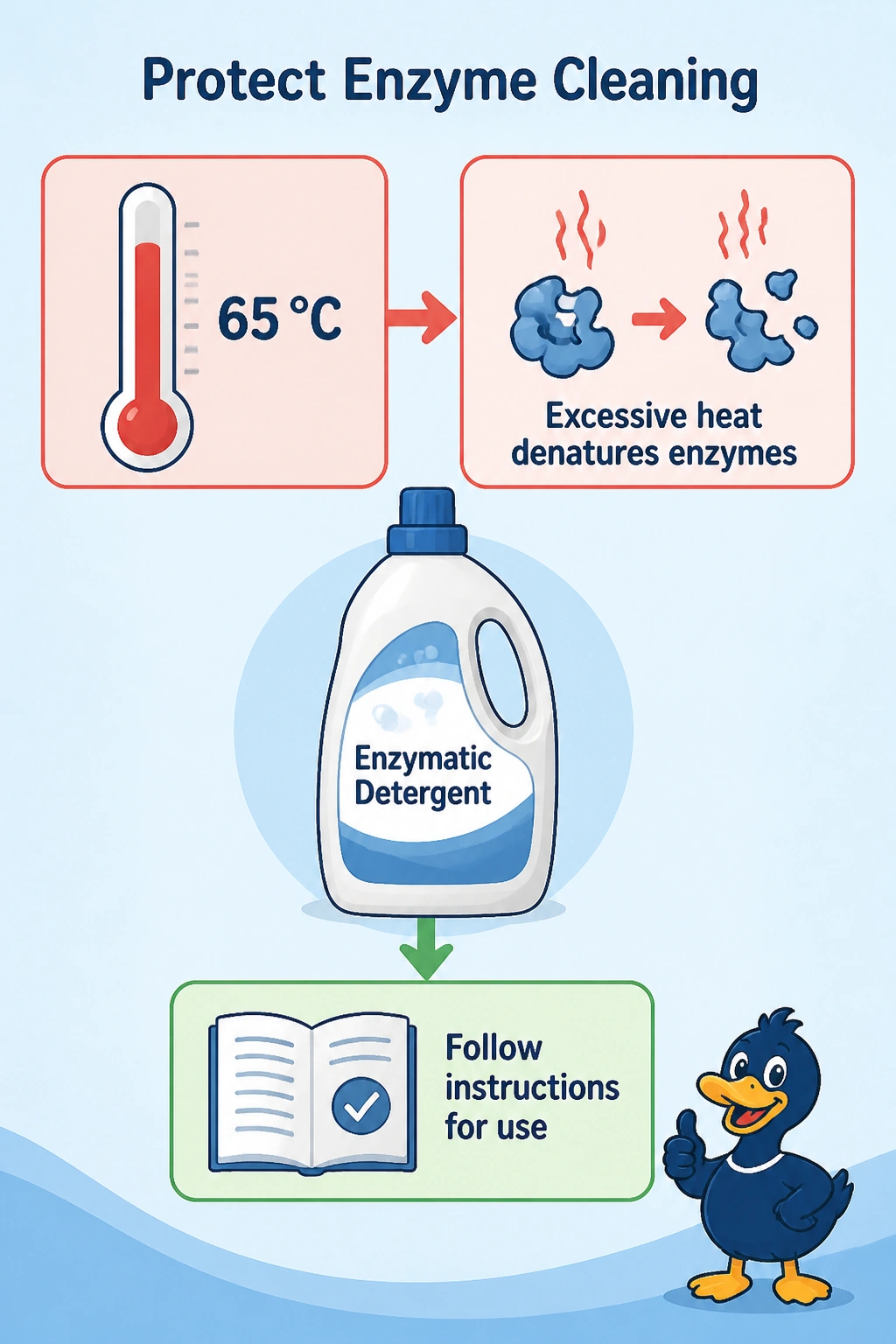
Short Explanation
Enzymes are a lot like delicate kitchen yeast: crank the heat too high or eyeball the recipe, and they stop working before you finish the job. The trap is thinking hotter water and extra soap clean better or let you shorten brushing and soaking. Always measure your detergent and match the manufacturer's temperature range so proteins and fats actually break down.
Full Explanation
Enzymatic detergents rely on specific biological catalysts such as proteases, lipases, and amylases to break down blood, tissue, and mucus on soiled surgical instruments. Because Excessive heat denatures cleaning enzymes and improper dilution reduces soil removal, failing to follow the validated instructions for use leaves organic bioburden behind that can shield microorganisms during disinfection or sterilization. Believing that Hot water and concentrated detergent can neutralize the subsequent steam sterilization cycle misstates the mechanism, as steam lethality depends on saturated steam contact, though residual soil itself blocks steam penetration. Claiming that Use extra detergent to compensate for shorter brushing and soaking times is incorrect because increased concentration does not validate shortened cleaning, and chemical soaking never substitutes for the time and mechanical friction needed to dislodge debris from serrations and box locks. Stating that Overheated enzymatic solutions corrode stainless-steel instruments within a single soak exaggerates the effect, whereas the primary failure is rapid enzyme inactivation and incomplete soil removal. Overly concentrated detergent also increases rinsing difficulty and leaves film. Use an accurate measuring device or dosing system and verify temperature/dosing equipment at the IFU-specified interval.
Prefer to study offline? Printable PDF study book + test engine ($7.50, unofficial). These questions stay free here.