
In an operating room, a surgical technologist prepares to keep blood-soiled stainless-steel instruments moist during a brief delay before transport to decontamination. Which solution must be avoided because it causes pitting and corrosion of instrument surfaces?
Select an answer to reveal the explanation.
Short Explanation
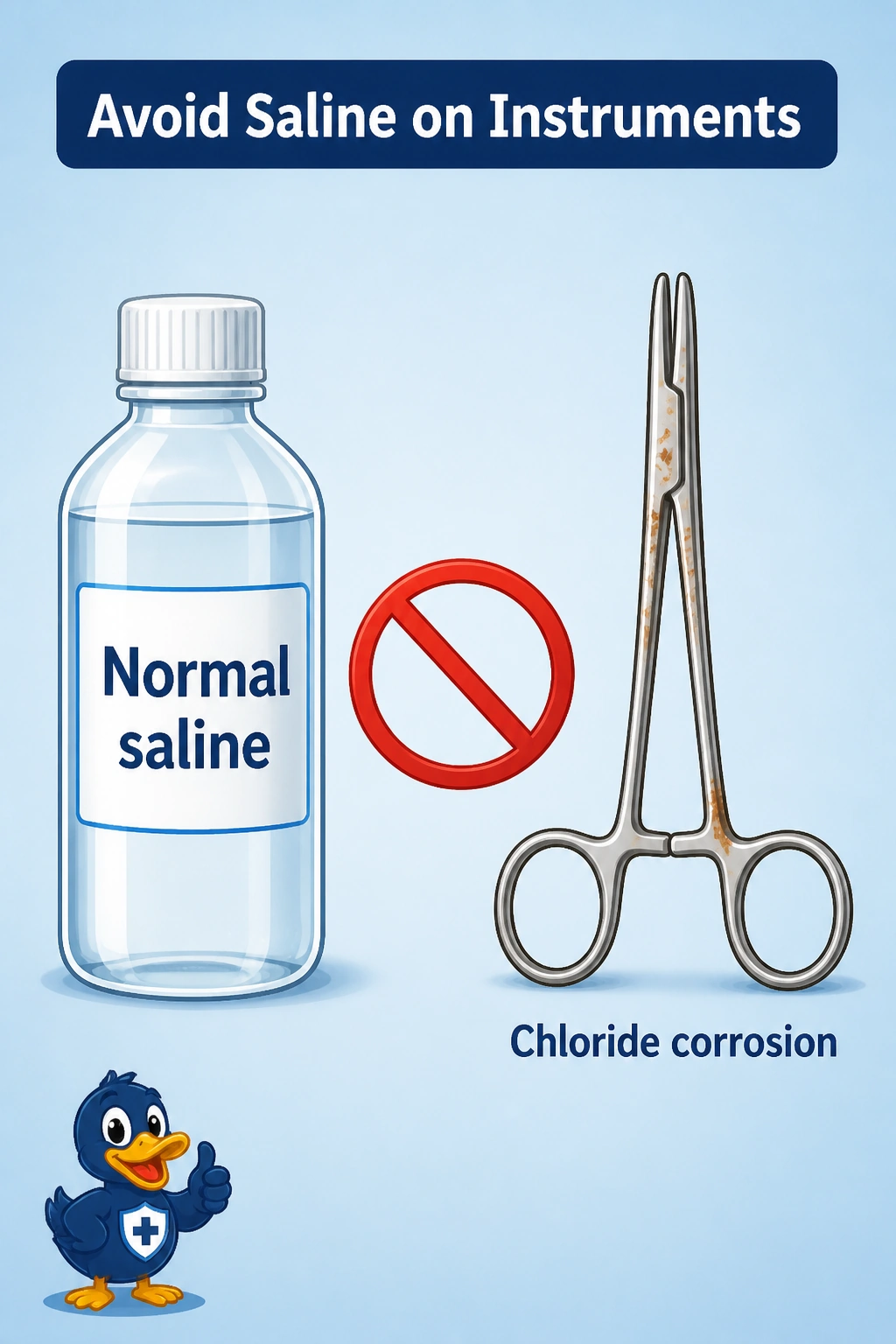
You can keep blood from drying on instrument hinges during a brief delay, but normal saline can quietly damage stainless steel. Its chloride content causes pitting and corrosion, so choose another listed moisture-preserving option instead.
Full Explanation
Normal saline solution must be avoided because its chloride ions can damage stainless steel’s passive chromium oxide protective layer, causing pitting, corrosion, and microscopic surface defects that may harbor biofilm and compromise sterilization. A neutral-pH enzymatic detergent spray is a suitable listed option because it keeps organic soil moist and begins breaking down proteins without the chloride-related corrosion associated with saline. Sterile water applied with a moistened towel can maintain moisture during a brief transport delay without exposing instrument surfaces to corrosive chloride ions. Manufacturer-approved instrument humectant gel is formulated to coat soiled instruments and help prevent drying when transport to decontamination is delayed. An exam caveat is that even a suitable moisture-preserving option does not replace prompt transport to decontamination or the manufacturer’s instructions for instrument care. As a practical check, inspect trays for brown staining or pitting during assembly and audit operating-room back-table practices to confirm that sterile water, rather than saline, is used to moisten instruments.
Prefer to study offline? Printable PDF study book + test engine ($7.50, unofficial). These questions stay free here.