
During operating room rounds, an infection preventionist observes an anesthesia technician wiping a used reusable metal laryngoscope blade with a 70% isopropyl alcohol pad and placing it unwrapped back into the anesthesia cart drawer. Which reprocessing standard must the infection preventionist enforce?
Select an answer to reveal the explanation.
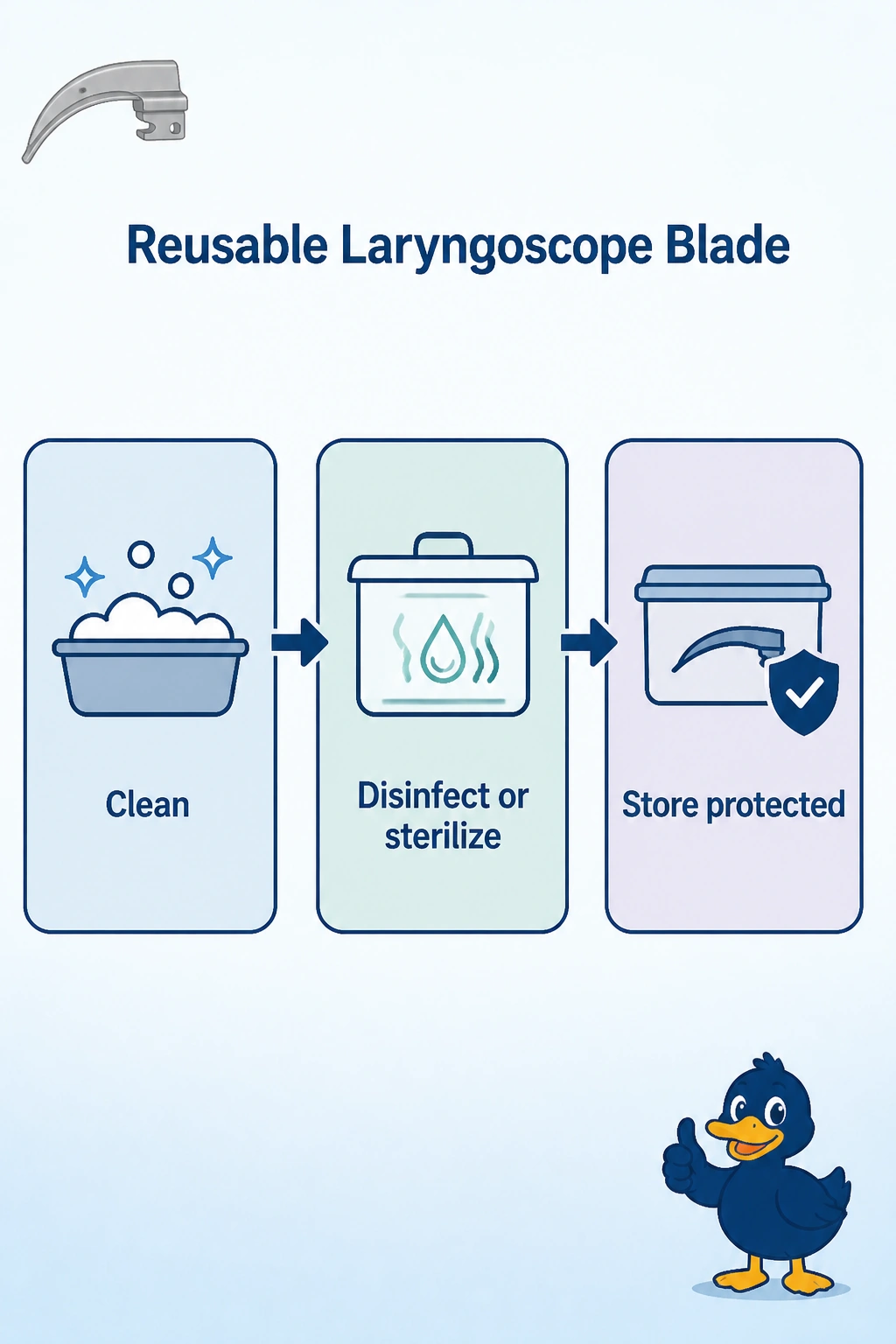
Short Explanation
A laryngoscope blade touches intact mucous membranes during intubation, putting it squarely in the semi-critical Spaulding category. You must clean the blade, perform high-level disinfection or sterilization, and store it protected from recontamination according to the IFU and facility policy before the next patient. The trap is treating it like a stethoscope with a surface wipe or leaving it unwrapped in a drawer.
Full Explanation
Under the Spaulding classification system and CDC disinfection guidelines, reusable laryngoscope blades are semi-critical devices because they contact mucous membranes, so you must clean the blade, perform high-level disinfection or sterilization, and store it protected from recontamination according to the IFU and facility policy. Proper reprocessing removes organic soil first, achieves high-level disinfection or sterilization, and protects the blade from environmental recontamination according to the IFU and facility policy until use; high-level disinfection does not create a sterile packaged product, and protected storage need not universally be an individually sealed sterile package. Choosing to spray the blade with a quaternary ammonium disinfectant and air dry it on the anesthesia cart provides only low-level disinfection and leaves the blade exposed to drawer contamination. Choosing to soak the blade in enzymatic detergent for ten minutes and rinse it with potable tap water performs cleaning only without any microbiocidal disinfection or sterilization step. Choosing to wipe the blade with a hospital-grade germicidal wipe and place it in a clean paper envelope also falls short because surface wipes are registered for low- or intermediate-level disinfection of non-critical items rather than semi-critical airway instruments. Caveat: the laryngoscope handle can also become contaminated during use and should be cleaned and disinfected according to manufacturer instructions. Operational check: inspect anesthesia airway carts during environment-of-care rounds to verify all reusable blades are clean and protected from recontamination.
Prefer to study offline? Printable PDF study book + test engine ($7.50, unofficial). These questions stay free here.