
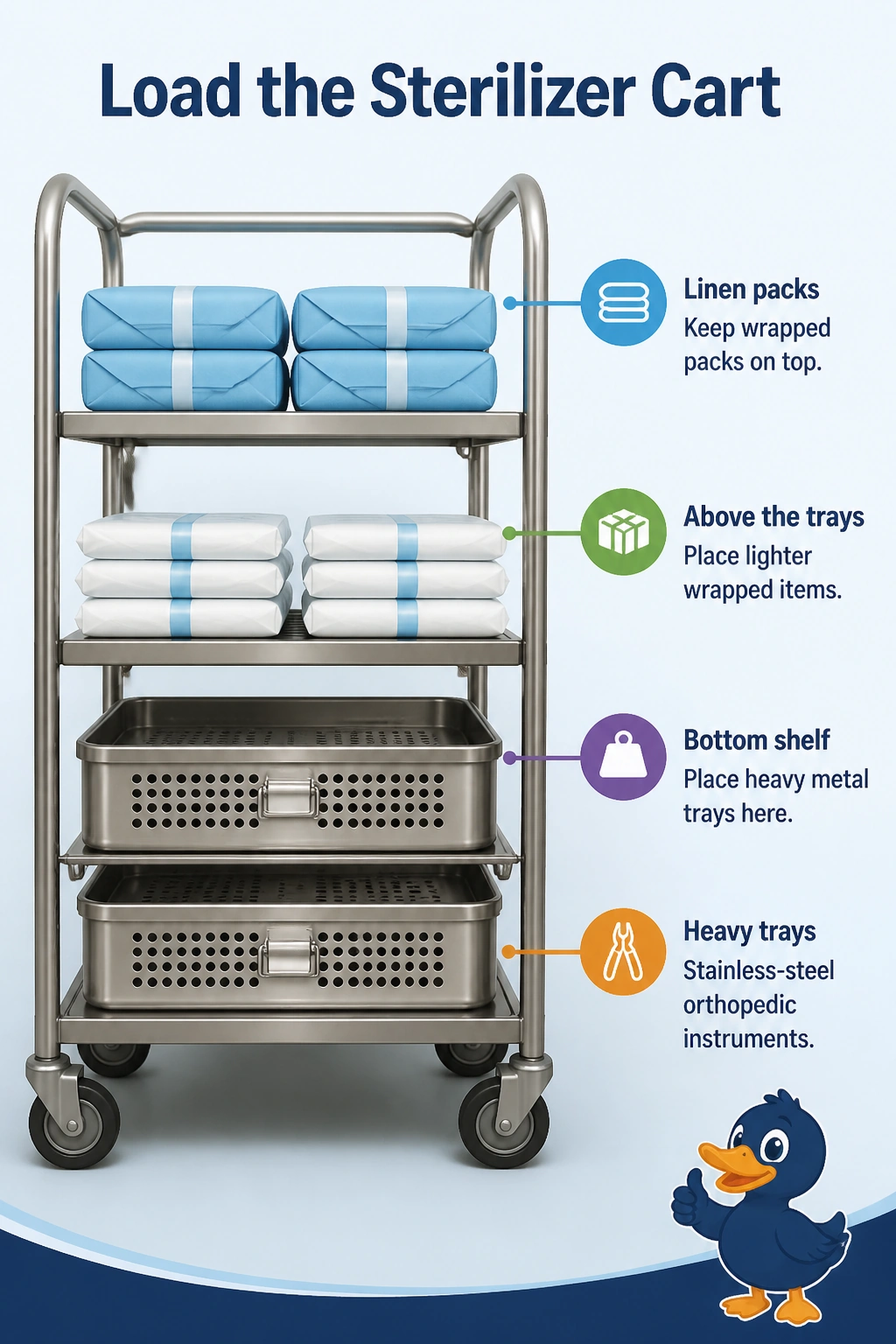
A central sterile processing technician prepares to load a steam sterilizer cart with heavy stainless-steel orthopedic instrument trays and lighter wrapped linen packs for the same cycle. How should the technician arrange the items on the sterilizer cart?
Select an answer to reveal the explanation.
Short Explanation
Picture steam hitting cold metal like a cold soda can on a humid day: condensation is going to drip downward. The trap is putting heavy metal trays up high, where dripping moisture soaks your lighter packs below and forces a full re-sterilization.
Full Explanation
During steam sterilization, dense metal mass absorbs substantial heat and generates more condensate than porous textiles as steam contacts the cool instrument surface. Technicians must Place heavy metal trays on the bottom shelf below lighter wrapped items so any gravity-driven condensate drains harmlessly to the chamber floor rather than wetting adjacent packages. Choosing to Place heavy instrument trays on the top shelf above lighter wrapped packs fails because moisture dripping from the upper metal trays saturates the textile or paper-wrapped packs underneath, creating wet packs and compromising sterility. Attempting to Pack instrument trays tightly edge-to-edge to maximize chamber capacity fails because crowding blocks air removal and prevents uniform steam circulation around every surface. Opting to Stack wrapped linen packs directly on top of metal trays on the same shelf fails because crushing and direct contact impede steam penetration and trap moisture between layers. As a caveat, even with proper shelf placement, exceeding manufacturer weight limits per tray can still cause incomplete drying and wet-pack events. Verify the manufacturer-specified chamber clearance, tray weight and mixed-load compatibility; place metal sets below porous packs when the validated loading instructions permit this arrangement.
Prefer to study offline? Printable PDF study book + test engine ($7.50, unofficial). These questions stay free here.