
An outpatient gastrointestinal clinic completes high-level disinfection of a flexible colonoscope in an automated endoscope reprocessor, but staff skip the final channel drying step and place the scope coiled inside a closed plastic bin overnight. Which risk does this practice create?
Select an answer to reveal the explanation.
Short Explanation
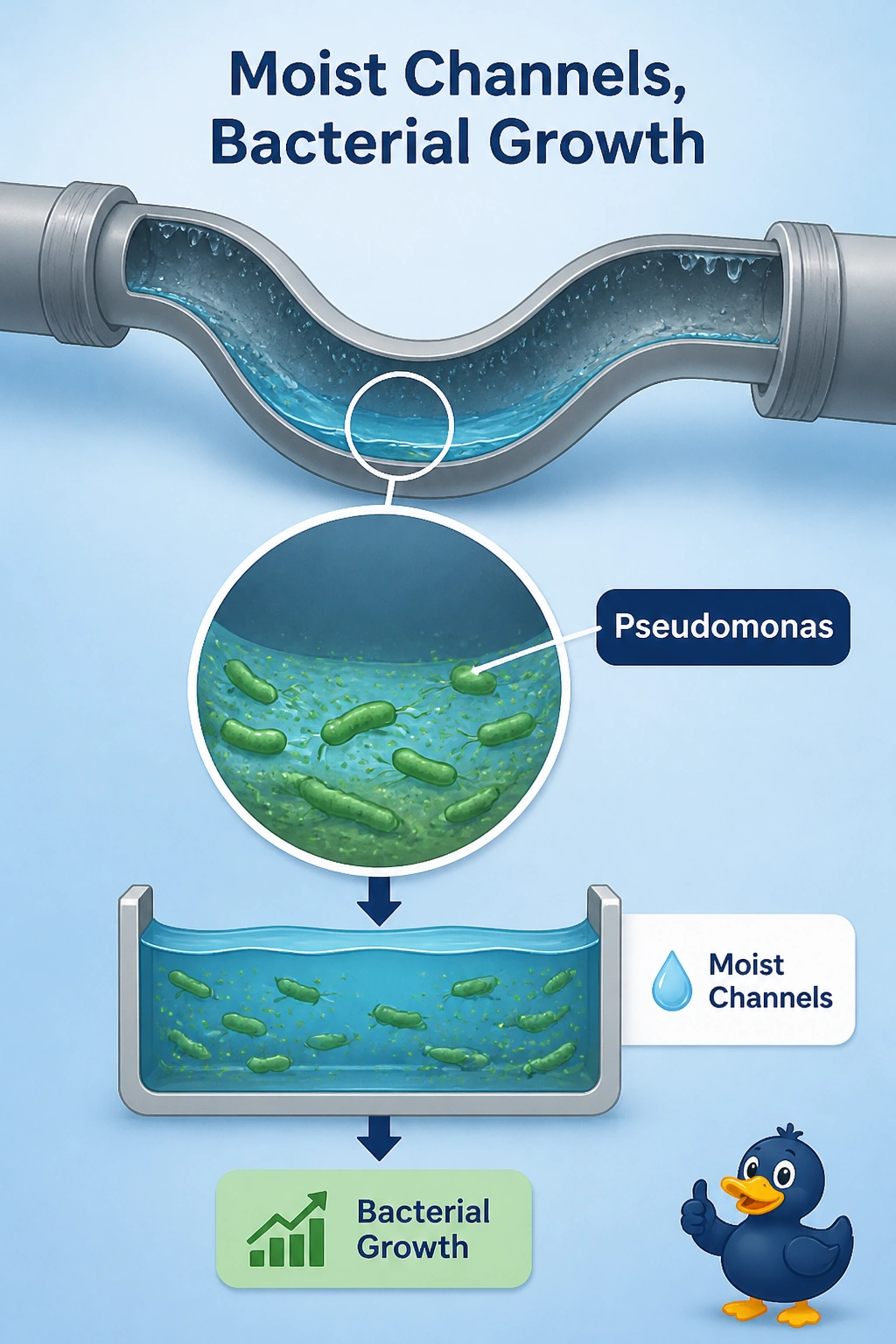
High-level disinfection kills vegetative bacteria, but leaving an endoscope wet in a closed bin is like setting out a warm petri dish overnight. The trap is assuming residual chemistry or an alcohol flush keeps wet channels safe, when you still need complete drying. Dry and store according to the validated scope/cabinet IFU; suitable systems may permit vertical or horizontal storage, so waterborne pathogens like Pseudomonas cannot multiply.
Full Explanation
Proliferation of waterborne bacteria such as Pseudomonas inside moist channels occurs when residual rinse water remains trapped in narrow lumens during overnight storage in a closed bin. High-level disinfection eliminates vegetative microorganisms, but it does not leave scopes sterile, and any remaining moisture in a warm unventilated environment allows surviving waterborne organisms to multiply and form biofilm before the next procedure. Accelerated degradation of the internal fiber-optic light bundle from air exposure is incorrect because validated air drying preserves rather than damages components. Residual HLD activity after a proper rinse prevents microbial growth during wet storage is incorrect because proper rinsing removes disinfectant and no residual activity can be relied upon to suppress growth in retained water; only complete validated drying removes the condition. A terminal alcohol flush makes overnight storage safe even if channels remain wet is incorrect because an alcohol flush aids drying but does not by itself guarantee dry channels, and neither replaces complete validated drying. Dry and store according to the validated scope/cabinet IFU; suitable systems may permit vertical or horizontal storage, with drying logs completed after every cycle.
Prefer to study offline? Printable PDF study book + test engine ($7.50, unofficial). These questions stay free here.