
A central sterile processing department runs a steam sterilization cycle containing orthopedic bone plates and screws along with a biological indicator test pack. At the end of the cycle, the physical printouts and external chemical indicators pass, and the operating room requests the implants immediately. How should the sterile processing technician respond?
Select an answer to reveal the explanation.
Short Explanation
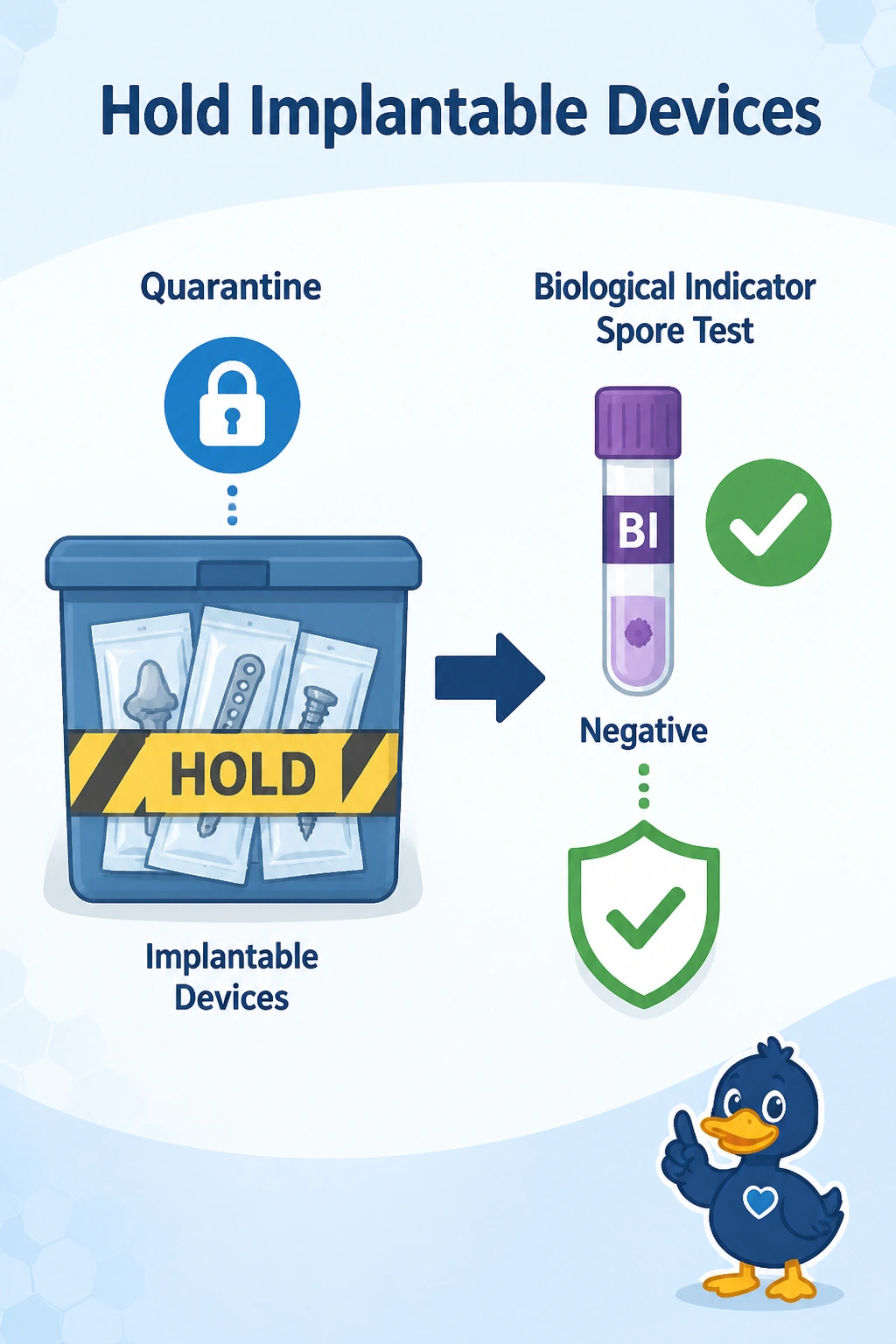
When the operating room is waiting on an implant, it’s tempting to trust a passing printout and release the tray. You should quarantine the implants until the biological indicator confirms spore kill.
Full Explanation
Quarantine the implantable devices until the biological indicator spore test is negative, as required by CDC and AAMI sterilization standards because implants carry an exceptionally high risk of deep surgical site infection if sterility fails. Biological indicators containing Geobacillus stearothermophilus spores provide a direct measure of microbial lethality within the load. Releasing the implants immediately because physical cycle parameters and chemical indicators passed is unsafe: mechanical gauges and chemical strips verify time, temperature, and steam contact, but not actual spore destruction. Submerging the implants in a high-level disinfectant solution for ten minutes is inappropriate because critical items entering sterile tissue require sterilization, not high-level disinfection. Re-running the wrapped implants through an immediate-use steam cycle to bypass biological testing violates standards that prohibit routine immediate-use steam sterilization for implants except in rare, documented emergencies with biological monitoring. As a reprocessing caveat, every load containing an implant must include a biological indicator. Before release, log the biological indicator lot, cycle number, and negative readout in the implant traceability record.
Prefer to study offline? Printable PDF study book + test engine ($7.50, unofficial). These questions stay free here.