
During a sterile processing audit, an infection preventionist observes a technician placing visibly soiled stainless-steel surgical forceps directly into a liquid chemical sterilant bath without manual washing. Why must this practice be stopped immediately?
Select an answer to reveal the explanation.
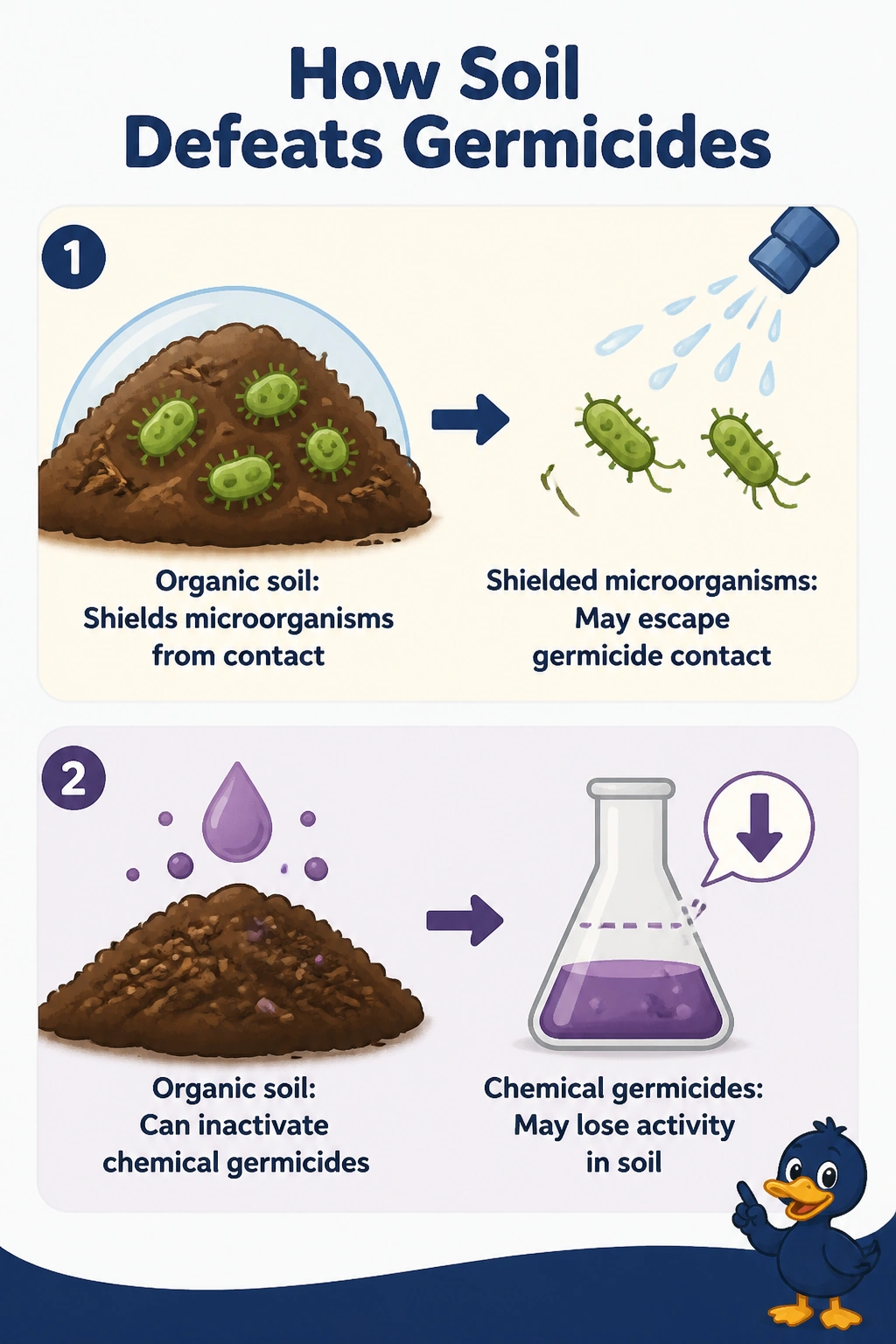
Short Explanation
Trying to sterilize a dirty instrument is like painting over mud—the coating never reaches the surface underneath. You must remove blood and tissue first because organic soil shields microbes and neutralizes liquid germicides. The trap is assuming enzymatic detergents kill spores on their own or that manual washing replaces terminal sterilization.
Full Explanation
Under CDC Guideline for Disinfection and Sterilization in Healthcare Facilities, meticulous cleaning must always precede disinfection or sterilization because Organic soil shields microorganisms from contact and can inactivate chemical germicides. Dried blood, mucus, and tissue create a physical barrier around pathogens inside hinges and serrations while chemically binding and neutralizing active ingredients in liquid germicides. Claiming that Residual blood and protein accelerate corrosion only when instruments are packaged in rigid containers is false because organic debris causes pitting and compromises reprocessing regardless of packaging type. Asserting that Manual washing eliminates the need for subsequent high-level disinfection or terminal sterilization confuses bioburden reduction with microbial kill required for semi-critical or critical devices. Believing that Enzymatic detergents alone achieve complete spore destruction without any chemical immersion step misrepresents enzymatic cleaners, which break down protein and lipid soils but are not sterilants or high-level disinfectants. As a caveat, ultrasonic or automated washers must also be validated and compatible with the instrument's manufacturer instructions for use. Operational check: observe decontamination sinks daily to confirm gross soil removal, enzymatic soaking, and brushing before any disinfection or sterilization cycle.
Prefer to study offline? Printable PDF study book + test engine ($7.50, unofficial). These questions stay free here.