
Before running the first instrument load of the morning in a dynamic-air-removal prevacuum steam sterilizer, a central sterile technician prepares a Bowie-Dick test pack. What is the primary purpose of running this test in an empty chamber each day?
Select an answer to reveal the explanation.
Short Explanation
A prevacuum sterilizer works like a vacuum-sealed coffee bag: if air stays trapped inside, steam cannot reach the metal. Running a Bowie-Dick test before your first load catches hidden air pockets before they ruin a whole morning of surgical trays. The trap is confusing this air-removal check with a spore test that proves microbial kill.
Full Explanation
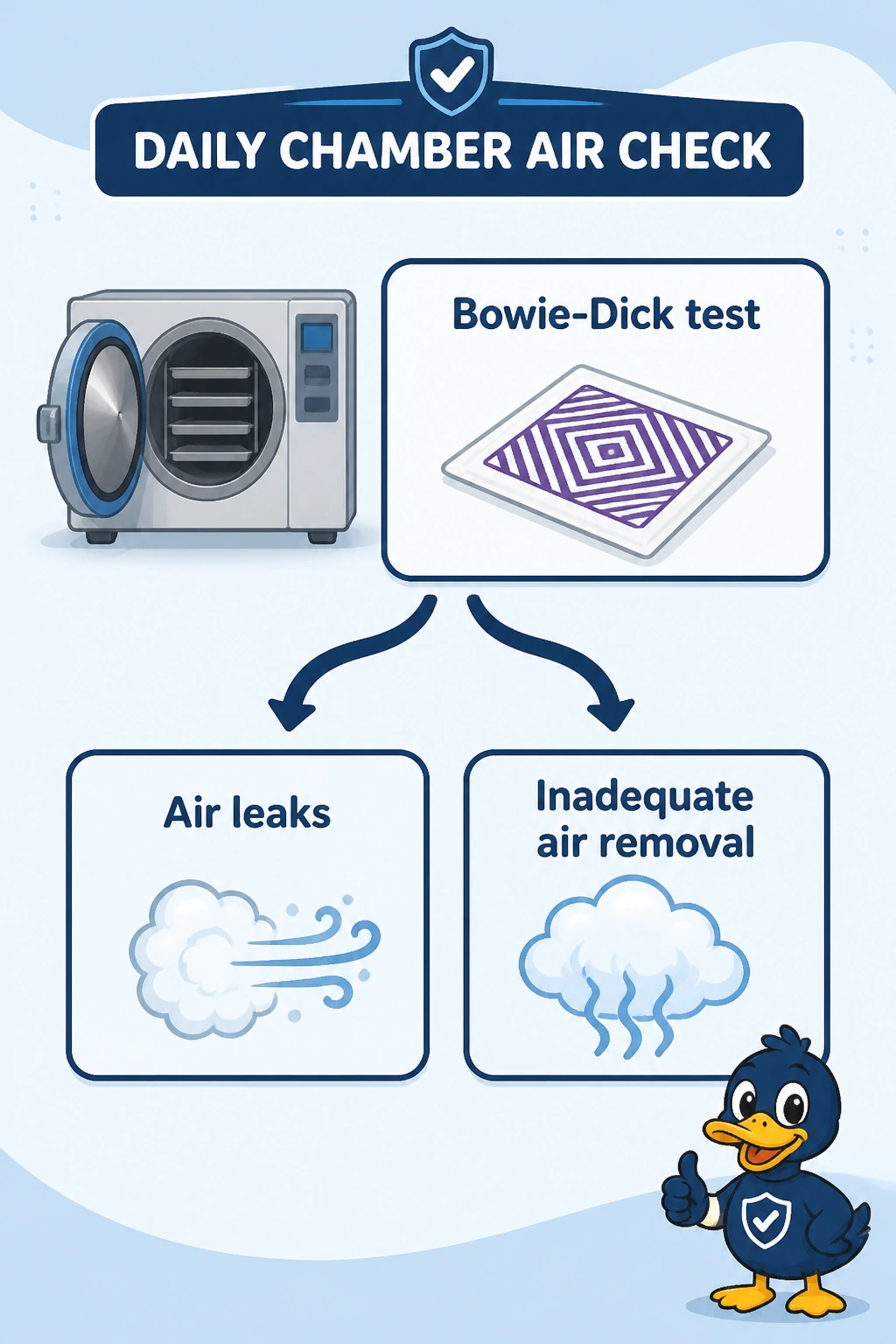
Selecting To detect air leaks and inadequate air removal inside the sterilizer chamber reflects the exact function of the Bowie-Dick test in dynamic-air-removal steam sterilizers. Because prevacuum cycles rely on mechanical vacuum pulses to pull air out before steam enters, residual air or a door-gasket leak creates cold spots that block steam penetration, which the indicator sheet inside the test pack reveals through uneven color change. Choosing To confirm that bacterial spores inside wrapped trays are killed describes biological indicator monitoring using Geobacillus stearothermophilus spores rather than the Bowie-Dick air-removal challenge. Choosing To verify the minimum effective concentration of chemical sterilants applies to reusable liquid chemical high-level disinfectants or sterilants, not steam autoclaves. Choosing To measure residual moisture left on porous surgical linen packs describes a wet-pack inspection after a cycle rather than a pre-use vacuum diagnostic. As a caveat, Bowie-Dick testing is not used for gravity-displacement steam sterilizers. For an operational check, review daily central sterile logs to confirm a passing Bowie-Dick sheet is recorded in an empty preheated chamber before any instrument load is released.
Prefer to study offline? Printable PDF study book + test engine ($7.50, unofficial). These questions stay free here.