
An outpatient endoscopy suite uses a reusable ortho-phthalaldehyde (OPA) bath in an automated endoscope reprocessor for flexible colonoscopes. What quality control check must staff perform before each use of the disinfectant solution?
Select an answer to reveal the explanation.
Short Explanation
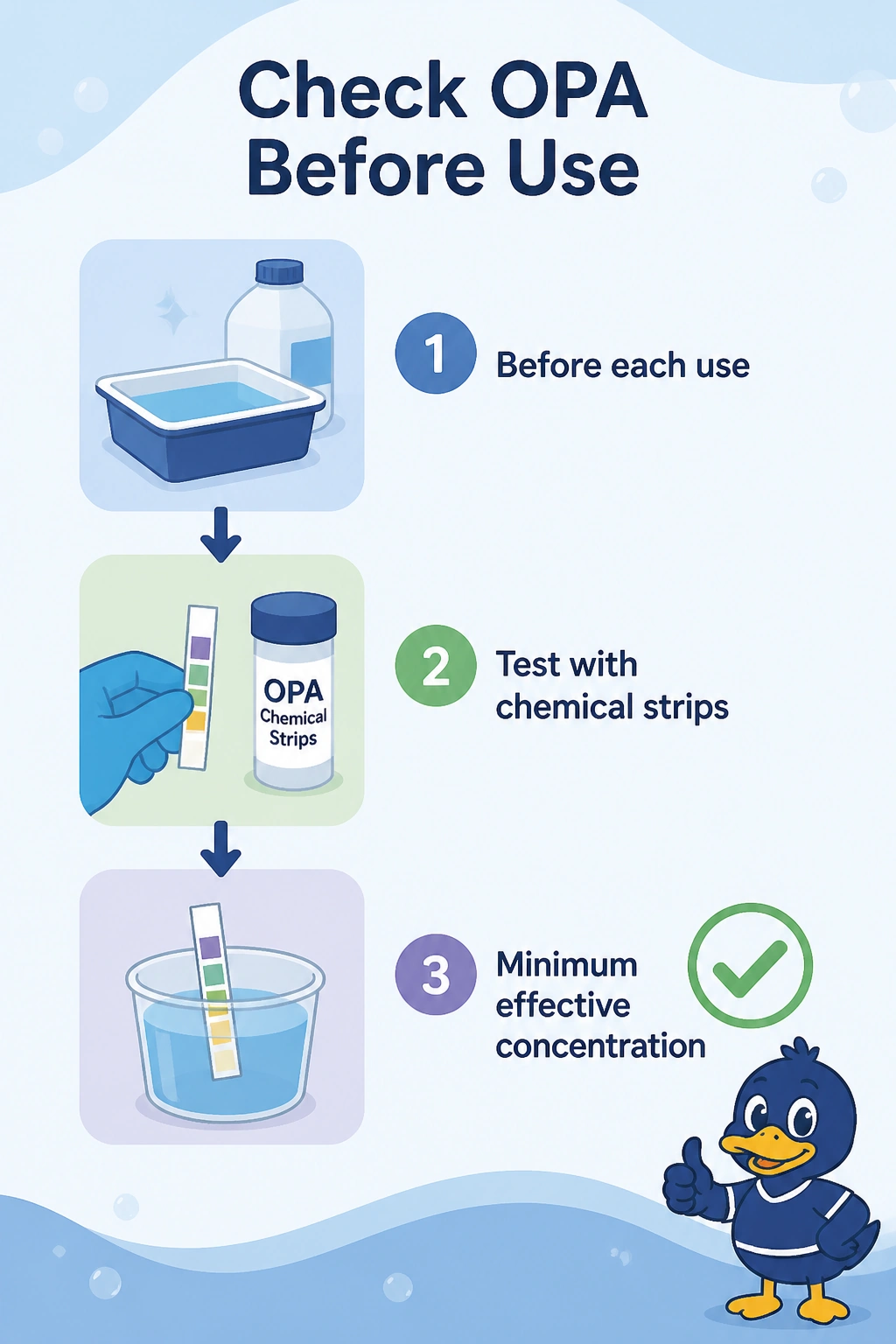
Reusable OPA can lose strength with repeated cycles and dilution, so you can’t rely on appearance alone. Before each use, test the minimum effective concentration with chemical strips. Use in-date strips and follow the product’s instructions for testing and quality controls.
Full Explanation
Reusable ortho-phthalaldehyde can lose strength with repeated cycles and dilution by residual rinse water, so before each use you must test its minimum effective concentration with chemical strips. This confirms that the active ingredient remains potent enough for high-level disinfection of semi-critical endoscopes; follow the product and automated endoscope reprocessor instructions for strip use and quality controls. Measuring water hardness in the final rinse cycle monitors water quality, not disinfectant potency, and cannot identify an exhausted OPA bath. Comparing the solution’s visible color with an unused OPA sample is unreliable because color cannot establish minimum effective concentration. Replacing the solution only when it turns visibly cloudy is unsafe: a clear bath can still fall below its required concentration and leave instruments inadequately disinfected. Exam caveat: do not top off the bath to extend its use, and discard it at the maximum reuse period even if chemical strips pass. For a practical check, review the log daily for concentration test results, expiration dates, and temperature.
Prefer to study offline? Printable PDF study book + test engine ($7.50, unofficial). These questions stay free here.