
At the end of an abdominal surgery, a circulating nurse notices dried blood on reusable laparoscopic instruments that will not be transported to central sterile processing for another two hours. Which point-of-use practice should the nurse perform immediately?
Select an answer to reveal the explanation.
Short Explanation
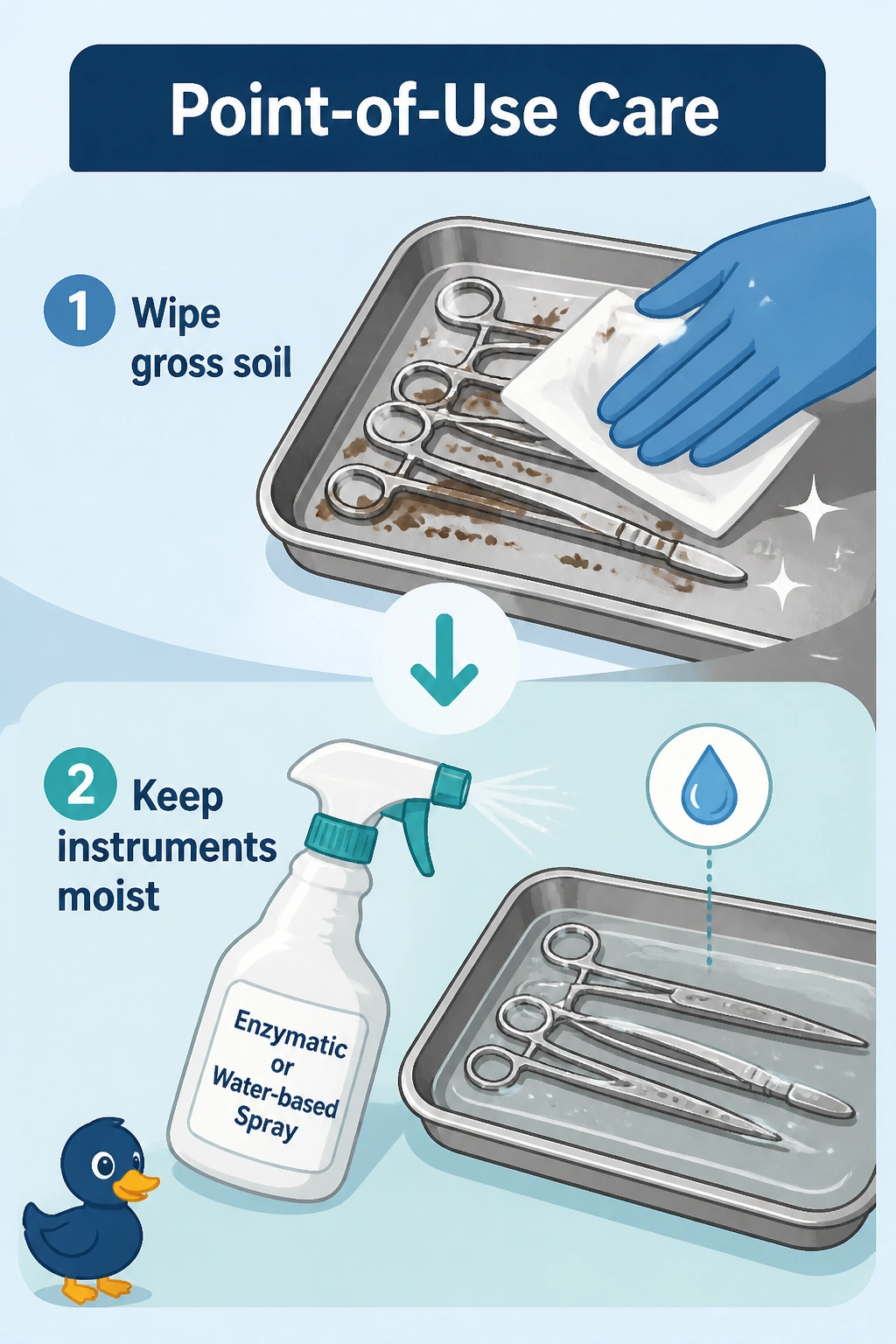
Dried blood on a surgical instrument sets like concrete and shields microbes from sterilization later. The trap is reaching for saline or letting instruments dry out, both of which damage your delicate stainless steel and make reprocessing much harder.
Full Explanation
Wipe gross soil and keep instruments moist with an approved enzymatic or water-based spray is the recommended point-of-use treatment because keeping bioburden moist prevents proteins from drying onto hinges and lumens and reduces biofilm formation before central sterile processing arrives. Soak the instruments in normal saline solution inside a sealed rigid container until pickup is harmful because sodium chloride causes pitting and corrosion on stainless steel surgical instruments. Submerge the instruments in undiluted household bleach to disinfect them before transport also corrodes metal surfaces, damages delicate laparoscopic optics, and creates chemical exposure hazards without substituting for proper detergent cleaning. Allow the instruments to air-dry completely on the back table to prevent corrosion during delay allows blood and tissue debris to bake onto serrations and box locks, which impairs subsequent enzymatic cleaning and blocks steam or gas contact during sterilization. As a caveat, always check the instrument manufacturer's instructions for use before applying any enzymatic foam or gel. For an operational check, audit operating room transport carts for moisture-retention sprays and measure turnaround times between case end and decontamination arrival.
Prefer to study offline? Printable PDF study book + test engine ($7.50, unofficial). These questions stay free here.