
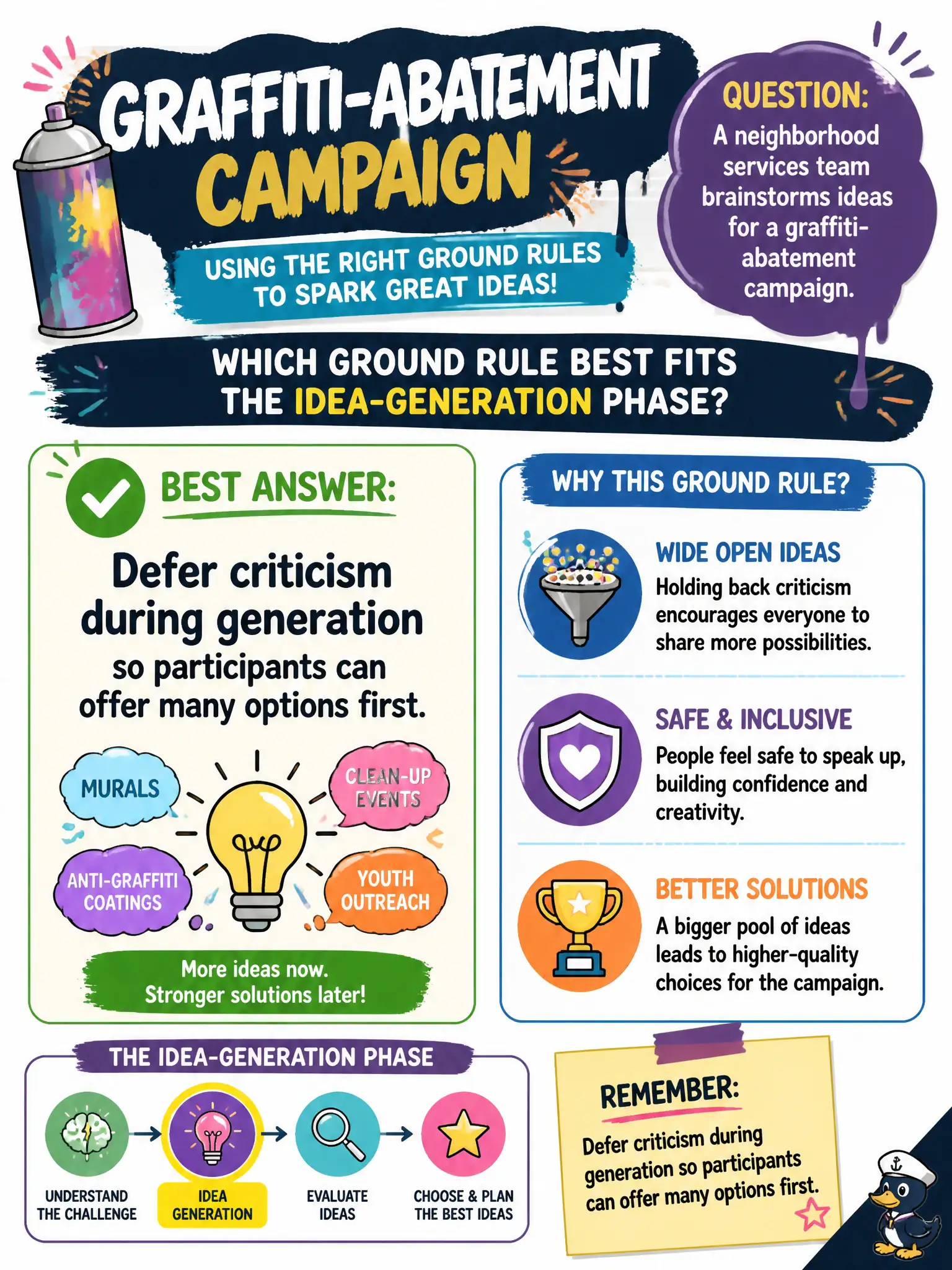
A neighborhood services team brainstorms ideas for a graffiti-abatement campaign. Which ground rule best fits the idea-generation phase?
Select an answer to reveal the explanation.
Short Explanation
Brainstorming has two gears: fill the board, then judge. In generation mode you park criticism so wild and useful ideas both show up. Premature critique shuts people down and leaves you with three safe, boring options.
Full Explanation
When a neighborhood services team brainstorms ideas for a graffiti-abatement campaign, the best ground rule for the idea-generation phase is to defer criticism so participants can offer many options first. Deferred judgment increases volume and psychological safety in civic workshops. Evaluation comes after generation, not during it.
Critiquing and discarding each idea immediately keeps the list short but starves creativity and chills participation. Allowing only the sponsor to propose ideas centralizes input and defeats group brainstorming. Requiring a full cost-benefit analysis before an idea may be spoken imposes analysis barriers that belong later.
Exam caveat: CAPM problem-solving questions often test brainstorming rules versus later filtering. Associates should not conflate generation ground rules with selection or business-case rigor.
Operational check: announce deferred-criticism rules, capture all graffiti-abatement ideas rapidly, then open a separate scoring or feasibility pass before committing campaign resources. Capture ideas in the participants’ own words before facilitators paraphrase, then translate into actionable campaign options in the evaluation round. Keep generation and scoring visibly separate on the agenda.