
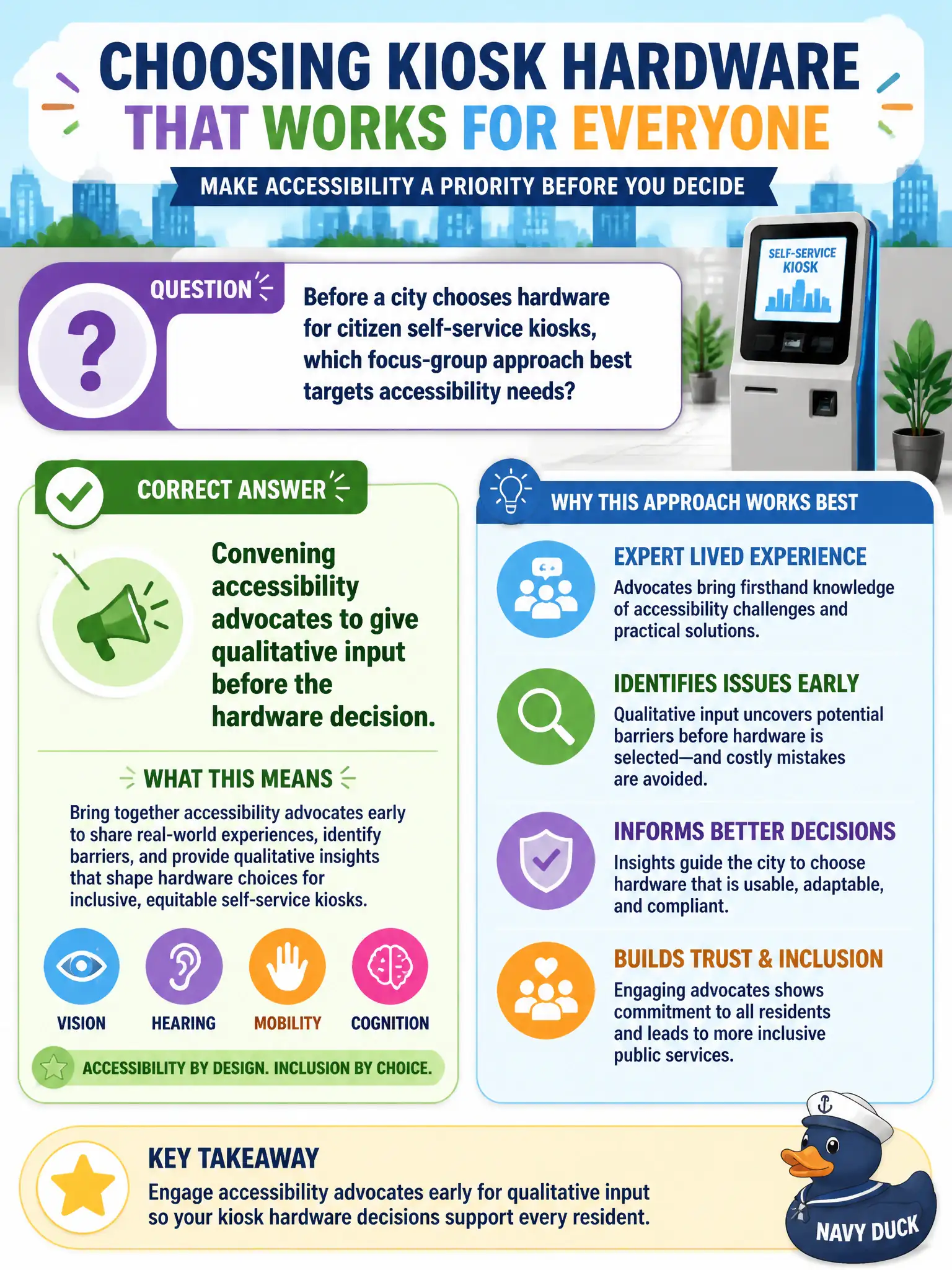
Before a city chooses hardware for citizen self-service kiosks, which focus-group approach best targets accessibility needs?
Select an answer to reveal the explanation.
Short Explanation
If the kiosk has to work for everyone, talk to the people who know those barriers before you buy metal and screens. A focus group with accessibility advocates is targeted qualitative input at the right moment. Fixing reach and contrast after install is apology engineering.
Full Explanation
Before a city chooses hardware for citizen self-service kiosks, convening accessibility advocates for qualitative input best targets accessibility needs. Hardware decisions about reach ranges, contrast, and interaction modes are hard to reverse after procurement. Early focus-group-style input from accessibility stakeholders reduces the risk of deploying kiosks residents cannot use equitably.
Surveying only procurement staff about unit price discounts optimizes cost, not accessibility usability. Waiting until after installation to ask users about reach and contrast discovers problems when change is expensive. Using brainstorming solely to rename the project without usability feedback wastes facilitation on cosmetics.
Exam caveat: Associates should time elicitation before irreversible procurement choices, especially for public-facing civic technology with accessibility obligations. Technique selection matters as much as stakeholder selection.
Operational check: run accessibility-focused sessions against candidate hardware, capture must-have physical and interface criteria, write those into procurement requirements, and verify vendor offerings against the criteria before award. Include at least one scenario that tests assistive-technology compatibility and physical approach paths, not only on-screen contrast. Feed must-fix into both hardware specs and installation guidelines for public lobbies.