
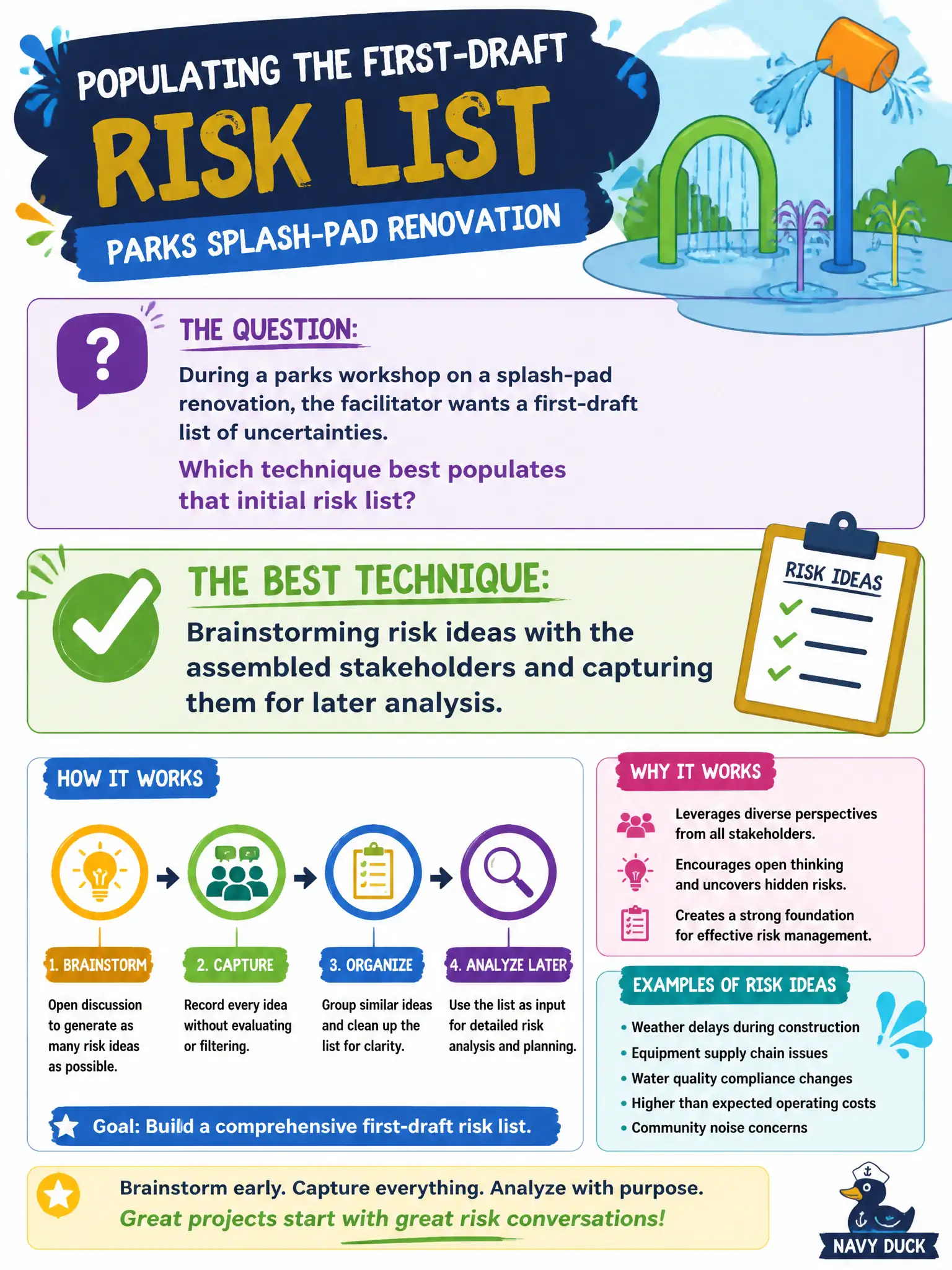
During a parks workshop on a splash-pad renovation, the facilitator wants a first-draft list of uncertainties. Which technique best populates that initial risk list?
Select an answer to reveal the explanation.
Short Explanation
You cannot manage what you have not named yet. Brainstorming is the workshop move that fills the blank risk list with raw ideas. Later you score and respond—but first you get the threats and opportunities onto the board.
Full Explanation
During a parks workshop on a splash-pad renovation, brainstorming with assembled stakeholders is the best first technique to populate an initial list of uncertainties. Brainstorming rapidly surfaces candidate risks from diverse civic perspectives before qualitative or quantitative analysis begins. Capturing those ideas creates the raw material for a risk register.
Calculating schedule variance from a control account ledger measures performance against plan; it does not generate an initial uncertainty list. Approving the project charter without team discussion may authorize work but does not populate risks. Publishing final risk responses before any risks are named reverses the process—responses require identified risks first.
Exam caveat: CAPM risk process literacy at associate depth starts with identification techniques such as brainstorming, then moves to analysis and response. Distractors often jump to later controlling or closing activities.
Operational check: run a facilitated brainstorm on splash-pad uncertainties, record each candidate risk without premature filtering, transfer unique items into the risk register, and schedule analysis workshops next. Seed the register with clear risk statements (cause–event–effect) rather than vague worries so later qualitative scoring is possible. Schedule the analysis pass while workshop energy and context remain available to the parks team.