
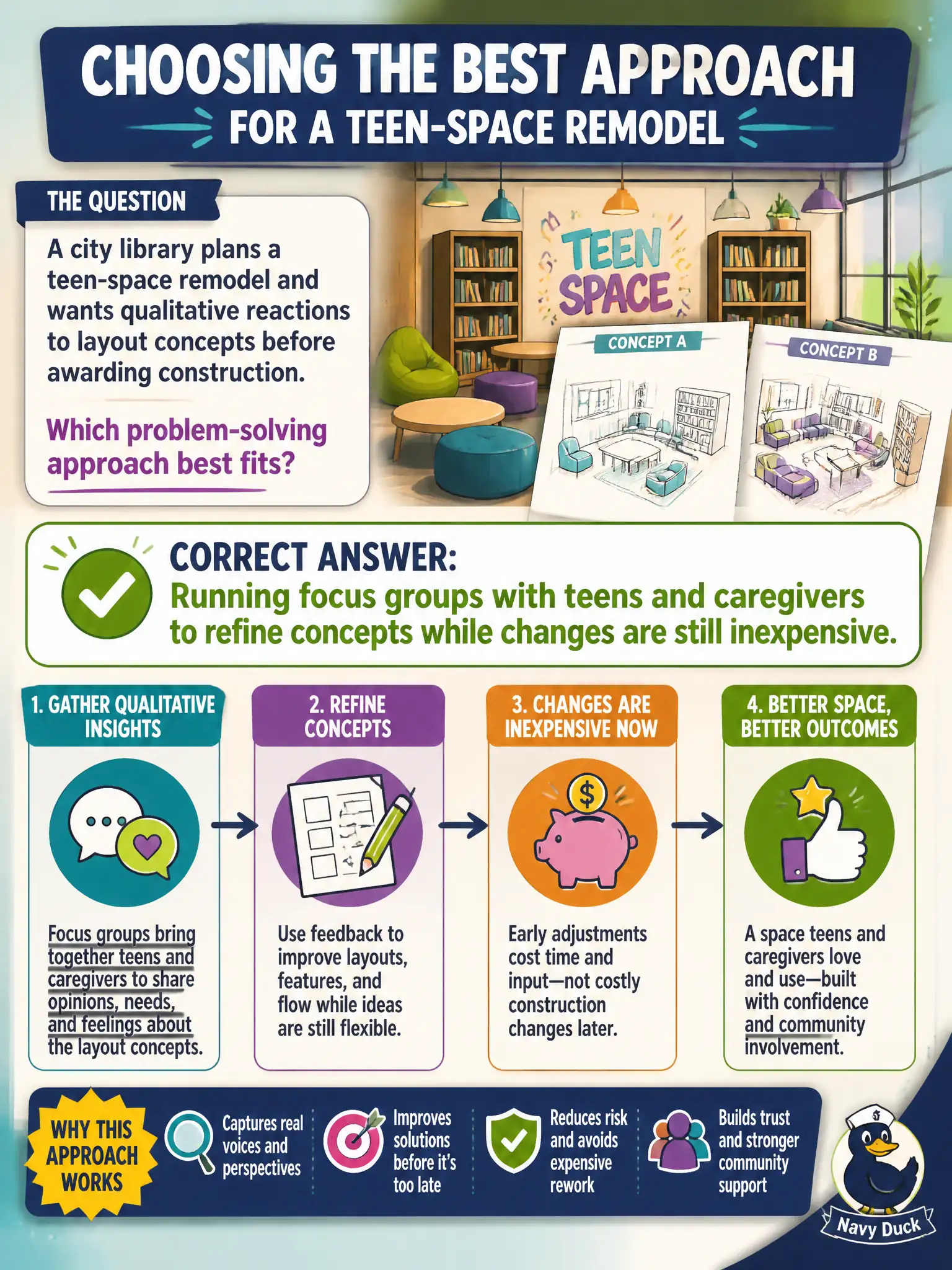
A city library plans a teen-space remodel and wants qualitative reactions to layout concepts before awarding construction. Which problem-solving approach best fits?
Select an answer to reveal the explanation.
Short Explanation
Think of it like tasting soup before you serve a banquet—cheap feedback beats expensive rebuilds. Focus groups let teens and caregivers react while the design is still paper and foam board. Waiting until steel is ordered turns every comment into a change order.
Full Explanation
A city library planning a teen-space remodel should gather qualitative reactions to layout concepts before awarding construction, and focus groups with teens and caregivers fit that need while changes are still inexpensive. Civic facilities succeed when users who will occupy the space influence design early. Focus groups surface preferences and friction that drawings alone may miss, reducing costly rework after contract award.
Issuing a fixed-price bid package before any community input locks scope without the qualitative insight the remodel needs. Scheduling only daily standups until the contractor is selected provides team coordination but does not elicit teen and caregiver perceptions of layout concepts. Updating an earned-value baseline instead of gathering stakeholder preferences confuses performance measurement with requirements and design feedback.
Exam caveat: CAPM associates should match problem-solving or elicitation techniques to the decision at hand. Focus groups are qualitative and timing-sensitive—most valuable before construction commitments freeze layout choices.
Operational check: facilitate focus groups with teens and caregivers against concept alternatives, document themes that change layout requirements, update design packages accordingly, and only then finalize bid documents for construction award.