
A municipal project coordinator compares two meetings on a streetscape job. Which pattern best shows an effective meeting rather than a wandering complaint session?
Select an answer to reveal the explanation.
Short Explanation
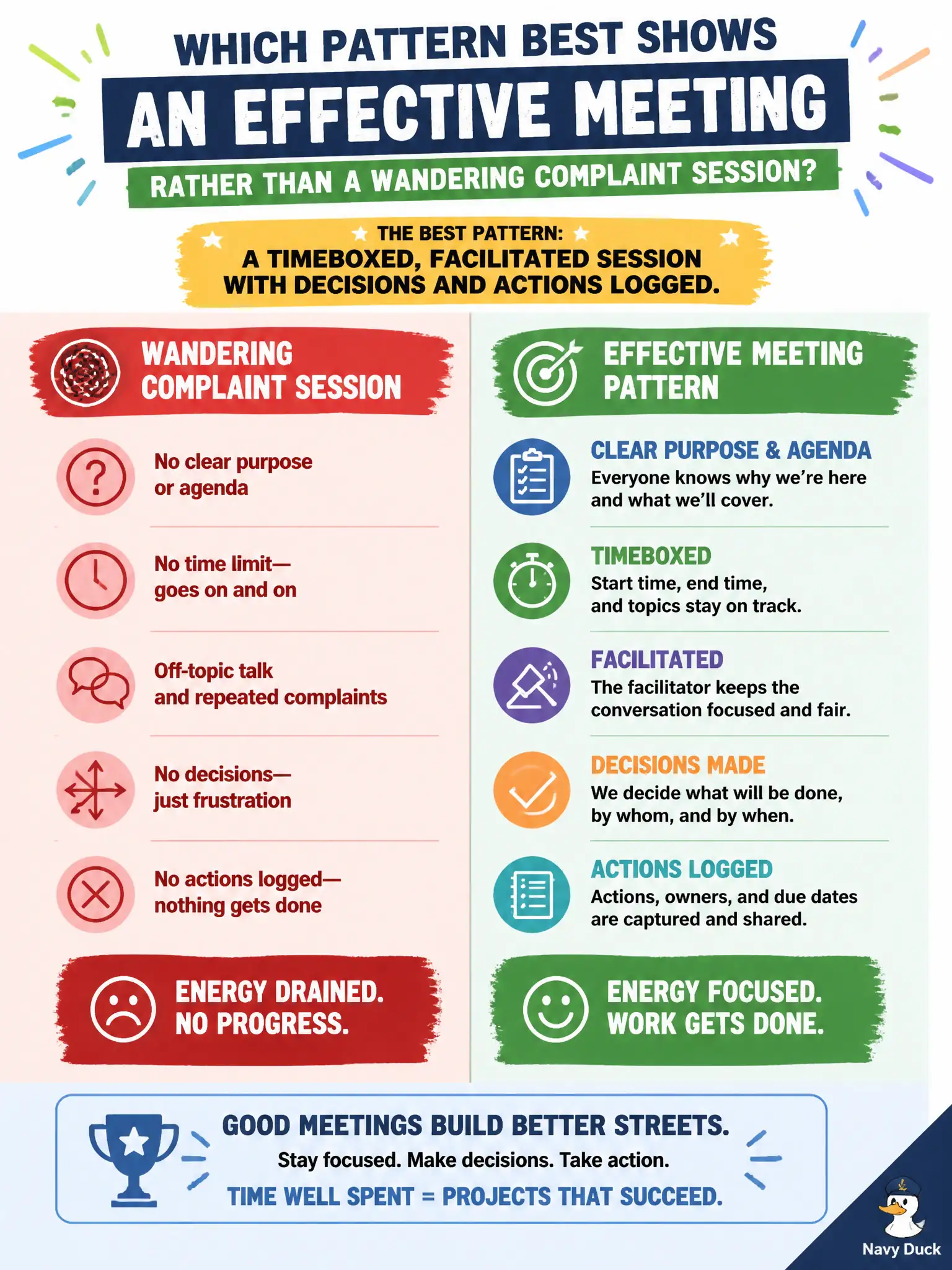
Effective meetings feel like a pit stop, not an open mic night. Someone facilitates, the clock matters, and decisions land in writing. If it is all complaints and no log, you burned an hour and still do not know what changed.
Full Explanation
An effective municipal meeting on a streetscape job is typically a timeboxed, facilitated session with decisions and actions logged. That pattern converts staff time into governed outcomes: who decided what, and who owns next steps. Civic projects suffer when meetings become unstructured complaint forums without closure, because public staff leave with emotions aired but no change to design, permits, or field work.
No agenda, open-ended venting, and no recorded decisions mark an ineffective wandering session. Unlimited attendance, no timebox, and outcomes left to memory destroy accountability and invite conflicting recollections the next day. Side conversations with a silent facilitator abandon facilitation and shared focus, so the room fragments into private negotiations the project cannot track.
Exam caveat: CAPM fundamentals treat meeting hygiene as a professional skill—purpose, facilitation, timeboxing, and documentation. Associates should diagnose ineffective patterns quickly and not confuse emotional venting or large audiences with progress on municipal deliverables.
Operational check: publish an agenda tied to decisions needed, invite only roles required for those decisions, facilitate to the timebox, actively close sidebars, capture decisions and action owners live, and distribute notes the same day so streetscape crews are not reconstructing outcomes from conflicting memories.