
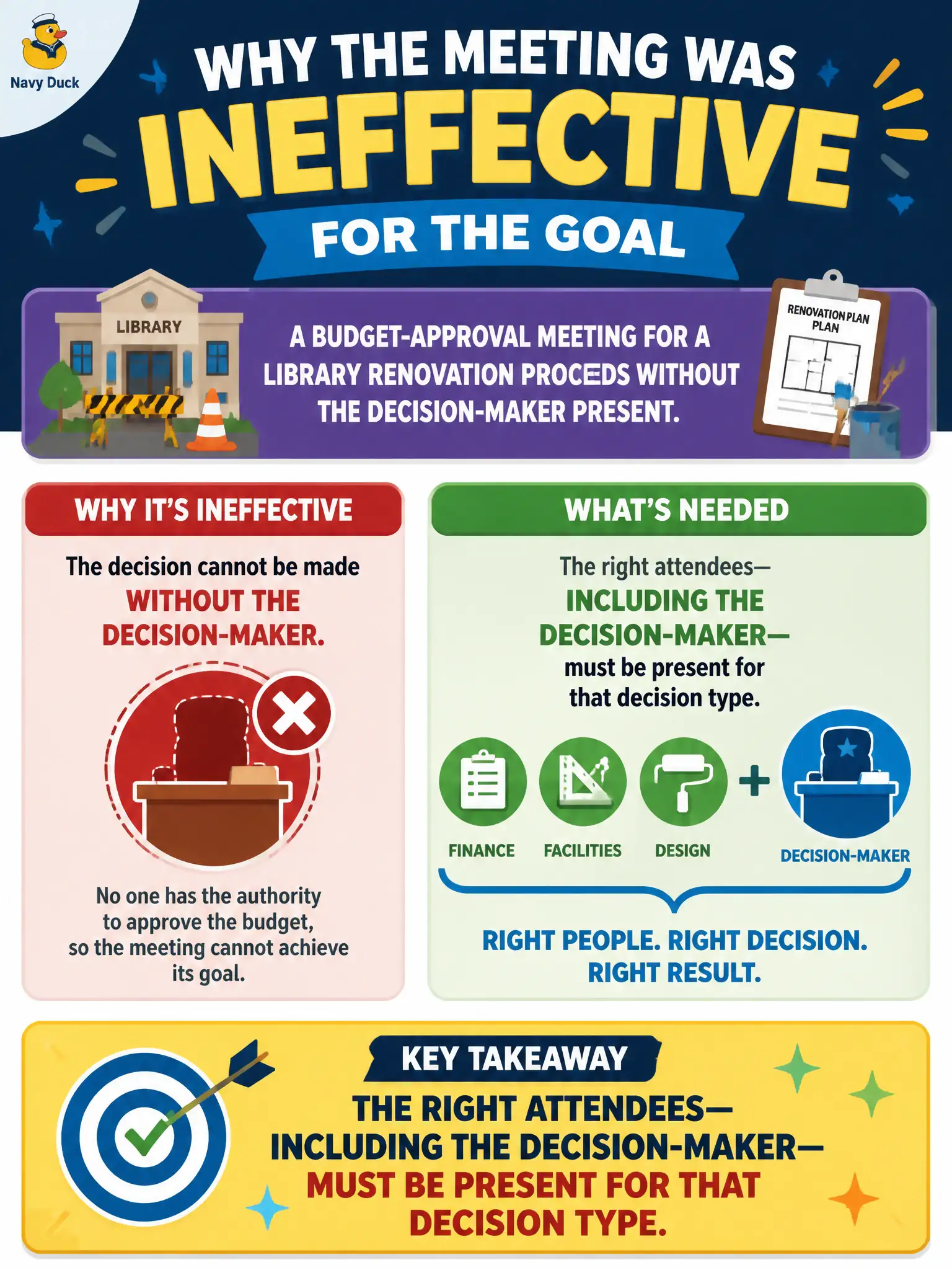
A budget-approval meeting for a library renovation proceeds without the decision-maker present. Why is the meeting ineffective for that goal?
Select an answer to reveal the explanation.
Short Explanation
If the person who can say yes to the budget is not in the room, you are rehearsing, not deciding. Match attendees to the decision you need. Polish and snacks do not unlock spending authority.
Full Explanation
A budget-approval meeting for a library renovation without the decision-maker present is ineffective for that goal because the right attendees—including the person with authority—must be present for that decision type. Polished slides cannot approve capital spending when the approver is absent. Civic budget governance depends on rightful authority in the room or a delegated surrogate with documented power.
Budget meetings do require a decision-maker when the purpose is approval; polish is insufficient. CAPM does not authorize any random attendee to approve capital budgets by default. Providing snacks may improve comfort but does not create decision authority or meeting effectiveness for approvals.
Exam caveat: Meeting design questions at CAPM depth often hinge on matching attendees to purpose. Information-sharing meetings and decision meetings have different mandatory participants.
Operational check: postpone the approval vote until the decision-maker or empowered delegate attends, or convert the session to a briefing that prepares a later decision forum—and label the purpose honestly in the agenda. If a delegate attends, verify written delegation before treating the vote as binding. Capital approvals without rightful authority create downstream audit and political risk for the library project.