
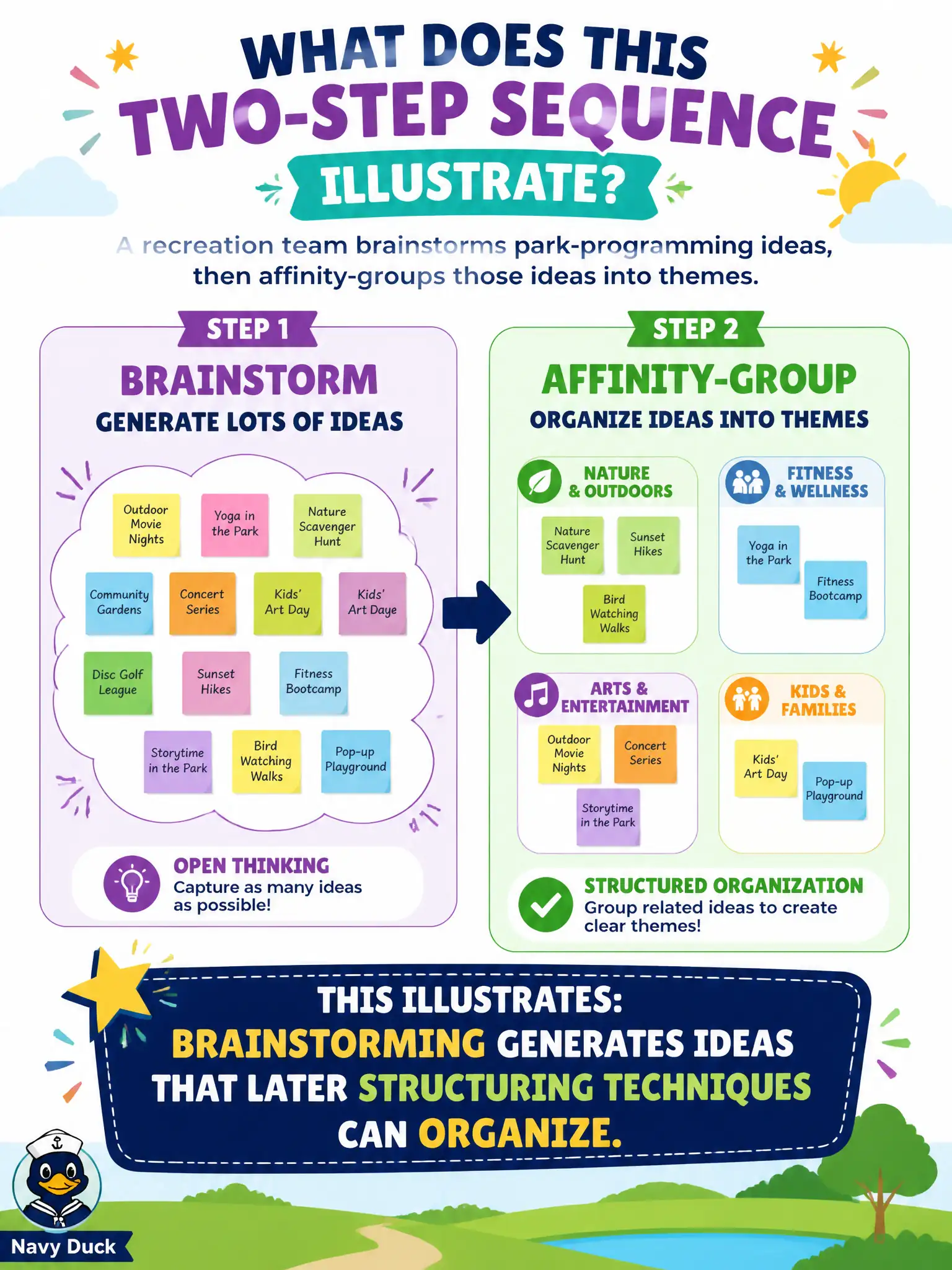
A recreation team brainstorms park-programming ideas, then affinity-groups those ideas into themes. What does this two-step sequence illustrate?
Select an answer to reveal the explanation.
Short Explanation
First you dump ideas on the table, then you cluster them into themes—brainstorm then affinity group. Generation feeds structure. Skipping the brainstorm or pretending clusters replace stakeholders misses the point.
Full Explanation
Brainstorming park-programming ideas and then affinity-grouping those ideas into themes illustrates a two-step sequence: generation first, structuring second. Brainstorming creates volume; affinity grouping organizes related ideas so recreation planners can see patterns. Civic facilitation often pairs these techniques to move from raw input to actionable theme sets.
Skipping brainstorming because affinity grouping will be used later removes the idea source the grouping needs. Claiming affinity grouping eliminates stakeholder input confuses organizing technique with engagement. Restricting affinity grouping to procurement sealed-bid packages invents an unrelated limitation.
Exam caveat: Associates should recognize complementary facilitation tools rather than treating each technique as mutually exclusive. Generation without structure stays messy; structure without generation has nothing to organize.
Operational check: run a deferred-judgment brainstorm, capture ideas on cards or board space, affinity-group into themes with participants, name each theme, and feed themes into prioritization or program planning. Theme names should be concrete enough to feed prioritization workshops—vague buckets like “stuff” waste the affinity effort. Bring the themed board to the next planning session while participant memory is fresh.