
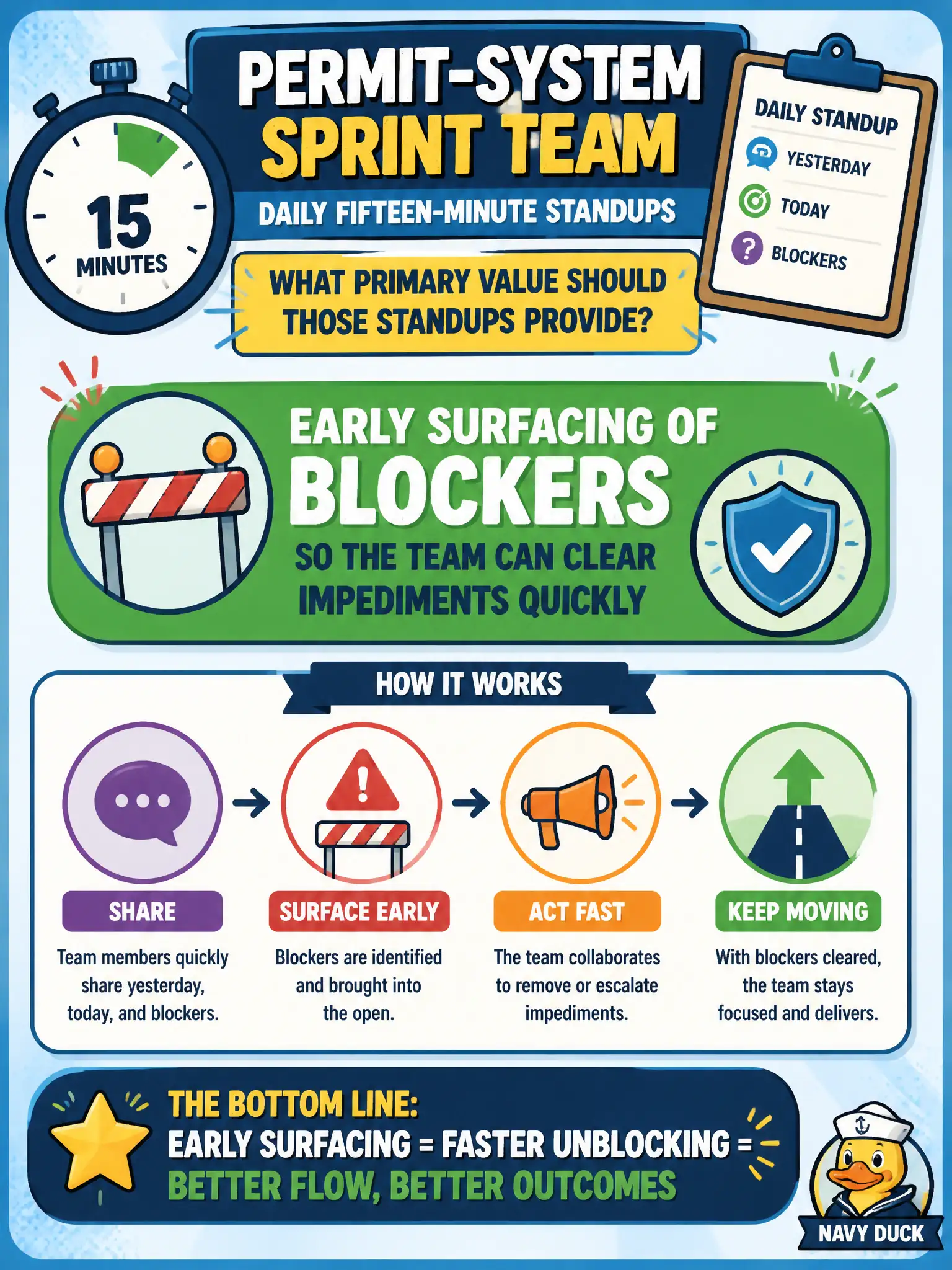
A permit-system sprint team holds daily fifteen-minute standups. What primary value should those standups provide?
Select an answer to reveal the explanation.
Short Explanation
Fifteen minutes is enough to spot “I’m stuck” before it becomes a week-long stall. Standups shine a light on blockers early. They are not the change board, the EVM engine, or city legal.
Full Explanation
Daily fifteen-minute standups on a permit-system sprint team primarily provide early surfacing of blockers so the team can clear impediments quickly. That coordination value keeps civic digital delivery moving without turning every morning into a governance or portfolio review. The format’s power is speed and visibility of obstacles.
Standups are not a substitute for all formal change-control board decisions; baseline-affecting changes still need the change path. They are not the venue for detailed earned-value forecasts across a multi-year capital plan. They also do not provide final legal approval of a city’s procurement ordinance, which sits outside team ritual entirely.
Exam caveat: Associates should know standup purpose at CAPM depth—coordination and impediments—without inflating the ceremony into enterprise control or legal authority.
Operational check: keep the standup timeboxed, ensure each member can state blockers, assign follow-ups immediately after for impediment removal, and route true change or legal matters to the proper forums. When a blocker needs a specialist outside the sprint team, the standup’s job is to surface it and trigger the offline path the same day—not to solve every dependency live. Track impediment age so chronic civic bottlenecks become visible to leadership.