
Which outcome best indicates that a municipal project coordination meeting was effective?
Select an answer to reveal the explanation.
Short Explanation
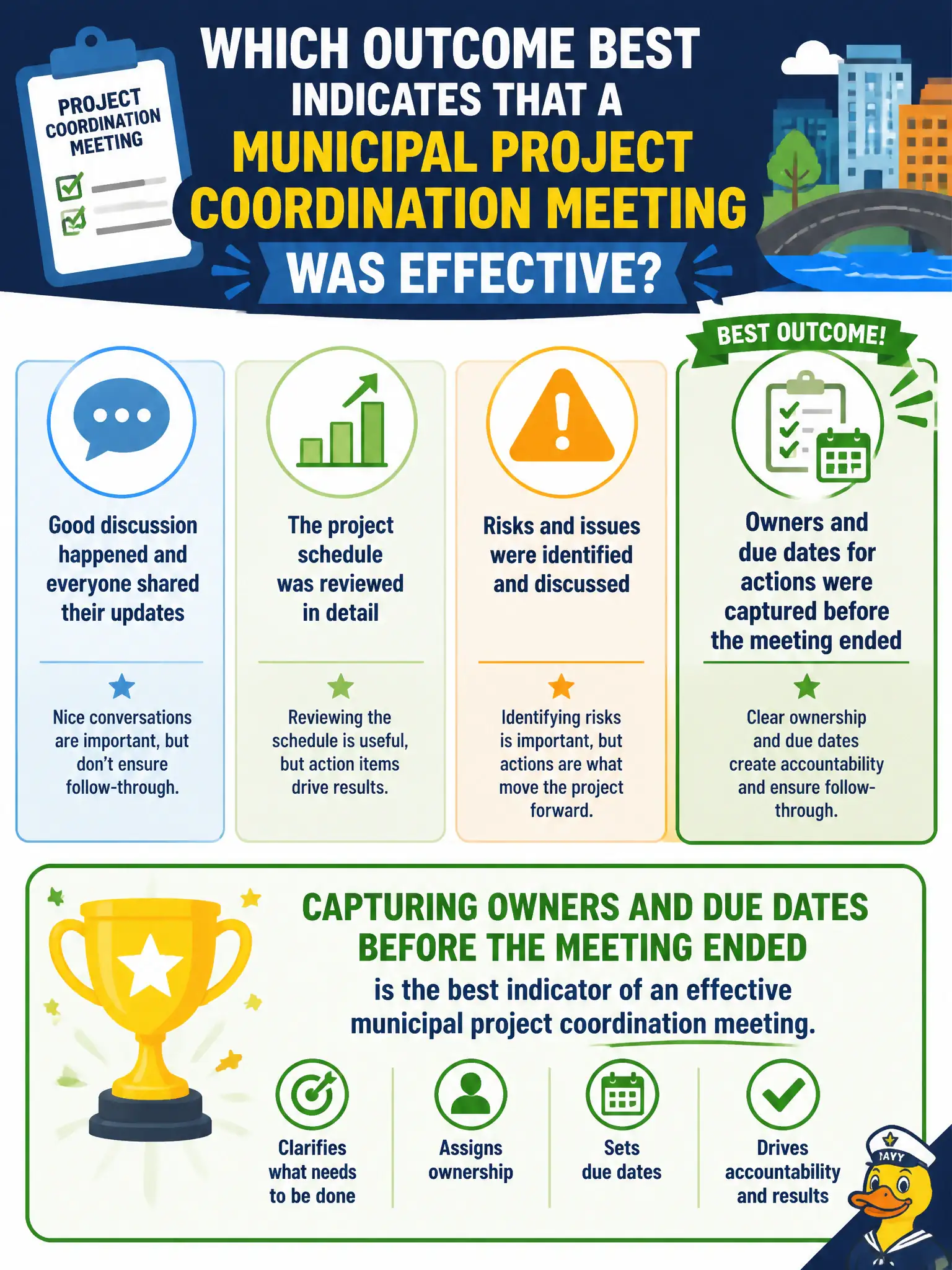
A meeting that ends with named owners and due dates actually moved work forward. Filling the hour or having one person monologue does not. Walk out with actions, not just airtime.
Full Explanation
The best indicator that a municipal project coordination meeting was effective is that owners and due dates for actions were captured before the meeting ended. Civic coordination creates value when commitments are explicit and traceable. Without owners and timing, discussion evaporates into unowned intent.
Booking the room for the maximum available duration measures occupancy, not effectiveness. Leaving without notes to keep discussion “confidential” destroys follow-through and shared understanding. Having only the project manager speak for the entire hour signals poor participation design rather than collaborative coordination.
Exam caveat: CAPM meeting-effectiveness cues emphasize purpose, participation, and documented outcomes. Associates should evaluate meetings by decisions and actions, not by length or one-way briefing habits.
Operational check: end every coordination meeting with a read-back of actions, owners, and due dates; publish the list within the communication cadence; and review open actions at the next session. If actions cannot be named, the meeting failed its coordination purpose regardless of how thoroughly issues were discussed. Treat missing owners as a defect in facilitation and fix the close-out ritual before scheduling the next session.