
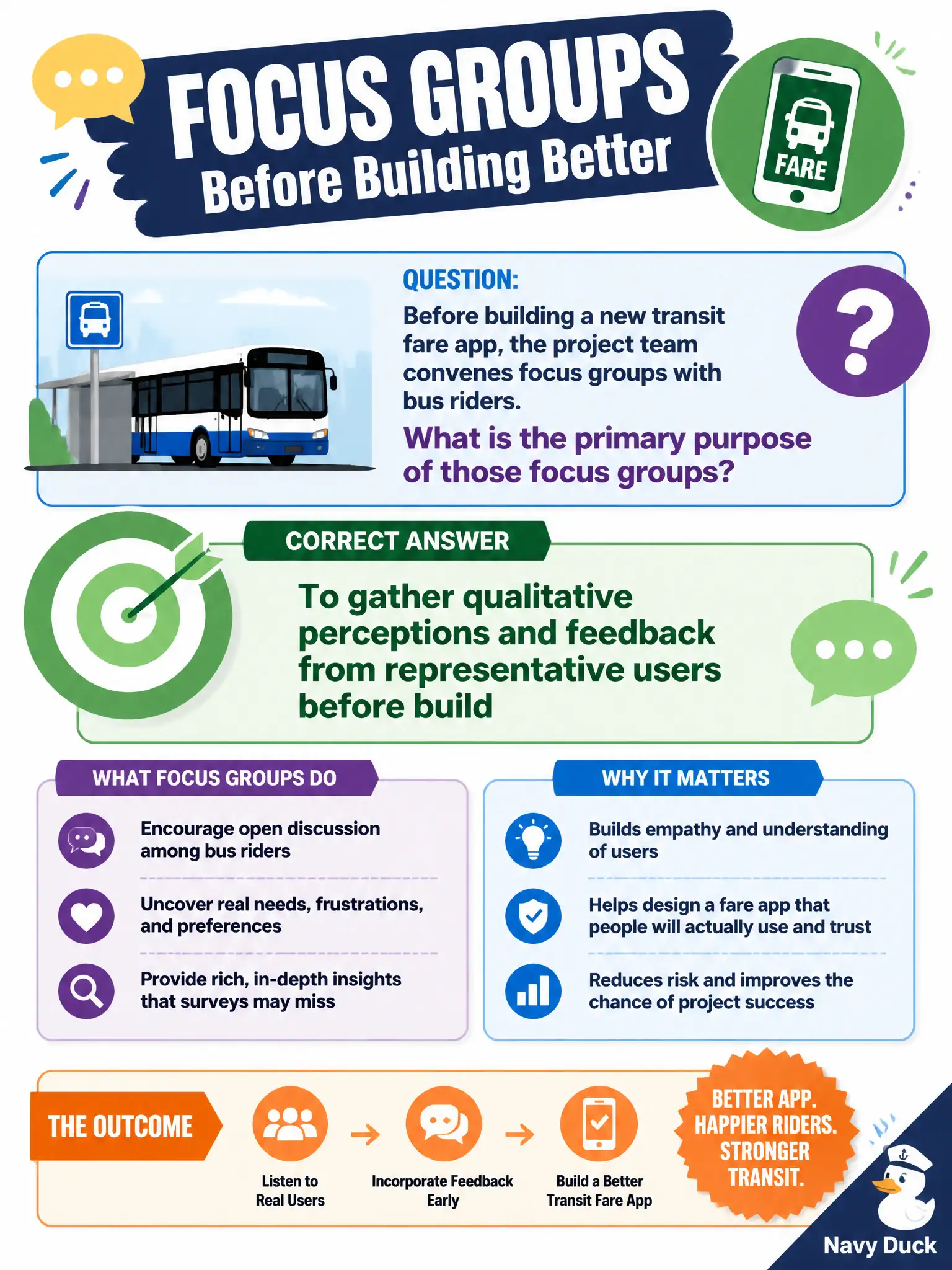
Before building a new transit fare app, the project team convenes focus groups with bus riders. What is the primary purpose of those focus groups?
Select an answer to reveal the explanation.
Short Explanation
Focus groups are listening sessions—riders tell you what feels confusing or useful before you pour money into code. You are hunting perceptions and stories, not signing off servers or computing SPI. Hear the users first.
Full Explanation
Focus groups with bus riders before building a new transit fare app exist primarily to gather qualitative perceptions and feedback from representative users before build. For civic digital services, early qualitative input reduces the chance of designing payment flows that residents reject. The technique informs requirements and design choices; it does not by itself certify production readiness.
Focus groups do not certify final production servers for go-live—that is environment and release validation work. They do not replace a project charter or sponsor authorization. They also do not calculate earned value or schedule performance indexes, which are predictive performance measures unrelated to qualitative rider feedback.
Exam caveat: Associates should place focus groups in the elicitation/feedback toolkit and know their qualitative nature. Confusing them with quantitative surveys, formal authorization, or EVM is a common distractor pattern.
Operational check: recruit a representative rider sample, run facilitated sessions with a clear discussion guide, synthesize themes into requirements or design decisions, and document limitations so nobody treats twelve riders as a citywide census.