
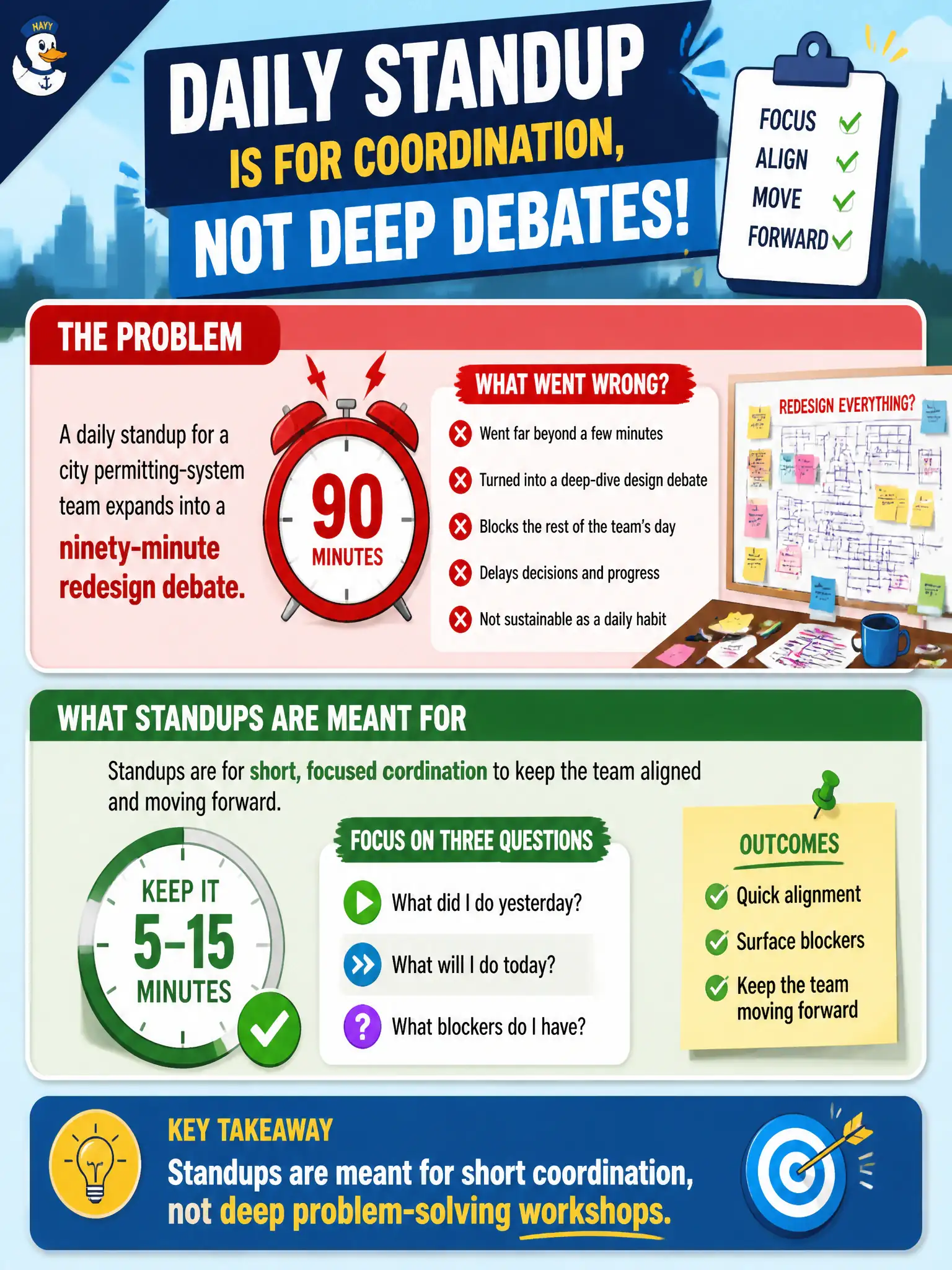
A daily standup for a city permitting-system team expands into a ninety-minute redesign debate. What is wrong with this use of the format?
Select an answer to reveal the explanation.
Short Explanation
Standups are the quick huddle—“what’s up, what’s stuck”—not a redesign workshop. When the debate balloons to ninety minutes, park the deep dive for a separate session. Keep the format short and focused.
Full Explanation
When a daily standup for a city permitting-system team expands into a ninety-minute redesign debate, the format is being misused. Standups are meant for short coordination—progress, plans, and blockers—not deep problem-solving workshops. Redesign debates need a facilitated working session with the right specialists and timebox, or civic delivery rhythm collapses into endless morning forums.
Claiming standups must always last at least two hours reverses the format’s purpose. Using standups to replace all stakeholder interviews and focus groups confuses daily coordination with elicitation techniques. Treating standups as venues only for earned-value slide decks imports predictive control reporting into a short team-sync ritual that cannot support that depth daily.
Exam caveat: CAPM associates should match meeting type to purpose. Standup misuse is a frequent exam and workplace failure mode when complex design issues hijack a brief sync.
Operational check: park the redesign topic, finish a short blocker-focused standup, schedule a separate facilitated redesign workshop with named attendees and outcomes, and keep future standups timeboxed. Parking complex topics to a workshop also protects psychological safety in the standup: people can raise blockers without being dragged into an impromptu design critique. Document the parking lot item with an owner and meeting time before the standup ends.