
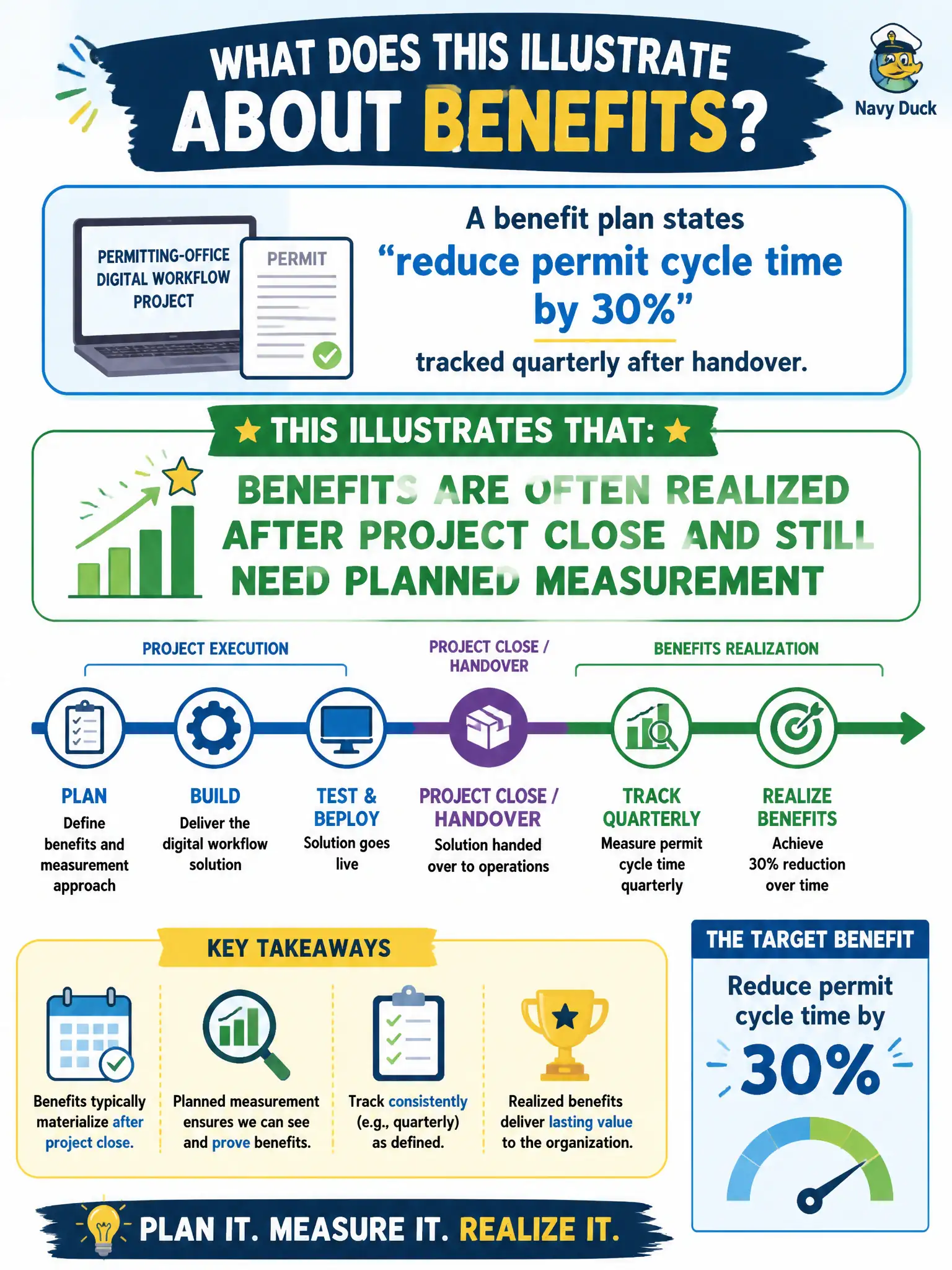
A permitting-office digital workflow project includes a benefit plan stating “reduce permit cycle time by 30%,” tracked quarterly after handover. What does this illustrate about benefits?
Select an answer to reveal the explanation.
Short Explanation
Lots of civic wins show up after the project team packs up—like faster permits months later. The benefit plan still names the target and how you will check it quarterly. Go-live is not the finish line for value.
Full Explanation
A permitting-office digital workflow benefit plan that targets a 30% reduction in permit cycle time, tracked quarterly after handover, illustrates that benefits are often realized after project close and still need planned measurement. Civic process improvements show value in operations once staff and residents use the new workflow, not merely when software is deployed. Post-handover metrics keep the benefit promise honest.
Requiring full benefit realization on go-live day misunderstands lagging operational outcomes and would invalidate many legitimate municipal benefits. Assigning ownership only to the software vendor ignores that cycle-time results depend on city process adoption and data the agency controls. Claiming benefit metrics replace a project charter confuses value tracking with authorization and initiation.
Exam caveat: CAPM benefit management separates delivery of capabilities from realization of outcomes over time. Associates should expect benefit plans to extend into operations with owners and cadences, especially for government service improvements.
Operational check: ensure the benefit plan names the cycle-time metric, baseline, target, quarterly reporting owner after handover, and data source in the permitting system—then verify the first post-launch measurement is scheduled.