
A flood-siren network project is being initiated for coastal neighborhoods. What content belongs in the initiation charter before a full work breakdown structure is built?
Select an answer to reveal the explanation.
Short Explanation
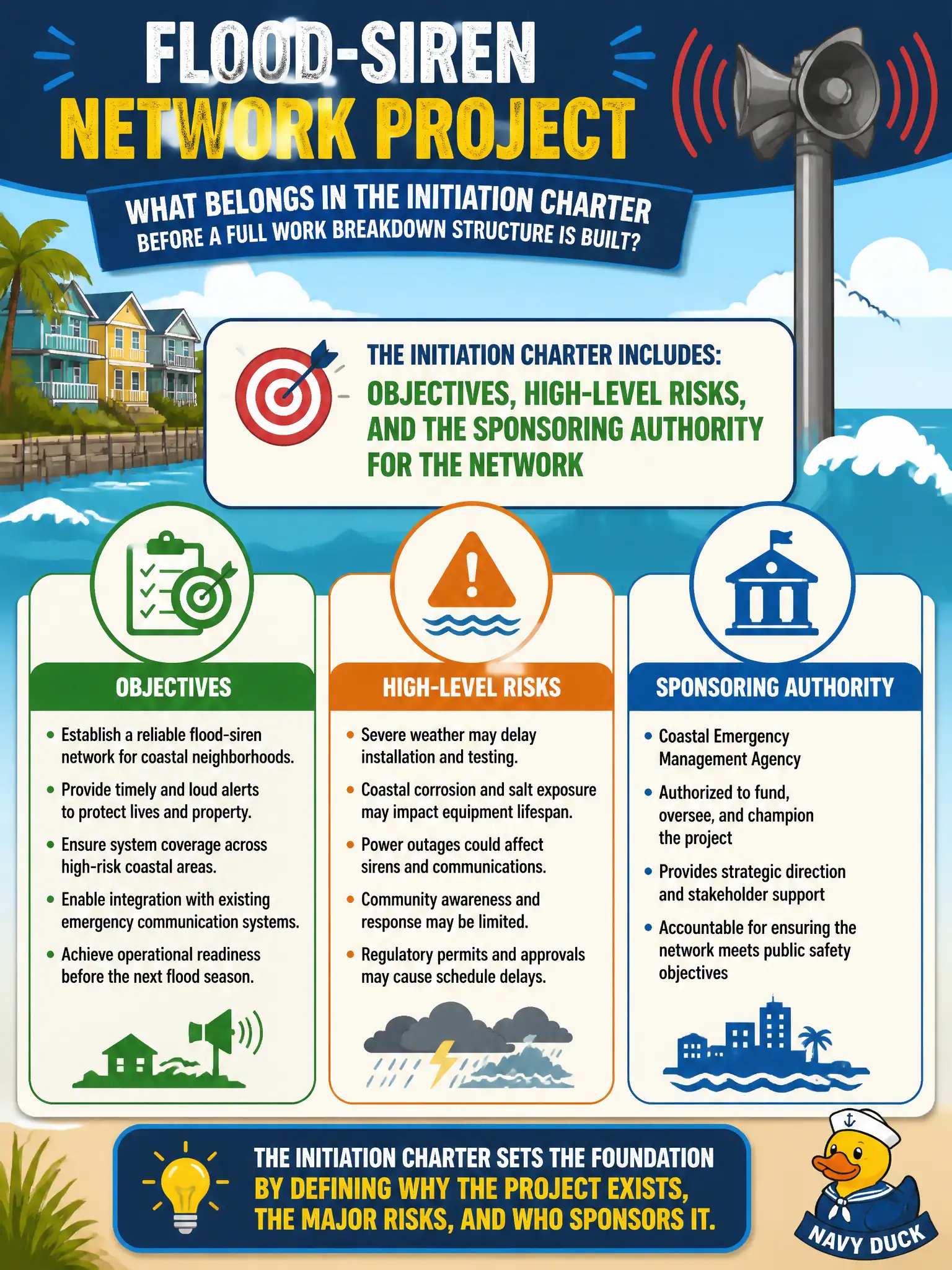
A charter is the project’s ID card: objectives, big risks, and who is backing it. You do not need every bolt SKU or the full WBS yet. Initiation comes first; the detailed breakdown follows in planning.
Full Explanation
An initiation charter for a flood-siren network in coastal neighborhoods should capture objectives, high-level risks, and the sponsoring authority before a full work breakdown structure is built. Those elements authorize and frame the civic safety investment at the right altitude: what success means, what major uncertainties exist, and who can commit the organization. Detailed decomposition follows once initiation is clear.
Every cable length, mounting bolt SKU, and weekly earned-value spreadsheet is planning or control detail inappropriate as charter content before scope is elaborated. Detailed sprint burndown charts for installation contractors assume an agile execution rhythm and a level of task tracking that initiation does not require. Final operations manuals and resident troubleshooting FAQs are closeout and operations products, not initiation charter material.
Exam caveat: CAPM initiation artifacts stay high-level; confusing charter content with complete technical or control detail is a common associate trap. High-level risks belong in initiation awareness, while detailed risk analysis continues in planning.
Operational check: review the draft charter for explicit objectives, named sponsor/authorizing body, and summary risks; defer SKU-level and EVM detail to planning packages once authorization is confirmed.