
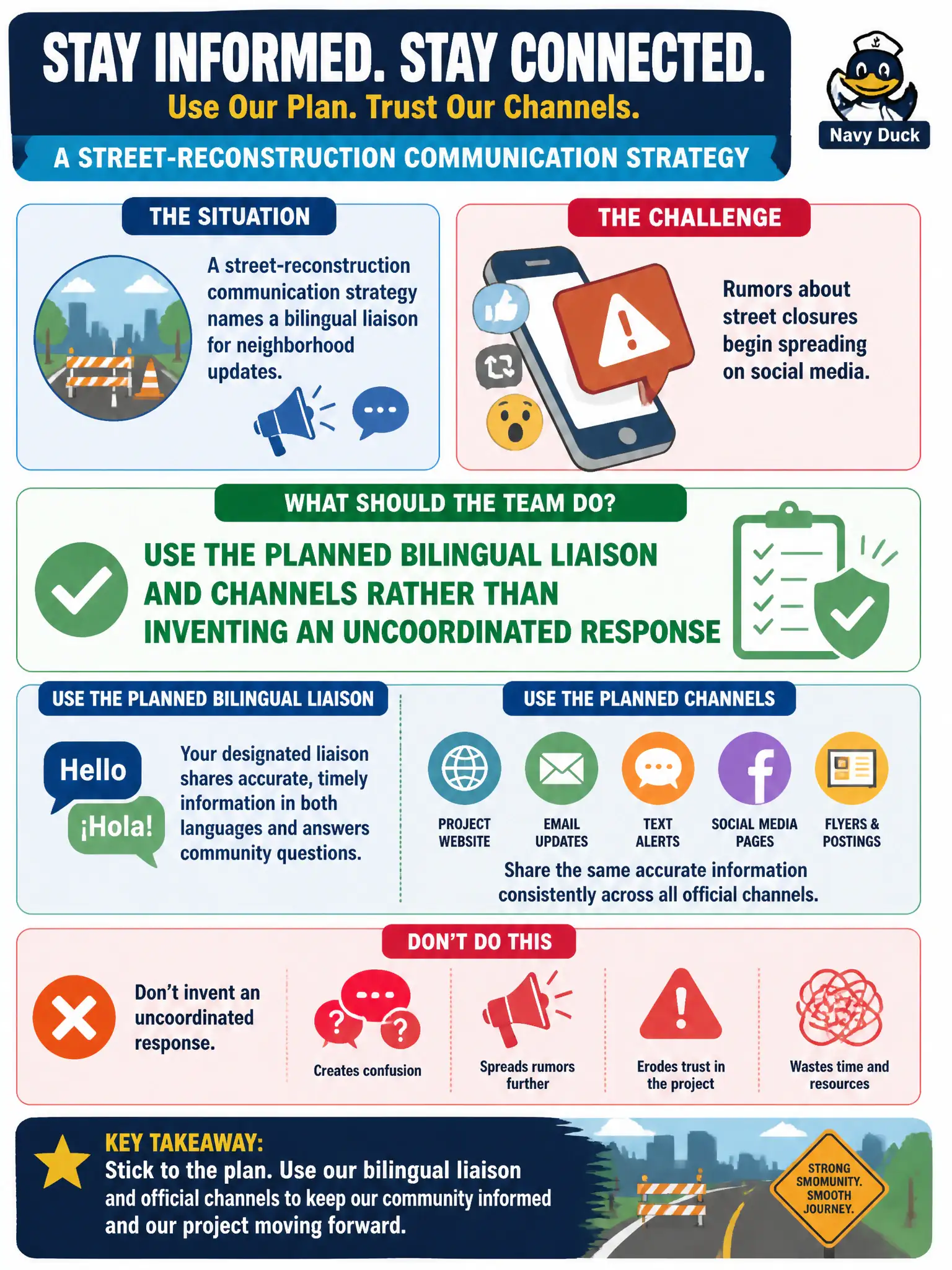
A street-reconstruction communication strategy names a bilingual liaison for neighborhood updates. Rumors about street closures begin spreading on social media. What should the team do?
Select an answer to reveal the explanation.
Short Explanation
When rumors fly, use the messenger you already planned—the bilingual liaison—not forty random posts. The communication strategy exists so the neighborhood hears one clear, trusted voice. Stick to the role and channels you set up.
Full Explanation
When rumors about street closures spread on social media during reconstruction, the team should use the planned bilingual liaison and approved channels rather than invent an uncoordinated response. Communication strategies on civic projects exist so neighborhood updates remain accurate, culturally accessible, and attributable. Activating the named liaison executes the plan under community stress.
Having every crew member post personal opinions overnight fragments the message, risks conflicting facts, and abandons the designated role. Stopping all construction until every online rumor disappears is rarely feasible and confuses rumor control with work stoppage criteria. Replacing the liaison with anonymous flyers that omit dates and detours reduces clarity and accountability when residents need specifics.
Exam caveat: CAPM communication questions often test whether associates follow the planned approach versus ad-hoc broadcasting. Plans can be formally changed, but crisis rumor traffic alone does not authorize discarding named roles and channels.
Operational check: brief the bilingual liaison with verified closure and detour facts, publish through the approved channels, monitor rumor themes, correct factual errors promptly, and log any needed plan updates through change control if channel gaps appear.