
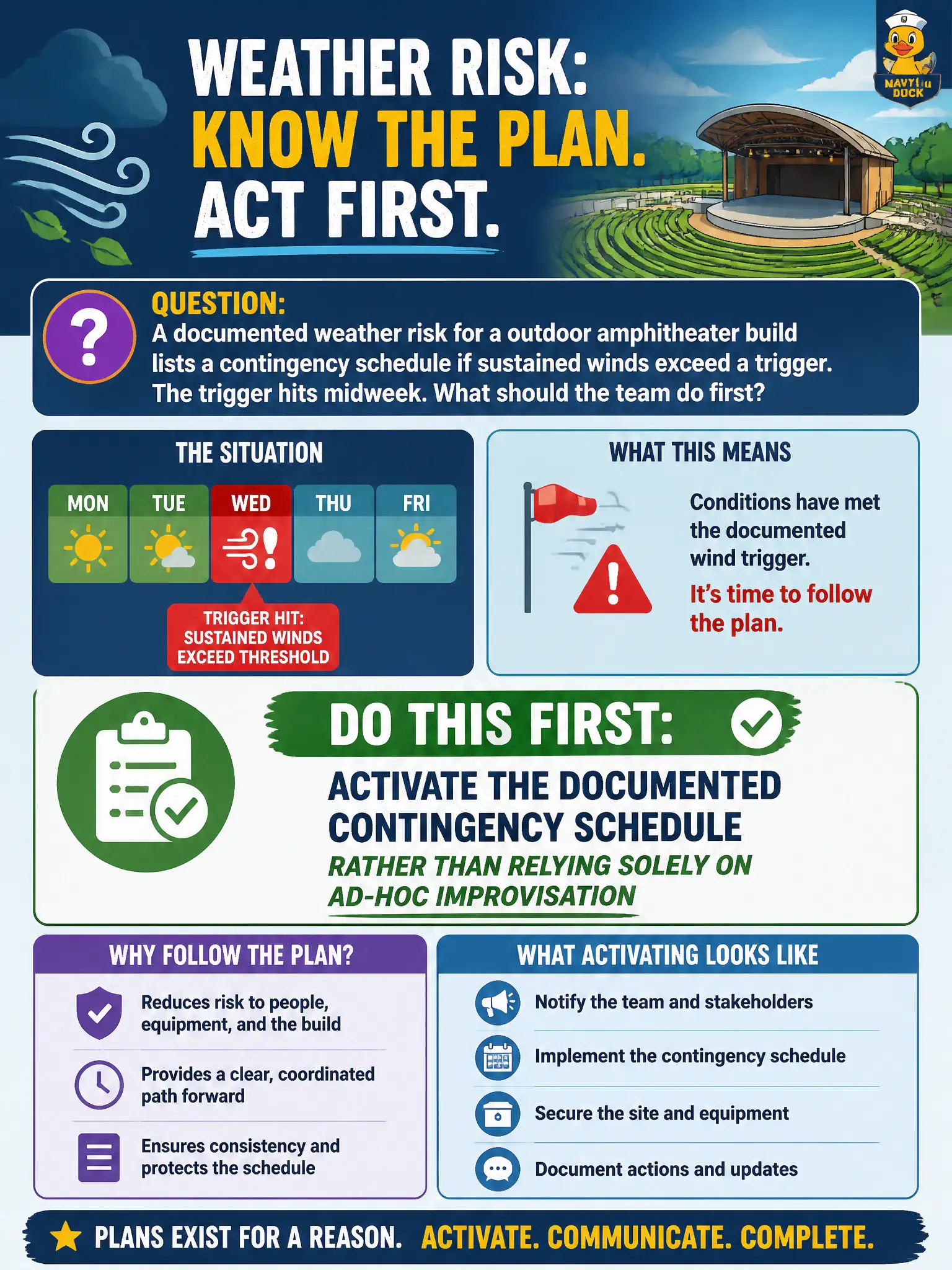
A documented weather risk for a outdoor amphitheater build lists a contingency schedule if sustained winds exceed a trigger. The trigger hits midweek. What should the team do first?
Select an answer to reveal the explanation.
Short Explanation
When the weather trigger fires, pull the contingency you already planned—don’t invent a brand-new panic list from scratch. The risk plan is there so you respond with a rehearsed path, not pure improvisation.
Full Explanation
When a documented weather risk for an outdoor amphitheater build includes a contingency schedule for sustained winds above a trigger, and that trigger hits, the first disciplined action is to activate the documented contingency rather than rely only on improvisation. Risk response planning exists so civic teams can switch to a prepared path under pressure. Using the contingency schedule shows the risk process working as designed.
Inventing only brand-new panic tasks that were never captured in any risk response discards prepared thinking and increases chaos when weather already stresses the site. Canceling the entire project charter and restarting initiation is an extreme overreaction to a triggered weather contingency. Silencing the risk register so stakeholders cannot see the weather entry hides status and violates transparency expectations for public projects.
Exam caveat: CAPM associates should know that contingency and fallback plans are meant to be executed when triggers occur; having a register entry without activation discipline is incomplete risk management. Improvisation may supplement a plan but should not replace an available documented response.
Operational check: confirm the wind trigger is met using the defined measurement, notify stakeholders per the risk communication approach, implement the contingency schedule activities, update risk status, and log any residual issues that still need escalation.