
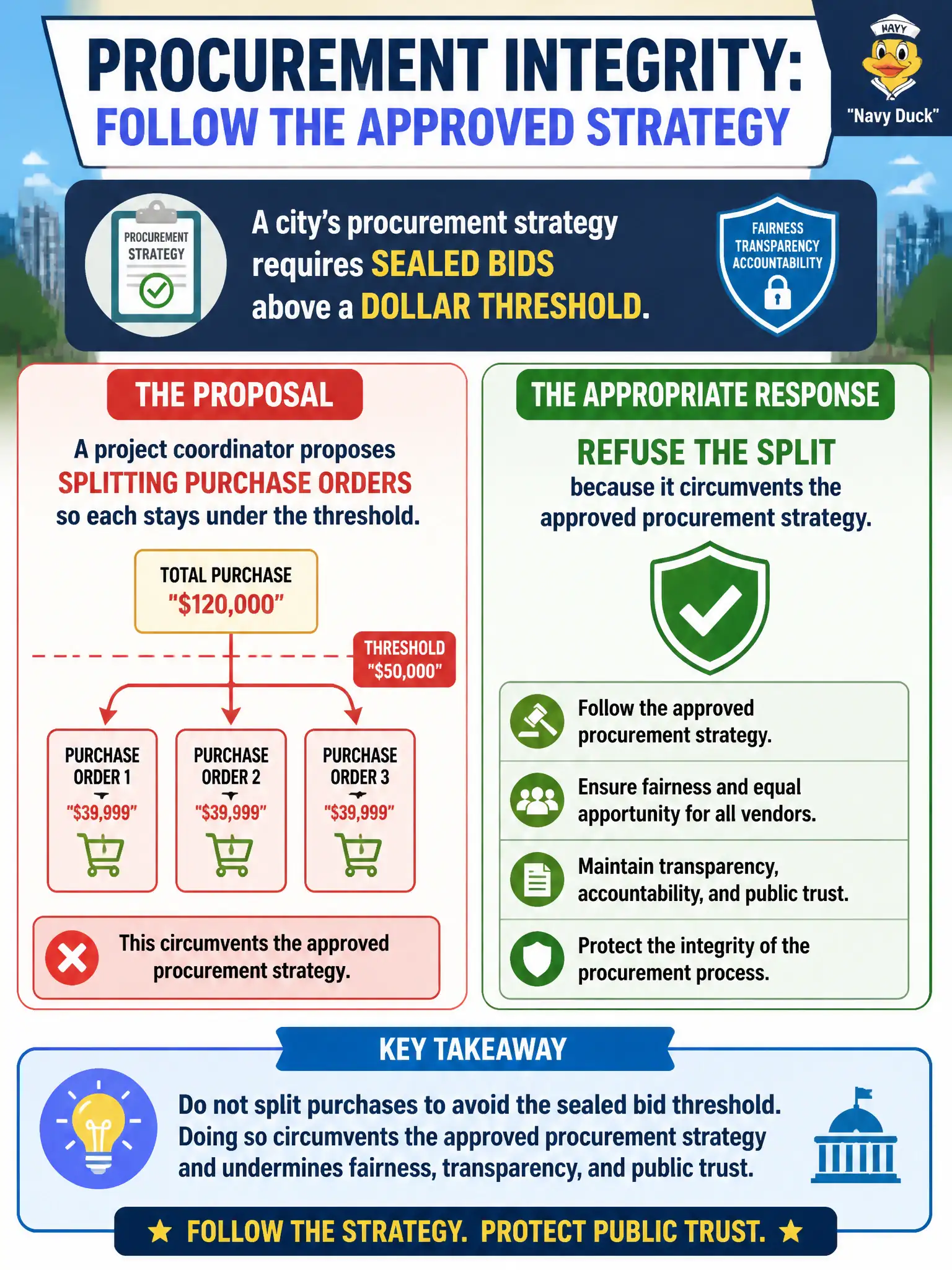
A city’s procurement strategy requires sealed bids above a dollar threshold. A project coordinator proposes splitting purchase orders so each stays under the threshold. What is the appropriate response?
Select an answer to reveal the explanation.
Short Explanation
Splitting POs to dodge the sealed-bid rule is playing games with the playbook. The threshold exists for fairness and control—work within it, don’t carve around it. Stick to the approved procurement strategy.
Full Explanation
An approved municipal procurement strategy that requires sealed bids above a dollar threshold must be followed, not gamed. Refusing to split purchase orders so each stays under the threshold protects competition, transparency, and the city’s procurement controls. Artificial splitting is a classic circumvention pattern that undermines the strategy the organization already authorized for civic purchasing.
Approving the split because it saves a week on the construction schedule subordinates governance to convenience and normalizes threshold evasion. Allowing a hallway verbal agreement from the mayor still bypasses the documented sealed-bid rule and weakens auditability. Replacing sealed bids with sole-source awards for every remaining item abandons the competitive strategy wholesale rather than correcting the proposed split.
Exam caveat: CAPM associates should treat approved procurement approaches as binding project constraints unless formally changed. Schedule urgency is not automatic authorization to break purchasing thresholds. Ethics and responsibility themes often sit behind these scenarios.
Operational check: if a coordinator proposes PO splitting under a sealed-bid threshold, refuse, cite the procurement strategy, route any legitimate urgency through proper procurement exceptions or change control, and keep a written record of the decision for audit.