
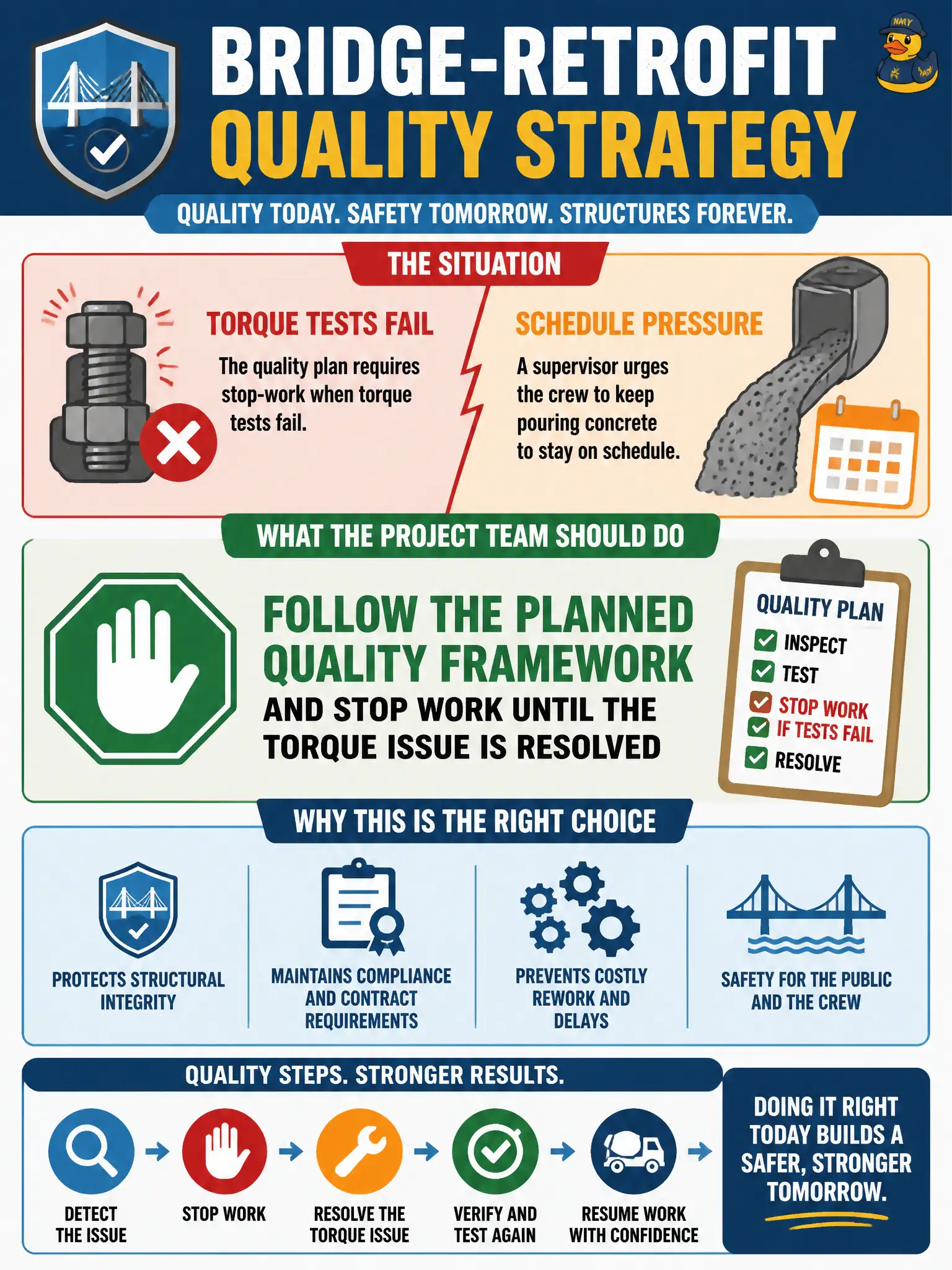
A bridge-retrofit quality strategy requires stop-work when torque tests fail. A supervisor urges the crew to keep pouring concrete to stay on schedule. What should the project team do?
Select an answer to reveal the explanation.
Short Explanation
When the quality playbook says stop, you stop—even if the schedule is yelling. Keeping the pour going after failed torque tests just bakes the defect into the bridge. Stick to the framework under pressure.
Full Explanation
When a bridge-retrofit quality strategy requires stop-work on failed torque tests, the project team must follow that planned quality framework even if a supervisor urges continued concrete placement to protect the schedule. Quality control triggers exist to prevent defective civic structures from being buried under later work. Stopping until the torque issue is resolved is executing the approved strategy, not optional courtesy.
Treating schedule as always outranking quality on civic jobs rejects the governance purpose of the quality plan and invites latent structural defects. Asking a vendor to rewrite failed test results after the pour is falsification, not quality management. Continuing to pour while logging failures only for a later after-action review ignores a stop-work requirement and converts a control gate into paperwork theater.
Exam caveat: CAPM expects associates to execute planned quality responses when thresholds fail; schedule pressure does not silently void quality frameworks. Informal supervisor preference is not a substitute for changing the plan through proper channels.
Operational check: on a failed torque test, stop the affected work per the plan, quarantine or hold the pour area, notify the quality and project leads named in the framework, document the nonconformance, and resume only after the defined corrective path clears the hold.