
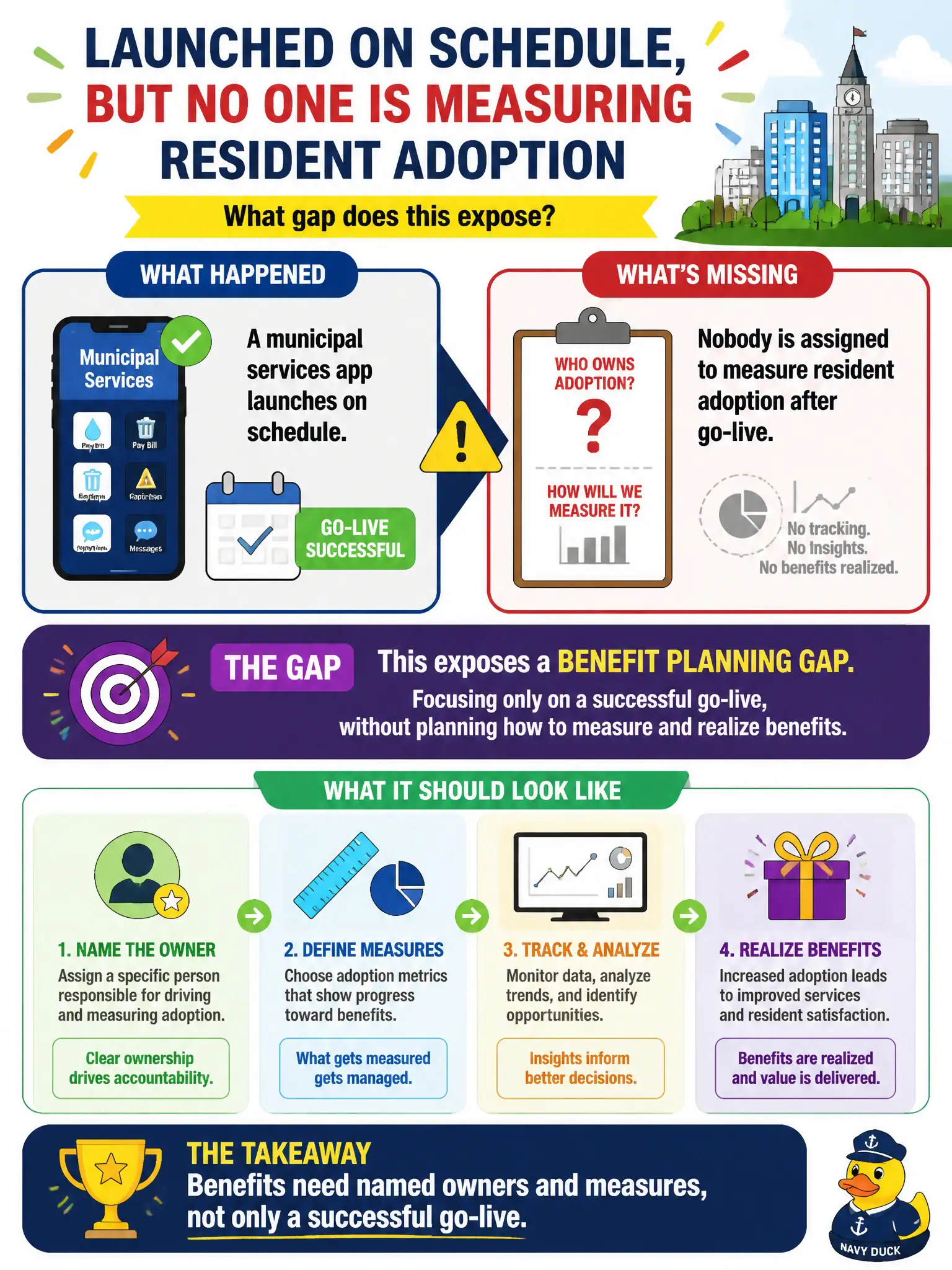
A municipal services app launches on schedule, but nobody is assigned to measure resident adoption afterward. What initiation or benefit-planning gap does this expose?
Select an answer to reveal the explanation.
Short Explanation
Shipping the app is not the same as proving it helped anyone. Without an owner watching adoption numbers, the benefit plan is just wishful thinking. Go-live is a milestone; benefits need a name and a measure.
Full Explanation
A municipal services app that launches on schedule still fails benefit planning if nobody is assigned to measure resident adoption afterward. Initiation and benefit planning must name owners and measures for the value the city claimed when it funded the work. Delivery success without post-launch measurement leaves organizational value unowned and unverified—common in civic digital projects that treat go-live as the finish line.
Using many story points in a final sprint speaks to delivery effort, not to missing benefit ownership. Listing every UI color hex code in a charter confuses initiation detail with graphic specification and does not fix adoption measurement. Requiring sealed bids for mobile apps is a procurement-policy question unrelated to the gap between launch and benefit realization.
Exam caveat: CAPM associates should remember that benefits often materialize after project close and therefore need planned measurement and named accountability. A charter or benefit plan that stops at “deliver the app” is incomplete for value-focused initiation.
Operational check: before go-live, confirm each claimed benefit has a named owner in operations or program leadership, a metric, a reporting cadence, and a first measurement date after launch; escalate if adoption tracking has no owner.